

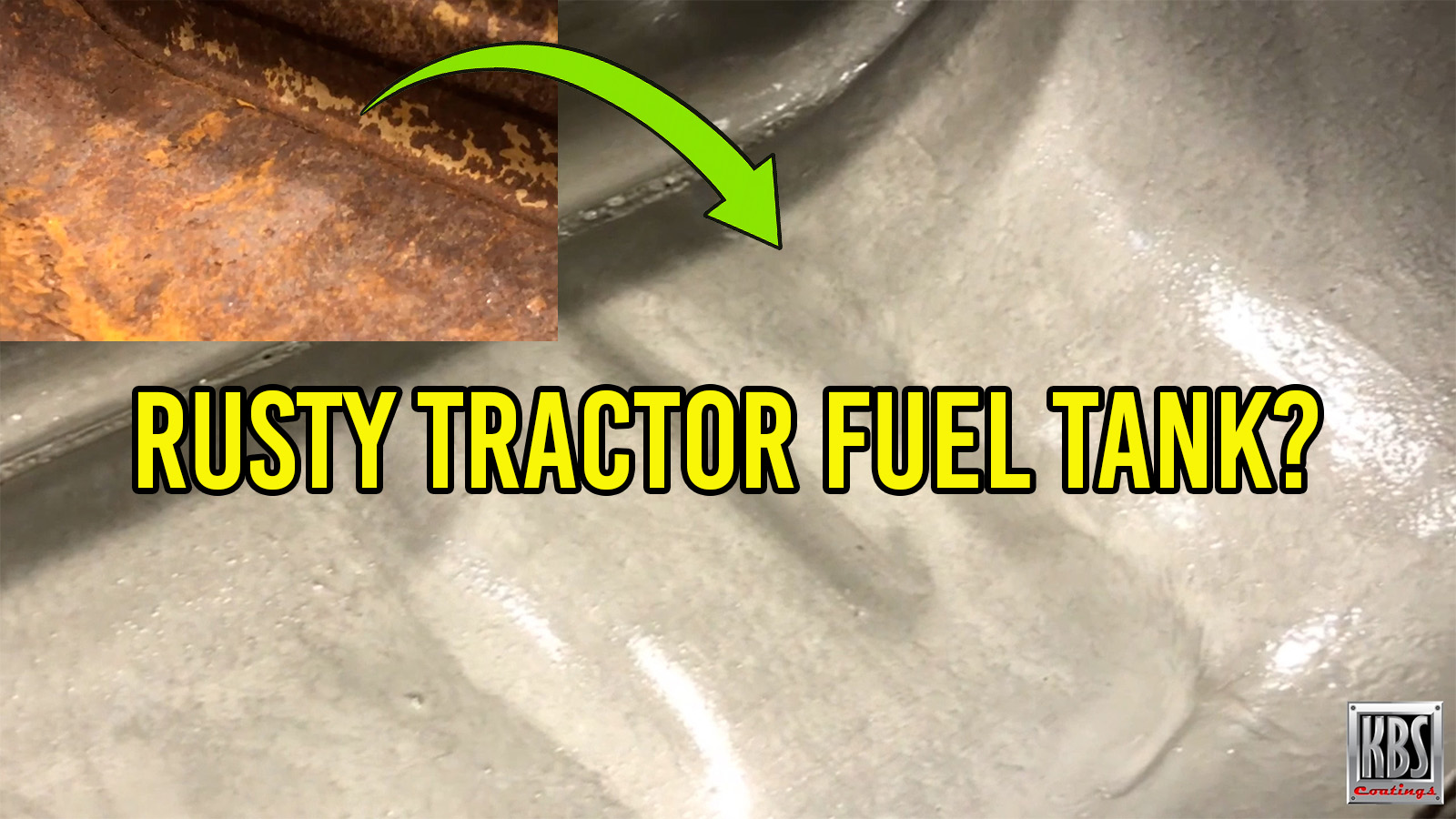
To remove rust from a tractor fuel tank, drain and remove the tank, clean it with KBS Klean mixed 1:1 with hot water, then etch the inside with full-strength RustBlast and rinse. Seal it with Gold Standard Tank Sealer and let it cure 96 hours before adding fuel.
Rust flakes and sediment from an old tank end up in the sediment bowl, the fuel filter and the lines, and they starve the engine of fuel. Most rusty tractor tanks can be restored instead of replaced. The steps below use the KBS 3-Step Tank Sealing System, from draining the tank to putting fuel back in.
Updated October 2026 by the KBS Coatings technical team.
- Tractor Fuel Tank Rust Removal at a Glance
- What Causes Rust Inside a Tractor Fuel Tank?
- Can a Badly Rusted Tractor Fuel Tank Be Restored?
- Which Tank Sealer Kit Fits a Tractor Fuel Tank?
- What You Need
- How to Remove Rust from Inside a Tractor Fuel Tank
- How to Seal a Tractor Fuel Tank to Prevent Rust
- Should You Refinish the Outside of a Tractor Fuel Tank?
- How to Keep Rust from Coming Back
- Frequently Asked Questions
Tractor Fuel Tank Rust Removal at a Glance
A tractor fuel tank takes three KBS products in order: KBS Klean to clean, RustBlast to remove rust and etch, and Gold Standard Tank Sealer to seal. The sealer goes on in one coat and needs 96 hours to cure before fuel goes back in.
| Products | KBS Klean, RustBlast, Gold Standard Tank Sealer |
|---|---|
| KBS Klean mix | 1 part KBS Klean to 1 part hot water, soak up to 24 hours for heavy buildup |
| RustBlast wet time | Full strength. Minimum 30 minutes for light rust, 40 to 60 minutes for moderate rust, 1 to 2 hours for heavy rust |
| Seal within | 10 days of finishing prep |
| Sealing temperature | 55 to 82°F (13 to 28°C), out of direct sun |
| Coats of Tank Sealer | One thin coat, pour, coat and drain |
| Cure before fuel | 96 hours, openings left open |
| Fuels | Gasoline, ethanol blends including E10, E15 and E85, and diesel |
What Causes Rust Inside a Tractor Fuel Tank?
Water causes rust inside a steel tractor fuel tank. It gets in through a worn fuel cap, from contaminated fuel, or as condensation when the temperature swings, and it settles on the bottom of the tank where it attacks bare steel.
Older tractors are especially prone to it because they often sit for months with a partly full tank. Every season of condensation adds more rust, and it builds up fastest along the bottom and the seams.

Can a Badly Rusted Tractor Fuel Tank Be Restored?
Yes, a badly rusted tractor fuel tank can be restored with the KBS 3-Step Tank Sealing System as long as the steel is still sound. Heavy surface rust and scale come out with KBS Klean and RustBlast. Metal that is rusted through or badly thinned is a different job.
Check the inside and outside for deep pitting, thin spots, pinholes and fuel weeping. Look hardest at the seams, the corners and the bottom, where damage hides.
Small holes can be repaired with KBS products. For pinholes and weld seams, prep the area inside and out, seal the inside of the tank first, then embed BackBone Reinforcing Mesh in a thin coat of Tank Sealer on the outside. For holes larger than a pinhole, scuff the clean, dry area with 320 grit and patch it with NuMetal Epoxy Putty, then let NuMetal cure 12 hours before you seal the inside. The Tank Sealer directions cover both repairs step by step.
If corrosion has weakened the tank's structure, have it evaluated, repaired or replaced.
Which Tank Sealer Kit Fits a Tractor Fuel Tank?
Pick the KBS tank sealer kit by your tractor tank's capacity. Every metal tank kit includes KBS Klean, RustBlast and Gold Standard Tank Sealer, so one box covers all three steps.
| Up to 5 gallons | Cycle Tank Sealer Kit |
|---|---|
| 5 to 12 gallons | Large Cycle Tank Sealer Kit |
| 12 to 25 gallons | Auto Fuel Tank Sealer Kit |
| 25 to 50 gallons | Tank Sealer Kit for 25 to 50 Gallon Tanks |
| Over 50 gallons | How Much Tank Sealer Do I Need? |
| Old liner inside | Cycle Tank Sealer PLUS Kit (adds KBS Strip), or add KBS Strip to a larger kit |
What You Need
Restoring a tractor fuel tank takes the three KBS tank products, a few basic tools and protective gear. Optional items are marked with when to skip them.
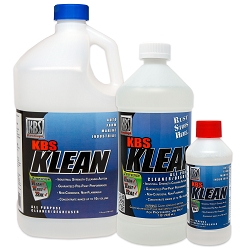
- KBS Klean: water-based cleaner and degreaser that removes fuel varnish, sludge, grease and loose rust
- RustBlast: rust remover and metal etch that leaves a zinc phosphate layer for the sealer to grip
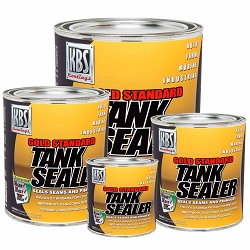
- Gold Standard Tank Sealer: moisture-cured urethane that seals the inside of the tank against fuel and moisture
- KBS Strip (optional): skip it unless the tank was sealed before
- NuMetal Epoxy Putty and BackBone Reinforcing Mesh (optional): skip them if the tank has no holes or leaking seams
- Hurricane Paint Mixer (optional): stirs Tank Sealer at low drill speed without whipping in air; a stir stick also works
- KBS Paint Spout (optional): a cleaner pour from the can into the tank filler
- KBS #1 Thinner: cleans Tank Sealer off tools while it is still wet
- Chemical-resistant nitrile gloves and safety glasses
- Hand tools to remove the tank and fittings, approved fuel containers, a bucket, a funnel, duct tape or rubber stoppers for the openings, and a fan or shop vac for drying
Safety Precautions
Work in a well-ventilated area away from flames, sparks, heaters and other ignition sources. Drain fuel into an approved container and dispose of contaminated fuel according to local rules. An empty tank can still hold fuel vapor. Wear gloves and safety glasses for all three steps, follow the product labels and safety data sheets, and never weld, grind or heat a fuel tank unless it has been professionally made safe for that work.
How to Remove Rust from Inside a Tractor Fuel Tank
Removing rust from a tractor fuel tank takes two KBS products: KBS Klean cleans out fuel residue and loose debris, then RustBlast dissolves the remaining rust and etches the steel. These are the first two steps of the KBS 3-Step Tank Sealing System.
Step 1: Drain and Remove the Fuel Tank
Take the tank off the tractor so the cleaner and RustBlast can reach every inside surface when you roll it. Drain the remaining gasoline or diesel into an approved container, disconnect the fuel lines, and remove the sediment bowl, shutoff valve and other fittings.
Plug the openings with duct tape, rubber stoppers or similar so nothing leaks while you roll the tank.

What If the Fuel Tank Has an Old Sealer?
An old tank liner has to come out completely before Gold Standard Tank Sealer goes in, even where it still looks attached. Check the inside for peeling, flaking or soft coating.
Strip it with KBS Strip between 60 and 85°F; it works best above 70°F. Pour it in, roll the tank so it covers the old liner, and let it work 20 to 60 minutes. Repeat as needed, pull out the loosened chunks, and rinse well. KBS Strip can be strained and reused. Once the old liner is gone, start at Step 2. The KBS Strip directions have the full process.
Step 2: Clean the Tank with KBS Klean
Clean the tank with KBS Klean mixed 1 part KBS Klean to 1 part hot water before any rust treatment. Fuel varnish, sludge and grease block RustBlast and weaken the sealer's bond, so they have to go first.
Pour the mixture in and soak the tank, rolling it now and then so the cleaner reaches every surface. Heavy buildup can take up to 24 hours. For thick rust flakes or scale, add a short length of chain or a handful of nuts and bolts and shake the tank to break it loose, then take all of it back out.
Strain the solution and repeat if needed. Rinse with water until it runs clear, then let the tank dry. See the KBS Klean directions for dilution ratios on other jobs.

Step 3: Remove the Rust with RustBlast
RustBlast removes the rust left after cleaning and etches the steel. It is a phosphoric acid-based rust remover and metal etch, and as a liquid it reaches corners and baffles that a brush or chain cannot.
Pour RustBlast into the dry tank at full strength, with no water added. Roll and tip the tank every 5 minutes so every surface stays wet: at least 30 minutes for light rust, 40 to 60 minutes for moderate rust, and 1 to 2 hours for heavy rust. Never let RustBlast dry on the metal. It works best between 55 and 90°F, and cold steel needs the longer times.
Drain the RustBlast into a container and look inside with a flashlight. Repeat the treatment if heavy rust remains. You do not have to remove every last trace of rust, because Gold Standard Tank Sealer bonds to what is left, but loose rust and scale must be gone.

Step 4: Rinse and Dry the Tank
Rinse the tank once with water after RustBlast, then dry it completely. The rinse neutralizes the active acid and stops a heavy zinc phosphate layer from building up. Rinsing too many times removes the thin zinc phosphate layer that helps Tank Sealer bond.
A light, white, powdery residue after the rinse is normal zinc phosphate, not flash rust, so leave it. Dry the inside with forced air, a shop vac, a blow dryer, a fan or a heat gun, paying attention to seams and corners where water hides. Diluted KBS Klean and RustBlast rinse water is not harmful, but it can stain concrete, so lay a tarp down if you rinse on the driveway.
Let the tank cool to room temperature, and seal it within 10 days. The RustBlast directions cover dwell times for other surfaces.
How to Seal a Tractor Fuel Tank to Prevent Rust
Seal a clean, etched and dry tractor fuel tank with one thin coat of Gold Standard Tank Sealer, drain the excess, and let it cure 96 hours before adding fuel. The moisture-cured urethane keeps fuel and water off the steel, and it is compatible with gasoline, ethanol blends and diesel.

Step 5: Pour In Gold Standard Tank Sealer
Apply Tank Sealer between 55 and 82°F, out of direct sun, and not in rain or high humidity. Stir the can thoroughly, touching the bottom and lifting to pick up the settled pigment. A Hurricane Paint Mixer at low drill speed works well. Never shake or whip it, because air bubbles cause problems in the coating.
Pour the entire can into the tank. Match the can to the tank: 8 oz seals up to 5 gallons, a pint up to 12, a quart up to 25 and a gallon up to 100. Slowly roll and tilt the tank for up to 30 minutes until every surface is coated, paying attention to seams and corners. Tank Sealer is a single thin coat, so a second coat is not needed.

Step 6: Drain the Excess Sealer
Drain all the excess sealer for at least 30 minutes, turning the tank side to side every 5 minutes so it does not pool in low spots. Pooled sealer can bubble and fail to bond. Wipe sealer out of threads, fuel outlets and lines before it cures.
Drained sealer cannot be saved or poured back into the can; use any leftover right away for exterior patching. Leave the lid off the catch can until the sealer in it has hardened, because a closed lid can build pressure. Foaming or bubbling while it drains means trapped gas and may call for a full strip and redo.
Step 7: Let the Sealer Cure for 96 Hours
Let Gold Standard Tank Sealer cure for 96 hours before adding gasoline or diesel. Leave the openings open so air reaches the coating, and keep the tank out of direct sun and away from heat, which does not speed the cure and can hurt adhesion.
After the cure, test the tank with water before it goes back on the tractor, then dry it and reinstall it. The Tank Sealer directions and the Tank Sealer FAQs answer most questions about this step.

Stuck or unsure? Search the KBS Support Desk for instant answers


Should You Refinish the Outside of a Tractor Fuel Tank?
Yes, if the outside of the tank is rusty or peeling, refinish it while the tank is off the tractor. Prep the outside with KBS Klean and RustBlast, brush or spray at least two thin coats of KBS RustSeal, then topcoat it, because RustSeal is not UV stable on its own.
KBS Top Coater goes straight over RustSeal that is 3 to 8 hours old with no other prep, and it adds color and UV protection. After 8 hours, scuff the RustSeal with 320 grit, clean and dry it first. Finish any exterior BackBone or NuMetal repairs before you paint.
How to Keep Rust from Coming Back
A properly applied coat of Gold Standard Tank Sealer keeps rust from coming back by keeping water off the steel. The rest is fuel system upkeep.
Buy clean fuel, keep the fuel cap and its seal in good shape, and follow good fuel storage practices for a tractor that sits for a season. Check the sediment bowl and fuel filter now and then for water or debris.
Frequently Asked Questions
What Will Dissolve Rust in a Fuel Tank?
A phosphoric acid-based rust remover such as KBS RustBlast dissolves rust inside a steel fuel tank. Poured in full strength and kept wet for at least 30 minutes, and longer for heavier rust, RustBlast removes the rust and leaves a zinc phosphate layer that helps Gold Standard Tank Sealer bond.
How to Remove Rust from a Fuel Tank Without Removing It?
KBS does not recommend treating a fuel tank while it is still on the tractor. The tank has to be drained, removed and rolled so KBS Klean, RustBlast and Gold Standard Tank Sealer reach every inside surface, and so the sealer can be drained and the tank dried properly.
What Is the Best Rust Remover for a Fuel Tank?
For a tank you plan to seal, use a rust remover that also etches the steel. KBS RustBlast is a phosphoric acid-based rust remover and metal etch that goes in after KBS Klean degreases the tank, and it leaves a zinc phosphate layer that Gold Standard Tank Sealer bonds to.
What Is a Good Rust Remover for Metal Fuel Tanks?
KBS RustBlast works on steel and aluminum fuel tanks as part of the KBS 3-Step Tank Sealing System. Use it full strength after cleaning with KBS Klean, keep it wet for the whole treatment, rinse once, and dry the tank before sealing.
Can You Use Vinegar to Remove Rust from a Tractor Fuel Tank?
Vinegar is not a substitute for KBS tank prep. A tank cleaned with vinegar still needs the full KBS 3-Step Tank Sealing System from the start: KBS Klean, then RustBlast, then Gold Standard Tank Sealer.
How Long Does Gold Standard Tank Sealer Take to Cure?
Gold Standard Tank Sealer needs 96 hours to cure before fuel goes in. Leave the tank openings open, keep it out of direct sun and away from heat, and test it with water before reinstalling it.
Can Gold Standard Tank Sealer Be Used in a Diesel Tractor Tank?
Yes. Gold Standard Tank Sealer is made for diesel tanks as well as gasoline tanks, including ethanol blends such as E10, E15 and E85. Once cured, it keeps the fuel off the steel.
Still have questions? Search the KBS Support Desk for instant answers
Restore Your Tractor Fuel Tank with KBS Coatings
A rusty tractor tank does not have to be replaced. The KBS Tank Sealer System puts KBS Klean, RustBlast and Gold Standard Tank Sealer in one box, sized to your tank, so you can clean it, remove the rust and seal it in one job.
Related guides: How to Seal a Rusty Fuel Tank in 3 Steps, How to Reseal a Gas Tank Inside and Out, How to Paint a Rusty Farm Plow Without Sandblasting, or browse all KBS application guides.
Tagged Products