

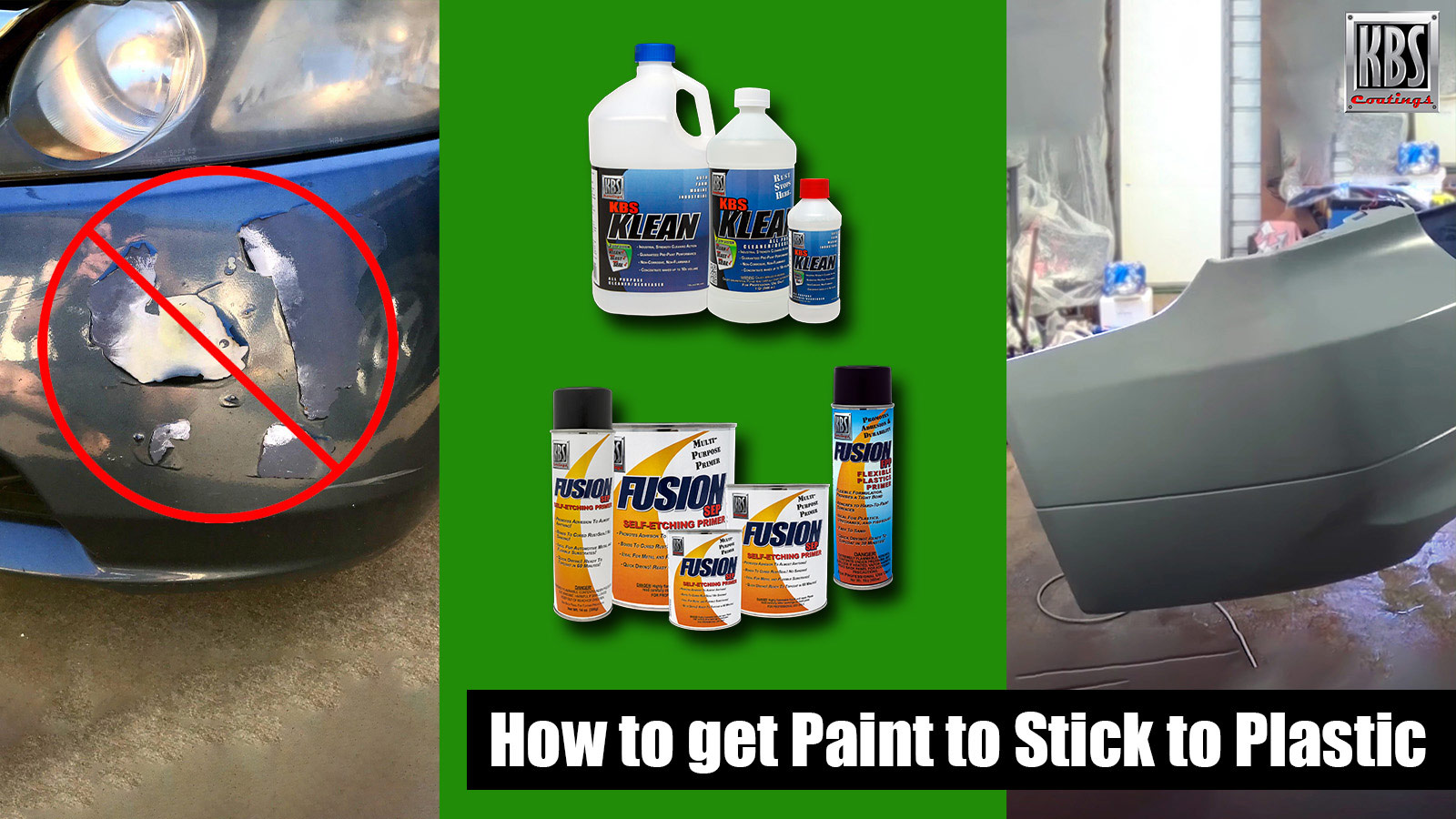
Paint sticks to plastic when you clean it, scuff it and prime it before any color goes on. Wash the plastic with KBS Klean, scuff it with 400 to 600 grit until the sheen dulls, then prime it: Fusion SEP for hard plastic, Fusion FPP for soft or flexible plastic. The primer is what bonds to the plastic. The top coat only has to hold onto the primer.
That is the whole job in one paragraph. The rest of this guide covers why plastic fights paint in the first place, how to tell hard plastic from flexible plastic before you pick a primer, the published dry times and coverage for each one, and the prep sequence that decides whether the finish lasts a season or a decade.
- Why Paint Peels Off Plastic
- What Is Plastic Primer?
- What Is the Best Primer for Soft Plastics?
- What Is the Best Primer for Hard Plastics?
- Fusion SEP and Fusion FPP Side by Side
- Step by Step: How to Get Paint to Stick to Plastic
- Top Coating Plastic Primers
- Frequently Asked Questions
- A Finish That Stays Put
Why Paint Peels Off Plastic
Paint peels off plastic because plastic is smooth, non-porous and chemically uninterested in the coating sitting on it. There is no surface profile for the paint film to key into and no absorption, so the bond is mechanical grip that was never really there. Add the way plastic expands and contracts with temperature and a rigid paint film cracks at the edges and lifts.
Two things fix it, and they work together. Scuffing gives the surface a texture to hold. A plastic primer supplies bonding agents that grip the plastic chemically and leave behind a surface the top coat can wet out on. Cleaning comes first because both of those fail through an invisible film of grease, wax or mold release.
What Is Plastic Primer?
Plastic primer is a coating formulated with bonding agents that grip a smooth plastic surface and give paint something to hold. KBS makes two, and the split is about how much the part moves: Fusion FPP for flexible plastic that bends, Fusion SEP for hard plastic that does not. Both are rated to 250 degrees F and both apply between 55 and 82 degrees F.
Picking the wrong one of those two is the most common mistake on a plastic job. A self-etching primer built for metal and rigid plastic cannot flex with a soft bumper cover or a vinyl dash, so the primer and everything above it cracks the first cold morning the part gets flexed.
What Is the Best Primer for Soft Plastics?
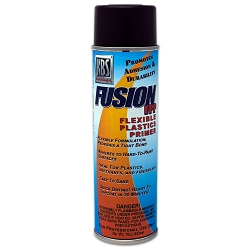
Fusion FPP is the primer for soft and flexible plastics such as vinyl, rubberized plastic, soft PVC and bumper covers. It is a grey flexible surface primer that moves with the part instead of cracking, it is dry to the touch in 10 minutes, and it is ready for a top coat in 30 minutes. One aerosol covers up to 18 square feet.
KBS Fusion FPP, Flexible Plastics Primer
Fusion FPP promotes a tight bond between flexible surfaces and most varieties of top coat. Beyond plastic it works on urethanes, wood, fiberglass and carbon fiber, which makes it the default choice on anything that bends or absorbs impact. It can be block sanded, it hides minor surface defects, and it leaves a primed surface under 20 percent gloss measured at 60 degrees.

What Is the Best Primer for Hard Plastics?
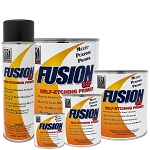
Fusion SEP is the primer for hard plastics such as ABS, polycarbonate and acrylic. It is a fast drying self-etching primer that is dry to the touch in 15 minutes and ready for a top coat in one hour, and one aerosol covers up to 35 square feet. It also primes bare steel, aluminum, brass, copper, bronze, chrome, galvanized metal, fiberglass and polyester filler.
KBS Fusion SEP, Self-Etching Primer
Fusion SEP earns its place on a mixed job because it handles the metal alongside the plastic. On metal its self-etching action bites an anchor pattern into the surface, and it is the preferred inter-coat primer for top coating fully cured RustSeal. It comes in aerosol, pint, quart, gallon and 5 gallon sizes, so it scales past the one-can jobs Fusion FPP is aimed at.
One limit worth knowing before you buy: Fusion SEP is not a high build primer and it is not made for flexible surfaces. For filling and blocking, KBS 2K DTM Build Primer is the high build option. For anything that bends, use Fusion FPP.

Fusion SEP and Fusion FPP Side by Side
Fusion SEP and Fusion FPP share an application temperature range, a 7 day recoat window and a 250 degree F heat rating. They differ on flexibility, dry time, coverage and the sizes they come in. The table below is the fastest way to decide which can belongs on your part.
| Spec | Fusion SEP | Fusion FPP |
|---|---|---|
| Best for | Hard plastic, bare metal, inter-coat over cured RustSeal | Soft and flexible plastic, urethane, wood, fiberglass, carbon fiber |
| Dry to the touch | 15 minutes | 10 minutes |
| Ready to top coat | 1 hour | 30 minutes |
| Aerosol coverage | Up to 35 sq ft | Up to 18 sq ft |
| Other sizes | Pint 50 sq ft, quart 100 sq ft, gallon 400 sq ft, 5 gallon 2000 sq ft | Aerosol only |
| Application temperature | 55 to 82 degrees F | 55 to 82 degrees F |
| Heat resistance | 250 degrees F | 250 degrees F |
| Recoat window | Within 7 days, otherwise scuff with 300 grit | Within 7 days, otherwise scuff with 300 grit |
| Flexible | No | Yes, and it can be block sanded |
Step by Step: How to Get Paint to Stick to Plastic
The job runs clean, scuff, prime, top coat, and every one of those steps exists because skipping it causes a specific failure. Cleaning removes the film that blocks the bond. Scuffing adds grip. Priming supplies the chemical bond. The top coat supplies color and UV protection. Work between 55 and 82 degrees F and keep the part out of direct sun.
Step 1: Clean the Plastic
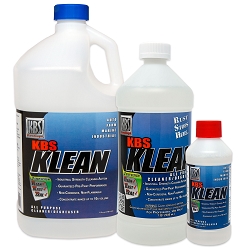
Clean the plastic with KBS Klean before anything else touches it. KBS Klean is a concentrated water-based cleaner and degreaser that lifts grease, oil, wax and road film and leaves no residue behind, which is the part that matters here. Solvent wipes flash off but leave an invisible film that primer will not bond through, and that failure does not show up until months later.
KBS Klean is a concentrate, so dilute it with warm water. The published range runs from 1:1 for heavy soil down to 25:1 on aluminum. Apply it with a sponge, bristle brush or scouring pad, rinse thoroughly with clean water, and dry completely with a lint-free cloth or compressed air. The KBS Klean directions cover dilution by surface type.
Step 2: Scuff the Surface
Scuff the plastic with 400 to 600 grit sandpaper or steel wool until the sheen dulls, using light pressure in a back and forth motion. The Fusion FPP directions call for this on plastic and melamine for maximum adhesion, and hard plastic gains the same benefit. Dulled sheen is the finish line. Going further gouges the plastic and those scratches telegraph through the top coat.
Then get the dust off. Plastic sanding dust is fine, static-charged and easy to miss, and a primer coat laid over it bonds to dust rather than to the part. Wash with hot water and a sponge, or with KBS Klean for a thorough job, and dry completely before the primer goes on.
Step 3: Apply the Primer
Apply one light covering coat of primer: Fusion SEP on hard plastic, Fusion FPP on flexible plastic. Shake the aerosol for at least a minute after the mixing ball moves freely, hold the nozzle 10 to 14 inches from the surface, and spray in steady, even, overlapping strokes. A single coat is usually all that is needed, and 2 to 3 light coats with 3 to 5 minutes between them is the maximum.
Keep the coats light. A heavy primer coat does not improve adhesion; it adds film thickness that can chip and it slows the cure. Work in a well ventilated area and wear eye protection and an approved respirator. For spray gun work, Fusion SEP runs at 35 to 45 psi on siphon and pot guns or 25 to 35 psi on gravity guns, with a 1.0 to 1.2 tip, thinned only with KBS #1 Thinner if thinning is needed at all.
Step 4: Top Coat the Primer
Top coat Fusion SEP after one hour and Fusion FPP after 30 minutes. Coat over either primer within 7 days. Past 7 days, scuff the primer with 300 grit first. Fusion SEP needs no sanding at all if it is coated over within 24 hours.
A solid color top coat is doing more than adding color here. Most plastics chalk and fade under UV light, and an opaque finish coat blocks the light that causes it, which is why a painted plastic part often outlasts the bare one it replaced. For an exceptionally smooth finish, lightly sand the cured primer with 600 to 800 grit before the color goes on.
Stuck or unsure? Search the KBS Support Desk for instant answers
Frequently Asked Questions About Painting Plastic
How to keep paint from coming off plastic?
Paint stays on plastic when the surface is clean, scuffed and primed. Wash the plastic with KBS Klean and dry it, scuff it with 400 to 600 grit paper until the sheen dulls, then apply a light coat of Fusion SEP on hard plastic or Fusion FPP on flexible plastic before any color goes on. Skipping the primer is what causes peeling.
Which paint will stick to plastic?
Most paints will stick to plastic once a plastic primer is underneath them. KBS BlackTop, KBS MAXX, KBS Top Coater and KBS Top Coater Aerosol all top coat Fusion SEP and Fusion FPP. The primer does the bonding work, so the top coat can be chosen for color, sheen and durability rather than for adhesion.
What paint permanently stays on plastic?
A primed and top coated system stays on permanently, not a single paint applied to bare plastic. Fusion FPP flexes with soft plastic so the film does not crack, and Fusion SEP gives hard plastic a bonded base. A solid color top coat over either primer also blocks the UV light that chalks and fades bare plastic.
Will paint stick to plastic without primer?
Not reliably. Plastic is smooth and non-porous, so paint has nothing to grip and it flakes or peels off in sheets. A plastic primer carries bonding agents that grip the plastic and leave a surface the top coat can hold. Fusion SEP covers hard plastic and Fusion FPP covers soft and flexible plastic.
Do you have to sand plastic before priming it?
Sanding is recommended on both hard and flexible plastic. The Fusion FPP directions call for a light sanding with fine sandpaper or steel wool for maximum adhesion on plastic and melamine, and hard plastic benefits from the same step. Use 400 to 600 grit, stop once the sheen has dulled, and remove every trace of dust before priming.
How long before you can top coat Fusion SEP or Fusion FPP?
Fusion SEP is ready for a top coat one hour after it goes on. Fusion FPP is dry to the touch in 10 minutes and ready for a top coat in 30 minutes, including BlackTop, KBS MAXX and KBS Top Coater. Coat over either primer within 7 days, or scuff it with 300 grit first.
What temperature should you paint plastic at?
Apply Fusion SEP and Fusion FPP between 55 and 82 degrees F, which is the recommended range printed on both directions sheets. Keep the work out of direct sunlight. A hot plastic surface flashes the primer off before it can wet out and bond, which is a common cause of adhesion failure on outdoor jobs.
Can you paint plastic parts that get hot?
Fusion SEP and Fusion FPP are both rated to 250 degrees F, which covers interior trim, dashboards and most engine bay plastic. Parts that run hotter than 250 degrees F are outside what these primers are rated for. Hot exhaust components are metal rather than plastic, and those belong in a high temperature coating such as XTC.
Still have questions? Search the KBS Support Desk for instant answers
A Finish That Stays Put
Getting paint to stick to plastic is a prep problem, not a paint problem. Clean the part so nothing is left on the surface, scuff it until the sheen dulls, prime it with the primer that matches how much the part flexes, then put a solid color over the top. Do those four things in order and the finish outlives the plastic underneath it.
Have a question about painting plastic or about which primer suits your project? Contact KBS Coatings and our team will help you pick the right one.
Tagged Products