

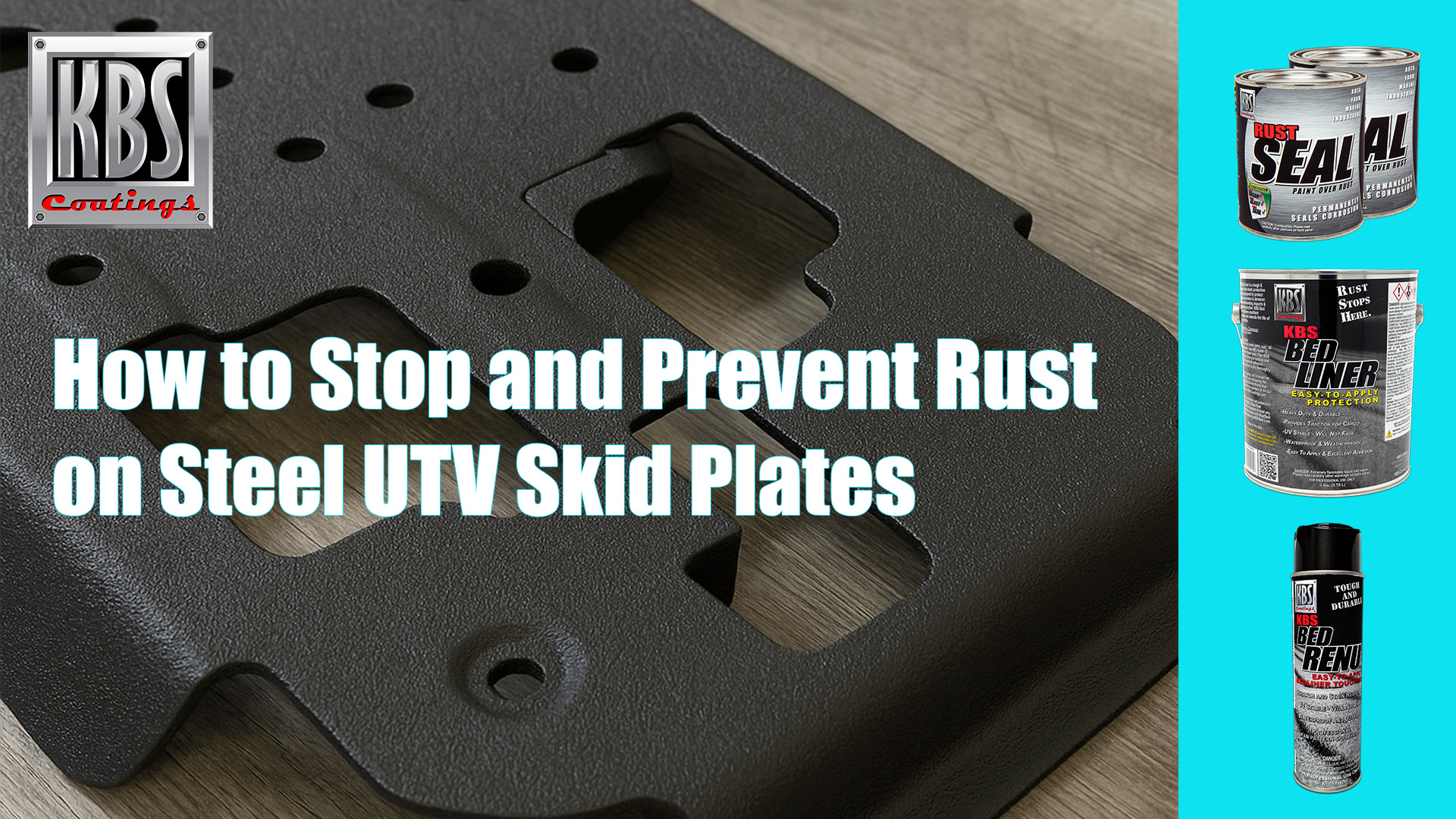
Skid plates take the hits so your UTV's engine, driveline, chassis, and belly pan do not. Steel plates handle that job better than anything else because they bend less and puncture less, but they have one weakness aluminum and UHMW do not: they rust. This guide covers how to stop rust on a steel UTV skid plate with KBS RustSeal and keep it stopped with KBS Bed Liner or KBS Bed Renu.
- What Are UTV Skid Plates Made Of?
- Why Does Rust Form on Steel UTV Skid Plates?
- What Is the Best Coating for UTV Skid Plates?
- Why RustSeal Is the Right Base Coat for Steel
- Why Add KBS Bed Liner Over RustSeal?
- What Supplies Do You Need?
- How Do You Prepare Steel Skid Plates Before Coating?
- How Do You Clean Skid Plates Before Applying RustSeal?
- Do You Need RustBlast Before RustSeal?
- How Do You Apply RustSeal to UTV Skid Plates?
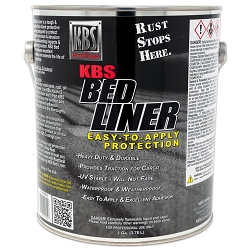
- How Do You Apply KBS Bed Liner?
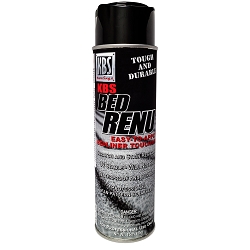
- How Do You Apply KBS Bed Renu?
- Can Bed Liner Be Repaired If Skid Plates Get Damaged?
- Frequently Asked Questions
- Conclusion

What Are UTV Skid Plates Made Of?
UTV skid plates come in three materials: steel, aluminum, and UHMW plastic. Steel gives you the best impact and puncture resistance and usually the lowest price, at the cost of weight and a rust problem once the finish is breached. Aluminum is lighter and does not rust but dents more easily. UHMW slides over obstacles well and flexes instead of denting, but it is not as stiff as steel.
How they compare under a machine:
- Steel: most impact resistant, best puncture resistance, typically the most affordable, heavier than the alternatives, and vulnerable to rust wherever the coating gets damaged.
- Aluminum: lighter than steel, does not rust, dents more easily, and shows minimal corrosion unless it lives around saltwater or road salt.
- UHMW plastic: will not rust or corrode, extremely slick over rocks and logs, flexes rather than dents, and is less rigid than steel.
Plenty of riders still choose steel and accept the weight, because a plate that flexes and slides is no help when a rock wants to go through it. That trade only works if you deal with the rust.
Why Does Rust Form on Steel UTV Skid Plates?
Rust forms on a steel skid plate as soon as trail damage exposes bare metal to moisture and oxygen. Factory powder coat and paint look great new, but rocks, stumps, and gravel gouge straight through them. Skid plates also trap mud and stay wet longer than anything else on the machine, so oxidation starts sooner and spreads faster down there.
Add winter road salt or a creek crossing to that and a strong plate turns into a thin, pitted one over a couple of seasons. Ordinary paint does not fix it, because ordinary paint sits on top of the metal instead of sealing it. What the plate needs is a coating built to lock moisture and oxygen out of the steel permanently.

What Is the Best Coating for UTV Skid Plates?
The best coating for a steel UTV skid plate is a two-layer system: KBS RustSeal to seal the metal, topped with KBS Bed Liner or KBS Bed Renu to take the abrasion and impact. Neither product does the other's job. RustSeal stops the corrosion, and the bed liner layer protects RustSeal from the trail.
That combination works on any of these:
- Brand-new steel skid plates, coated before they ever go on the machine
- Plates with scratches, chips, or worn-through powder coat
- Plates carrying surface rust
- Plates that live in mud, snow, road salt, or standing water
Coat a new plate before you install it. The underside of a mounted skid plate is miserable to prep and paint well, and twenty minutes on the bench beats a weekend on your back.
Why RustSeal Is the Right Base Coat for Steel
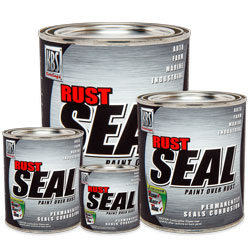
KBS RustSeal is a 1K moisture-cured urethane that cures rock hard but stays flexible, which is what a skid plate needs when it flexes over a rock. It bonds directly to tightly rusted, sandblasted, or abraded steel and seals the surface against moisture, oxygen, and salt. Two thin coats at 2 mils each build the recommended 4 to 5 mils dry film thickness.
What that gets you on a skid plate:
- Bonds to bare metal or to tightly adhered rust that has been etched with RustBlast
- Flexes with the plate instead of cracking off it
- Brushes, rolls, or sprays, and self-levels as it dries
- Reduces 5 to 10 percent with KBS #1 Thinner for spray work
RustSeal has one limitation worth knowing before you stop there. It is not meant to be the final finish on a surface that lives in direct sunlight. Prolonged UV exposure alters its color and sheen. The rust protection does not degrade, but the look does, which is the second reason to topcoat.
Why Add KBS Bed Liner Over RustSeal?
KBS Bed Liner goes over RustSeal because it absorbs the physical abuse RustSeal is not built to take. It is a thick, flexible polyurethane with a satin finish that resists corrosion and abrasion, withstands impacts, and improves traction. It is also UV stable, so it protects the RustSeal underneath from the sun that would otherwise dull it.
On a skid plate, that layer is doing four jobs:
- Absorbing rock and debris strikes that would otherwise chip through to metal
- Resisting abrasion from sand, gravel, and whatever the trail drags across it
- Shielding RustSeal from UV so the finish holds its color
- Letting the plate slide over obstacles instead of catching on them
What Supplies Do You Need?
A full skid plate job takes the three KBS 3-Step products plus a topcoat and basic prep tools. For a typical UTV skid plate set, a pint or quart of RustSeal is enough: at the recommended two coat application a pint covers about 25 square feet and a quart about 50. Buy the 3-Step System together and you have the prep chemistry matched to the coating.
- KBS Klean water-based cleaner and degreaser
- KBS RustBlast rust remover and metal etch
- KBS RustSeal in your color of choice
- KBS Bed Liner or KBS Bed Renu
- 320 grit sandpaper, a wire brush or wire wheel, and a Scotch-Brite pad
- Bristle brush, solvent-resistant textured foam roller, or a KBS HVLP Spray Gun or Schutz Underseal Spray Gun
- KBS #1 Thinner if you plan to spray RustSeal
- Protective gloves and safety glasses
How Do You Prepare Steel Skid Plates Before Coating?
Prep the plate by removing every bit of loose rust, flaking paint, and failing powder coat with a wire brush, 320 grit sandpaper, or sandblasting. RustSeal is only as sound as the surface under it, so anything that can lift later has to come off now. Coating that is still tightly bonded can stay, as long as you scuff it.
Step 1: Strip what is loose
Work the plate with a wire wheel or 320 grit until nothing flakes off under a scraper. Sandblasting is the ideal option here if you have access to it, since freshly blasted steel gives RustSeal the best profile it can get.
Step 2: Scuff what is staying
Scuff any remaining sound coating with 320 grit so RustSeal has a tooth to grip. A glossy factory finish that has not been scuffed is one of the most common causes of adhesion failure on a topcoated part.

How Do You Clean Skid Plates Before Applying RustSeal?
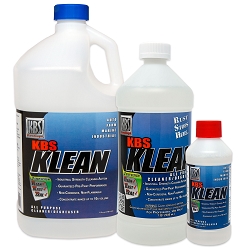
Clean the plate with KBS Klean mixed roughly 5 parts hot water to 1 part cleaner, scrubbing for 5 to 10 minutes with a bristle brush or scouring pad. Rinse thoroughly with water before it dries, then let the plate dry completely. KBS Klean is water-based, so it lifts mud, grease, and fingerprints without leaving the invisible residue that solvent cleaners leave behind.
Use hotter water for better cleaning action, and give heavily soiled plates a longer soak if the first pass does not get them clean. Do not skip this because the plate "looks clean." Fingerprints alone carry enough oil to cost you adhesion. Full instructions are on the KBS Klean directions page.

Do You Need RustBlast Before RustSeal?
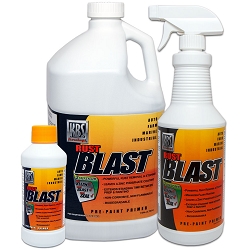
Yes, unless the steel was just sandblasted. Freshly sandblasted metal handled with gloved hands takes RustSeal directly once the loose dust is blown off. Every other surface needs KBS RustBlast to dissolve remaining rust, neutralize oxidation, and etch the steel so RustSeal has something to bite into.
Plastic media, bead, and soda blasting are the exception to the exception. None of them leave enough abrasion for a direct RustSeal application, so those surfaces still get RustBlast.
How to apply RustBlast on a skid plate
- Apply RustBlast full strength to a dry surface with a spray bottle, brush, or roller
- Keep the surface wet for at least 30 minutes on smooth steel, 40 to 60 minutes on moderate rust, or 1 to 2 hours on heavy rust. Do not let it dry
- Reapply as needed and scrub intermittently with a Scotch-Brite pad
- Rinse thoroughly with water and let the plate dry completely
- Leave the whitish zinc phosphate film behind. It prevents flash rust and helps RustSeal adhere
- See the RustBlast directions page for the full procedure

How Do You Apply RustSeal to UTV Skid Plates?
Apply a minimum of 2 thin covering coats of RustSeal at 2 mils each, between 55 and 82 degrees F. Because a skid plate sits in water and mud constantly, go with 3 coats. Recoat once the previous coat is dry to the touch and leaves no fingerprint, which usually takes 2 to 6 hours depending on temperature and humidity.
- Application: brush, roller, or spray. RustSeal self-levels, so brush marks flow out. Do not overwork the brush
- Conditions: 55 to 82 degrees F, moderate to dry air. RustSeal is moisture-cured, so avoid rain and high humidity. A damp surface can bubble
- Stirring: stir several minutes, touching the bottom of the can and lifting to redisperse settled pigment. Do not shake instead of stirring
- Never paint from the can. Pour a working amount into a separate steel or glass container and reseal the original can immediately
- Thinning: only needed for spraying. Reduce 5 to 10 percent with KBS #1 Thinner. Never lacquer thinner
- Recoat window: 2 to 6 hours. If more than 8 hours pass, wait a full 24 hours and lightly scuff with 320 grit or a green Scotch-Brite pad before the next coat
- Over rust: RustSeal goes over tightly adhered surface rust that has been treated with RustBlast
- Full details are on the RustSeal directions page
Thin coats are not a suggestion. A heavy coat skins over like pudding and traps solvent gas underneath, which is what causes the bubbling people occasionally see and blame on the paint.
How Do You Apply KBS Bed Liner?
Scuff the cured RustSeal with 320 grit, then apply 2 to 3 coats of KBS Bed Liner with the air and plate temperature between 50 and 90 degrees F. The surface has to be clean, bone dry, and non-glossy. A gallon covers up to 250 square feet, so a quart handles most skid plate sets with room to spare.
- Mix before use with a drill mixer if you have one, so the product goes on uniformly
- Do not thin it. Adding thinner raises VOC content and can change how the coating performs
- Spraying: use a Schutz style or HVLP gun, test on cardboard first, and adjust air pressure to set the texture. Less pressure gives more texture
- Spray 18 to 24 inches away in long sweeping motions, varying your spray paths so no shadowing pattern forms. Wipe the tip between passes
- First pass goes on thin to give the heavier coats a base. That is what keeps Bed Liner from running off smooth steel or sagging on the vertical faces of a plate
- Rolling: use a high quality solvent-resistant textured foam roller. Rolled Bed Liner looks good
- Coats: 2 to 3 for maximum durability. Recoat once the previous coat is dry to the touch
- Cure: wait 8 to 10 hours before handling the surface, and allow 72 hours of full cure before the plate goes back under the machine
- See the KBS Bed Liner directions page for the complete procedure
How Do You Apply KBS Bed Renu?
KBS Bed Renu is the aerosol version of KBS Bed Liner, so you get the same protection without mixing or a spray gun. Spray it at 50 to 90 degrees F in 70 percent humidity or lower, holding the can 8 to 10 inches from the plate. One 15 oz aerosol covers up to 30 square feet, which suits a single plate or a repair.
- Prep the same way: clean, dry, scuffed RustSeal underneath
- Shake the can for at least a minute after you hear the mixing ball, then shake about 10 seconds every 1 to 2 minutes while spraying
- Hold it 8 to 10 inches out and move back and forth in overlapping passes, releasing the sprayhead at the end of each stroke rather than holding it down
- Thin coats only. One or two thin covering coats handle general applications. Runs and sags mean you are spraying too heavy or too close
- Recoat once the previous coat is dry to the touch, typically 1 to 2 hours depending on humidity. Apply consecutive coats within 24 hours
- Full cure is usually reached within 48 hours
- See the KBS Bed Renu directions page for the full instructions
Can Bed Liner Be Repaired If Skid Plates Get Damaged?
Yes. When a rock gouges through the Bed Liner topcoat, KBS Bed Renu repairs it. It is the same coating in an aerosol can, so it bonds to the original Bed Liner and matches the texture closely. Clean the area, scuff it, and lay down thin covering coats until the repair blends in.
You are spot-repairing damage as it happens instead of stripping and recoating a plate every season, and the RustSeal underneath keeps working the whole time. If a hit goes all the way through to bare metal, treat that spot with RustBlast and RustSeal before you spray the Bed Renu.
Frequently Asked Questions About Coating UTV Skid Plates
Can you paint over rust on a UTV skid plate?
Yes, over tightly adhered surface rust that has been treated with RustBlast. RustSeal is designed to bond to a rusted, etched profile. What you cannot coat over is loose, flaking rust or failing powder coat, because RustSeal will only be as sound as whatever it is stuck to.
Do you have to use RustBlast before RustSeal?
Yes, with one exception. Freshly sandblasted steel handled with gloved hands can take RustSeal directly after the loose dust is blown off. Every other surface needs RustBlast to neutralize oxidation and etch the metal. Plastic media, bead, and soda blasting do not leave enough profile, so those surfaces still need RustBlast.
Should you leave the white residue after RustBlast?
Leave it. The whitish film is zinc phosphate, and RustBlast deposits it deliberately. It prevents flash rust between prep and paint, and it improves the adhesion of RustSeal. Rinse RustBlast off before it dries so the layer stays thin rather than heavy and powdery.
Can you spray KBS Bed Liner straight onto a bare steel skid plate?
Not if you want the rust to stay stopped. KBS Bed Liner is an abrasion and impact coating, not a rust preventive. On bare or rusted steel, run the KBS 3-Step System first with KBS Klean, RustBlast, and RustSeal, then use Bed Liner as the armor layer over the sealed metal.
How long before a coated skid plate can go back on the UTV?
Allow 72 hours of cure after the final coat of KBS Bed Liner before putting the skid plate back into service. KBS Bed Renu reaches full cure in roughly 48 hours. Bolting a plate up early is what causes fastener imprints and early chipping at the mounting points.
Can you touch up KBS Bed Liner with KBS Bed Renu?
Yes. KBS Bed Renu is the aerosol version of KBS Bed Liner, so it bonds to the original coating and matches the texture closely. Clean the gouged area, scuff it, and spray thin covering coats until the repair blends, then give it 48 hours to cure.
How much RustSeal does a UTV skid plate take?
At the recommended two coat application, a pint of RustSeal covers about 25 square feet and a quart covers about 50 square feet, which is more than enough for a typical skid plate set. Plan on 30 to 40 percent less coverage on sandblasted or heavily pitted steel.
Conclusion: The Best Way to Protect Steel UTV Skid Plates
The long-term answer for a steel UTV skid plate is RustSeal over properly prepped metal, topped with KBS Bed Liner or KBS Bed Renu. RustSeal seals the steel against the moisture, oxygen, and salt that start corrosion. The bed liner layer absorbs the rock strikes and abrasion that would otherwise breach it, and blocks the UV that would dull RustSeal on its own.
The process is the same on a new plate or a rusted one: strip what is loose, clean with KBS Klean, etch with RustBlast, seal with RustSeal, armor it with Bed Liner. Keep a can of Bed Renu on the shelf for the first rock that leaves a mark.

Tagged Products