

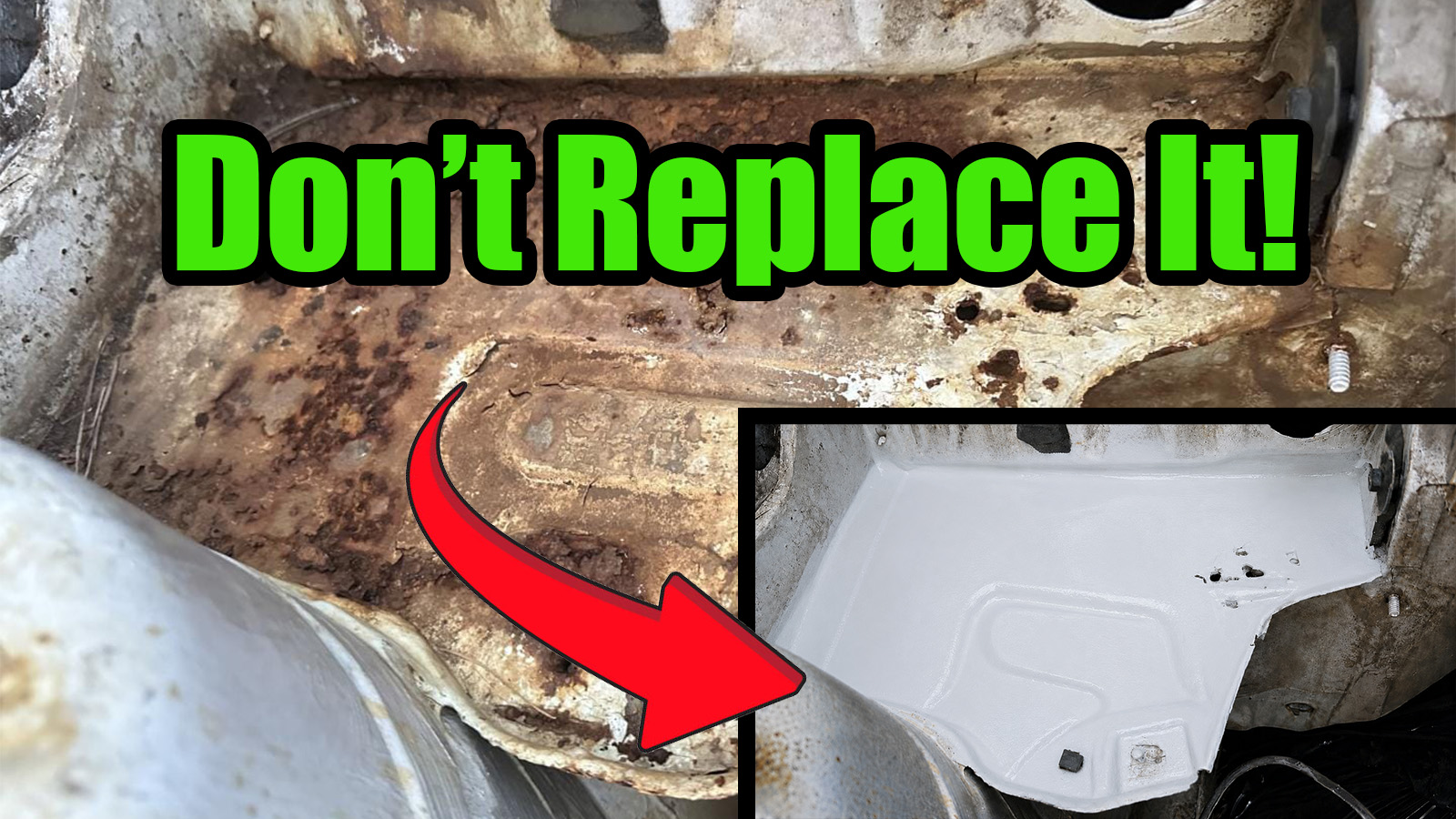
Whether you're restoring a rusted battery tray or protecting one from future corrosion, long-term results require removing existing rust, neutralizing battery acid residue, properly preparing the metal, and applying a durable, corrosion-resistant coating. Routine battery inspections and prompt cleanup of leaks help prevent future rust, extend the life of the battery tray, and protect surrounding engine compartment components.
- Why Is My Battery Tray Rusting?
- What Problems Can a Rusty Battery Tray Cause?
- Can a Rusted Battery Tray Be Repaired?
- Tools and Materials Needed
- What Are the Steps to Restore a Battery Tray?
- Inspect the Finished Repair
- Maintain the Repair to Maximize Service Life
- Frequently Asked Questions
- Common Mistakes That Can Cause Battery Tray Rust to Return
- Protect Your Battery Tray for Long-Term Corrosion Resistance
Why Is My Battery Tray Rusting?
Battery trays commonly rust because battery acid, moisture, road salt, and debris become trapped beneath the battery, where they slowly break down the protective coating and expose the metal to corrosion. When the battery is removed, it's common to find corrosion that extends well beyond the visible rust, often hidden beneath intact paint or in areas that are difficult to inspect.
The most common causes include:
- Battery acid residue trapped beneath the battery
- Standing water that cannot drain or evaporate
- Dirt, leaves, and other debris that trap moisture against the metal
- Road salt that accelerates corrosion
- Hidden areas beneath the battery that are difficult to inspect and clean

What Problems Can a Rusty Battery Tray Cause?
A rusty battery tray can lead to problems that extend beyond surface corrosion. During battery tray restoration, close inspection often reveals that corrosion has weakened the metal enough that the battery is no longer securely supported. As the tray deteriorates, battery movement can damage surrounding components and allow corrosion to spread throughout the engine compartment.
A rusted battery tray can cause:
- The battery to no longer sit securely in the tray
- The battery hold-down bracket to loosen or no longer tighten properly
- Battery movement while driving, especially over rough roads
- Increased vibration that can shorten battery life and damage internal battery components
- A greater risk of electrical shorts or damaged battery cables if the battery shifts out of position
- Rust to spread into nearby sheet metal, battery supports, brackets, and other engine compartment components
Can a Rusted Battery Tray Be Repaired?
Yes. In many cases, a rusted battery tray can be repaired if corrosion is identified before the metal has lost its structural integrity. The most reliable way to determine whether the tray should be repaired or replaced is to remove the battery and perform a thorough inspection, as corrosion often extends well beyond what is visible from above.
When inspecting the battery tray:
- Inspect underneath the battery, not just the visible tray surface
- Check the battery hold-down bolts and hardware for hidden corrosion
- Examine beneath the battery hold-down clamp, around spot welds, seams, and corners where battery acid and moisture commonly collect
- Look for heavy pitting, rust-through, loose brackets, or other signs that the tray has been structurally weakened
If inspection confirms the tray is still structurally sound, removing the corrosion, properly preparing the surface, and applying a durable rust-prevention coating can often restore and protect the original tray. If corrosion has caused extensive rust-through or compromised the tray's ability to securely support the battery, replacement is typically the better long-term solution.

Tools and Materials Needed
Safety Equipment
- Safety glasses
- Chemical-resistant gloves
Tools
- Wire wheel, sandpaper (320 grit), or sandblaster, for removing loose rust and smoothing surfaces
- Scotch-Brite pads, to help break up stubborn contamination
- Bucket, for mixing KBS Klean
- Sponge, for applying cleaners and rinsing surfaces
- Scrub brush, to agitate heavy dirt and rust areas
- Paint brushes or spray equipment, for applying coatings evenly
Materials
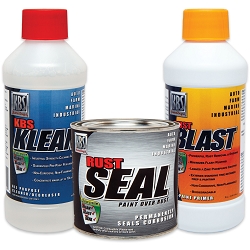
- KBS Klean, a water-based cleaner and degreaser for removing oil and grime
- KBS RustBlast, a rust remover and zinc phosphate surface prep
- KBS RustSeal, a moisture-cured coating that stops and prevents rust
- Baking soda
- Water
What Are the Steps to Restore a Battery Tray?
Restoring a battery tray involves more than removing visible rust and applying paint. Any remaining battery acid should first be neutralized to help prevent continued corrosion. The tray is then cleaned, stripped of rust, prepared for coating, and protected with durable coatings designed to resist future corrosion.
The restoration process described below uses the KBS Coatings System Sampler Kit because long-lasting corrosion protection depends on proper surface cleaning, preparation, and coating application. The products are designed to work together as a complete system to promote coating adhesion and help protect the battery tray from future rust and corrosion.
Always wear chemical-resistant rubber gloves and safety glasses when using the KBS Coatings System Sampler Kit. Work in a well-ventilated area and follow all safety precautions and application instructions provided on each product label.
Battery tray restoration steps:
- Remove the battery tray when possible
- Neutralize any remaining battery acid
- Remove rust, corrosion, and failed coatings
- Clean and degrease the surface
- Condition the metal for coating
- Apply a rust-preventive coating
- Inspect the finished repair
- Maintain the repair
Remove the Battery Tray When Possible
Whenever practical, removing the battery tray before beginning the restoration process provides better access to all surfaces and makes each of the following steps easier to perform. If the tray cannot be removed, the restoration can still be completed with additional care to protect surrounding components and reach all accessible areas.
Neutralize Any Remaining Battery Acid Before Restoring the Battery Tray
Before restoring a battery tray, any remaining battery acid should be neutralized to help stop ongoing corrosion and prevent acid residue from interfering with coating adhesion. Simply washing it off with water won't stop microscopic acid residue hidden in the metal's pores, which will quickly ruin your new paint job and cause rust. A baking soda and water solution is widely recommended because it safely neutralizes residual battery acid before rust removal and surface preparation begin.
It is recommended to neutralize the battery acid before removing rust and loose paint, as scraping or wire-brushing a rusty, acid-contaminated battery tray can release corrosive dust and rust particles into the air, increasing the risk of contact with your skin, eyes, and surrounding vehicle components.
Mix approximately 1 tablespoon of baking soda with 1 cup of water to create a neutralizing solution. Apply the mixture liberally with a spray bottle, sponge, or brush, ensuring it reaches seams, corners, spot welds, and beneath the battery hold-down hardware where battery acid commonly collects.
The solution will typically bubble as it reacts with residual acid. Once the bubbling stops, rinse the area thoroughly with clean water and allow the metal to dry completely before proceeding with rust removal and surface preparation.

Remove Rust, Corrosion, and Failed Coatings
After neutralizing battery acid, remove all rust, paint, and failing coatings. Thorough surface preparation is essential because coatings achieve strongest adhesion and longest-lasting protection when applied to a stable surface. Pay particular attention to seams, enclosed cavities, and other hard-to-reach areas where hidden corrosion may be present.
Use one of the following:
- Wire wheel
- 320-grit sandpaper
- Sandblasting
If some coating is still firmly adhered, scuff with 320-grit sandpaper to give coatings a tooth to grip.
Note that light surface rust can remain when treated with KBS RustBlast and coated with KBS RustSeal. Also, KBS RustSeal can be directly applied to newly sandblasted metal surfaces that have been handled with gloved hands. No further preparation other than blowing off loose dust is required.

Clean and Degrease the Surface
Once loose rust and paint have been removed, and any well-adhered existing coatings have been scuffed, the battery tray must be completely cleaned to remove grease and other contaminants that can interfere with coating adhesion and reduce the durability of the finished coating.
Use KBS Klean to thoroughly remove dirt, grease, oil, and other contaminants from the battery tray before surface preparation. The residue-free cleaner prepares the metal for KBS RustBlast without leaving behind films that can reduce coating adhesion or the long-term durability of the protective coating.
Use KBS Klean as directed:
- Mix KBS Klean with hot water using the appropriate dilution ratio: 1 part KBS Klean to 5 parts water for moderately soiled surfaces, or 1 part KBS Klean to 1 part water for heavily soiled surfaces
- Scrub the surface with a bristle brush or scouring pad for 5-10 minutes, or as long as needed to remove dirt, grease, and other contaminants. For heavily soiled surfaces, allow KBS Klean to soak for up to 24 hours or longer before scrubbing to improve cleaning performance
- Rinse thoroughly with water after cleaning and dry completely. Do not allow KBS Klean to dry before rinsing
See the full KBS Klean application instructions, including recommended dilution rates.

Condition the Metal for Coating
Before applying the rust-preventive coating, the metal should be properly conditioned to neutralize remaining oxidation and create a surface that promotes strong coating adhesion.
To accomplish this, apply KBS RustBlast to bare metal and areas with light rust or corrosion. KBS RustBlast chemically prepares the surface by neutralizing oxidation, micro-etching the metal, and depositing a zinc phosphate conversion coating for improved coating adhesion.
Use KBS RustBlast as directed:
- Liberally apply KBS RustBlast full-strength to a dry surface using a spray bottle or brush
- Scrub intermittently with a Scotch-Brite pad
- Keep the surface wet for a minimum of 30 minutes for smooth surfaces, 40-60 minutes for moderately rusted surfaces, and 1-2 hours for heavily rusted surfaces
- Re-apply often and as needed. Do not allow KBS RustBlast to dry on the surface
- After treatment, rinse thoroughly with water and then allow to dry completely
- A whitish zinc-phosphate residue will remain. This is beneficial and prevents flash rust, so do not remove it
See the full RustBlast application instructions.

Apply a Rust-Preventive Coating
Once the metal has been properly prepared, a rust-preventive coating must be applied to seal the surface from moisture, oxygen, battery acid, and other corrosive contaminants. For battery tray applications, the coating should also resist battery acid to help maintain long-term corrosion protection. Achieving lasting results depends on both proper surface preparation and a coating that bonds tightly to the metal and withstands harsh conditions.
For this step, KBS RustSeal creates a durable, corrosion-resistant barrier that isolates the metal from moisture, chemicals, and other corrosive contaminants. KBS RustSeal is a battery acid-resistant, single-component, moisture-cured urethane coating engineered for long-term corrosion protection. Unlike many conventional coatings, it can be applied directly over properly prepared surface rust, as well as bare and treated steel.
KBS RustSeal cures to a hard yet flexible finish that resists impacts, abrasion, chipping, and peeling. Its self-leveling formula produces a smooth finish with minimal brush marks and is available in 11 colors.
Use KBS RustSeal as directed:
- Choose your application method: brushing, rolling, or spraying
- Optimal temperature: apply between 55-82°F, avoiding rain or high humidity
- Mix thoroughly: stir from the bottom of the can to the top before use. Do not shake the can
- Thinning/reducing: when spraying, thinning is generally not required, but if needed, 5-10% is normally adequate. Use KBS #1 Thinner or Xylene only
- Apply in thin overlapping coats: apply two to three thin, even coats; multiple thin coats promote proper curing
- Re-coating: once the previous coat is dry to the touch (2-6 hours), apply additional coats within 8 hours
- Coating over rust: KBS RustSeal can be applied over light surface rust treated with KBS RustBlast
- Cure time: while the tray can be handled after 1 day, wait 7 days for full cure before reassembly or use
See the full RustSeal application instructions.

Inspect the Finished Repair
A properly restored battery tray should be inspected before the coating is placed into service. Taking a few minutes to verify the finished restoration helps ensure the protective coating has been applied correctly and that the repaired areas are fully protected for long-term corrosion resistance.
A final inspection should include the following:
- Check coverage and finish quality
- Verify complete protection of repaired areas
- Correct imperfections if necessary

Maintain the Repair to Maximize Service Life
A restored battery tray will last longer when it is protected from the conditions that cause corrosion. Regular maintenance helps identify potential problems early and preserves the protective coating, reducing the likelihood of rust returning and extending the service life of the restoration.
Routine maintenance should include:
- Routine inspections
- Cleaning and maintenance
- Touch up damaged areas promptly
Frequently Asked Questions About Protecting Battery Trays from Acid and Rust
How do I know if my battery tray should be replaced instead of restored?
If the battery tray is structurally sound, it can usually be restored. Replacement is typically recommended only when corrosion has caused severe rust-through, heavy metal loss, or structural weakening that prevents the tray from securely supporting the battery.
Can I paint over a rusty battery tray?
No. Painting over a rusty battery tray can lead to poor adhesion and recurring corrosion. For long-lasting protection, remove rust, clean with KBS Klean, condition the metal with KBS RustBlast, and protect it with KBS RustSeal.
Why should battery acid be neutralized before restoring a battery tray?
Battery acid should be neutralized before restoration because residual acid can continue attacking the metal and interfere with coating adhesion. Neutralizing the acid with a solution of baking soda and water helps stop ongoing corrosion, improves coating performance, and reduces the likelihood of rust returning beneath the new protective coating.
What is the best coating for a battery tray?
The best coating for a battery tray is one that bonds tightly to properly prepared metal and resists moisture, road salt, chemicals, and battery acid. KBS RustSeal is a battery acid-resistant, rust-preventive coating designed to provide long-term corrosion protection for battery tray applications.
What causes rust to return after a battery tray has been restored?
Rust commonly returns when battery acid residue isn't neutralized, surface preparation is incomplete, or the protective coating is damaged. Routine inspections and prompt touch-ups help prevent moisture and contaminants from reaching the metal and starting the corrosion process again.
Is RustSeal resistant to battery acid, chemicals, fuel, and road salts?
Yes. KBS RustSeal is impervious to road salts and resistant to fuels, oils, acids, and alkalis. Its non-porous, ceramic-like barrier prevents moisture and oxygen from reaching the metal, stopping corrosion at the source.
How many coats of KBS RustSeal do I need?
A minimum of two coats is required to reach the recommended 4-5 mils dry film thickness. One coat alone is not sufficient for long-term protection.
Common Mistakes That Can Cause Battery Tray Rust to Return
- Failing to neutralize remaining battery acid
- Inadequate surface preparation
- Applying the coating too thin
- Skipping seams, corners, and other hard-to-reach areas
- Painting over rust without proper preparation
- Using ordinary spray paint instead of a rust-preventive coating
- Failing to coat the underside of the battery tray
Protect Your Battery Tray for Long-Term Corrosion Resistance
With proper preparation and routine maintenance, a restored battery tray can provide many additional years of reliable service while protecting both the battery and surrounding engine compartment from future corrosion.
Because KBS RustSeal resists the corrosive effects of battery acid, it's also an excellent choice for protecting other metal components exposed to moisture, chemicals, road salt, and other harsh conditions. Explore additional RustSeal projects to see how it can help prevent corrosion in a wide range of automotive, marine, industrial, and restoration applications.
Tagged Products