

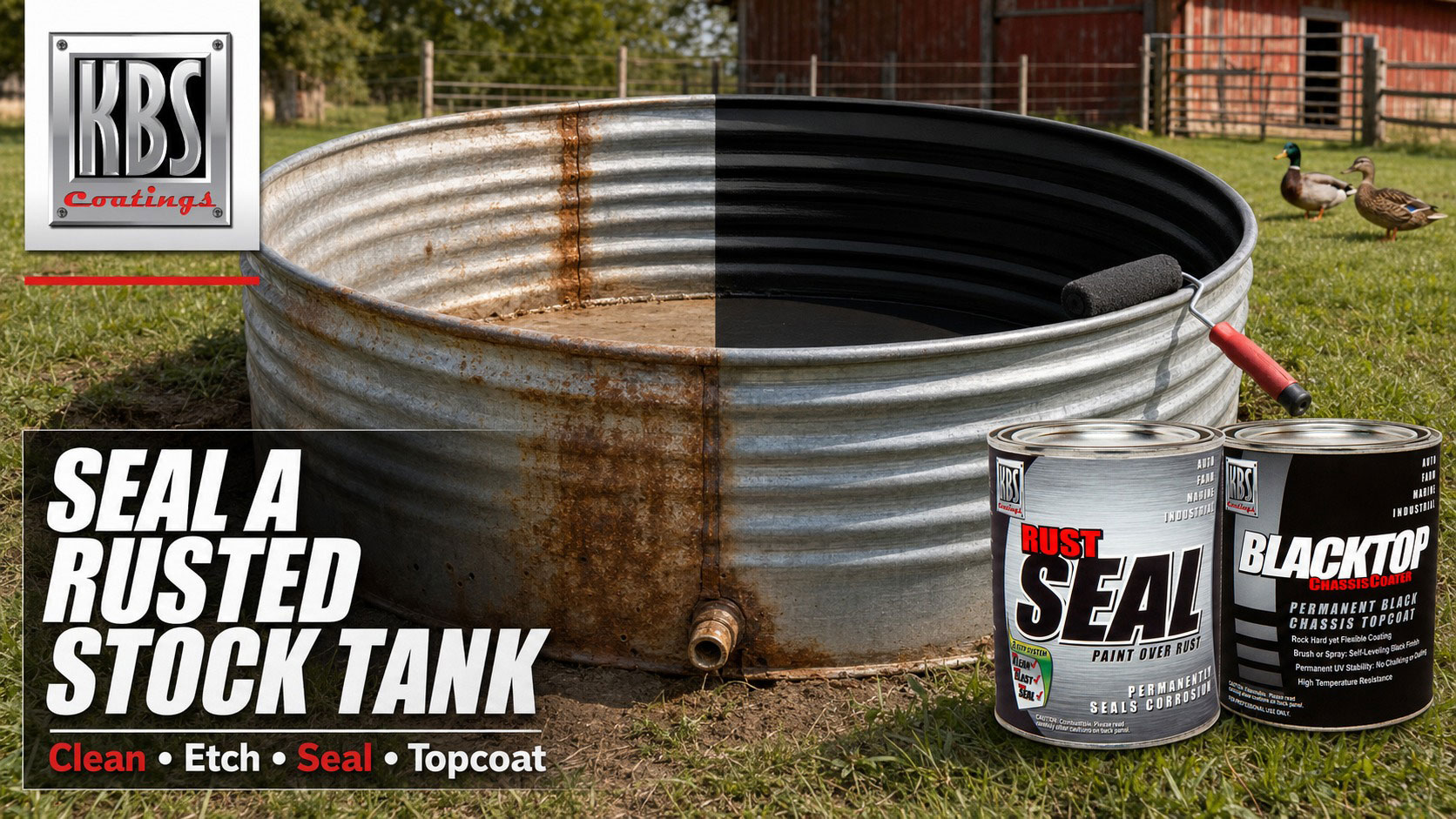
A galvanized stock tank buried in the ground, whether it's watering livestock or, in one customer's case, doubling as a duck pond, takes a beating. Standing water, weather, and years of use eventually wear through the galvanizing and let rust take hold. The good news: a tank doesn't need to be replaced just because it's rusting, or even if it has a few small holes. Cleaned, etched, sealed, patched, and topcoated with the right products in the right order, it can go back into service for years. This guide walks through the exact process, using KBS Klean, RustBlast, RustSeal, and BlackTop, based on a real customer question about sealing a 2-foot-deep, 10-foot-wide open-top galvanized tank.
Why Galvanized Stock Tanks Rust
Galvanizing is a zinc coating that protects the underlying steel, but it isn't permanent. Constant water contact, especially in a buried tank with a drain fitting, along with scrubbing, cleaning, and general wear will eventually break down the zinc layer. Once that happens, the bare steel underneath is exposed and starts to corrode. A tank used as a duck pond has it even worse: constant standing water, organic waste, and regular cleaning to remove algae and muck all accelerate the process. The fix isn't a temporary patch. It's removing the surface contamination and rust, creating a surface the new coating can actually bond to, and then sealing it with a system built to handle permanent water exposure.
Supplies You'll Need
This job uses the KBS 3-Step Rust Prevention System, plus a UV-stable topcoat for a tank that lives outdoors:
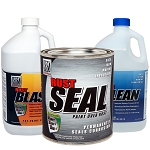
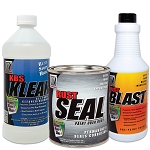
- KBS Klean - cleaner and degreaser, Step 1
- RustBlast - rust remover, metal etch, and zinc phosphate pre-primer, Step 2
- RustSeal - rust encapsulating coating, Step 3
- BlackTop - UV-stable topcoat for lasting color and gloss outdoors, Step 5
If the tank has any actual holes, not just surface rust, you'll also need a patch product for Step 4, applied after RustSeal and before BlackTop (optional, only if needed):
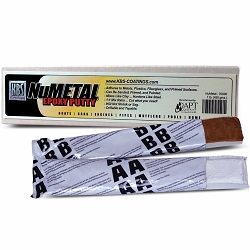
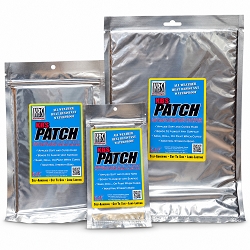
- KBS NuMetal Epoxy Putty or KBS Patch - patches pinholes and small holes
For a tank this size (roughly 140 sq. ft. of interior surface for a 10-ft round, 2-ft deep tank, floor plus walls), plan on at least a gallon of RustBlast, a gallon of RustSeal for two coats, and a gallon of BlackTop, and lean toward a second gallon of RustSeal if you're doing three coats for the added water exposure.
Step-by-Step: Sealing the Tank
Step 1: Drain and Clean with KBS Klean
Drain the tank completely and remove any standing muck, algae, or debris. Scrub the interior with KBS Klean, a concentrated, water-based degreaser that cuts through grime, algae, and biological residue without leaving behind a film that would interfere with adhesion. Rinse thoroughly and let the tank dry completely before moving to the next step.
Step 2: Etch with RustBlast
RustBlast removes any remaining rust and etches the galvanized surface, leaving a zinc phosphate layer that gives RustSeal something to grip. Apply full strength by brush or sprayer and keep the surface wet for at least 30 minutes. Rinse and allow the tank to dry fully.
Step 3: Seal with RustSeal
Apply RustSeal in thin, even coats. Two coats minimum is standard, and for tanks with constant water exposure, like this one, three coats is the better call. RustSeal cures to a hard, non-porous barrier that locks out water and air, and it's the same core chemistry used to seal fuel tanks, so it's well suited to permanent water contact. Let each coat cure per the product directions before applying the next.
Step 4: Patch Any Holes Over the Sealed Surface
If the tank has actually rusted through anywhere, whether it's a pinhole or a small hole around the drain fitting, patch it now, after RustSeal rather than before. Patching over a surface that's already cleaned, etched, and sealed gives the patch a stable, corrosion-free base to bond to instead of raw rusted metal. Two KBS products handle this depending on the repair: KBS NuMetal Epoxy Putty is a two-part epoxy putty that mixes like clay, bonds to damp or wet surfaces, and will even cure underwater, making it a good fit for pinholes or irregular gaps on a tank you can't fully dry out. For a cleaner puncture or a larger area, KBS Patch is a fiberglass-reinforced polyester patch made specifically for watertight repairs on water tanks and drain pipes; it sticks down over the hole and cures in the sun or with a UV light in as little as 5 minutes. Either way, once the patch has cured it can be sanded smooth so BlackTop goes on evenly over both the RustSeal and the repair.
Step 5: Topcoat Everything with BlackTop
Because this tank sits outdoors and cures in direct sunlight, finish by coating the entire interior, RustSeal and any patched areas alike, with BlackTop. RustSeal alone isn't intended as a final UV-exposed finish; repeated sun exposure will fade or dull its color over time, even though the rust protection underneath holds up. BlackTop is formulated specifically for permanent UV stability with no chalking or fading, and applying it over RustSeal has been salt spray tested to 2,000 hours, roughly double the protection of either product alone. Coating over the patched areas too ties the whole interior together in one uniform, UV-stable finish.
Brush, Roller, or Sprayer?
Both RustSeal and BlackTop can be brushed, rolled, or sprayed. For a tank interior like this, with a flat floor, curved walls, and a drain fitting to work around, a lot of KBS customers use a combination: a roller for the large flat areas and a brush to cut in around the drain and any seams. If you'd rather spray for a faster, more even finish on the open interior surfaces, the KBS HVLP Spray Gun handles both products well, just be sure to keep the gun moving in overlapping passes to avoid runs on vertical surfaces.


Frequently Asked Questions
Can a rusted galvanized stock tank be sealed instead of replaced?
In most cases, yes, even if it has rusted through in a few spots. Clean it with KBS Klean, etch it with RustBlast, and seal it with RustSeal first. Then patch any holes over that sealed surface with KBS NuMetal Epoxy Putty or KBS Patch, a fiberglass repair patch made for watertight repairs on tanks and pipes, and finish by topcoating the whole interior, patches included, with BlackTop. Together that gives you a durable, waterproof interior that can hold up for years.
Is RustSeal safe for a tank that holds water and animals, like a duck pond?
Yes. Once fully cured, RustSeal forms a hard, non-porous, chemically resistant barrier that is routinely used inside fuel tanks, marine bilges, and holding tanks. Follow the full cure time on the product directions before refilling or reintroducing animals.
Do I need to topcoat RustSeal if the tank will sit outside in direct sun?
Yes. RustSeal is not intended as a final UV-exposed finish -- prolonged direct sunlight will cause cosmetic fading or dulling over time, though it will not affect the rust protection underneath. For a tank that sits outside, topcoat with BlackTop, which is specifically formulated for permanent UV stability with zero chalking or fading.
Can RustSeal and BlackTop be applied by brush instead of spraying?
Yes. Both RustSeal and BlackTop can be applied by brush, roller, or sprayer. For a project like a stock tank interior with corners, seams, and a drain fitting, a brush or roller often gives better control than a sprayer, though an HVLP spray gun works well for the flat interior walls and floor.
How long will RustSeal and BlackTop hold up on a tank exposed to constant water and weather?
Applied correctly over a properly cleaned and etched surface, this system is built for long-term, constant exposure. RustSeal followed by BlackTop has been salt spray tested to 2,000 hours (ASTM B117), and both products remain flexible and resist cracking, chipping, and peeling under continued water exposure and temperature swings.
Conclusion
A rusted galvanized stock tank, even one that's been buried in the ground and used as a duck pond for years, is usually a candidate for sealing rather than replacing. Clean it with KBS Klean, etch it with RustBlast, seal it with RustSeal, patch any actual holes over that sealed surface, and finish with BlackTop over the whole interior for a UV-stable exterior that won't fade or peel in the sun. Done right, the tank goes back into service with a permanent, chemical- and water-resistant interior built to last.
Tagged Products