

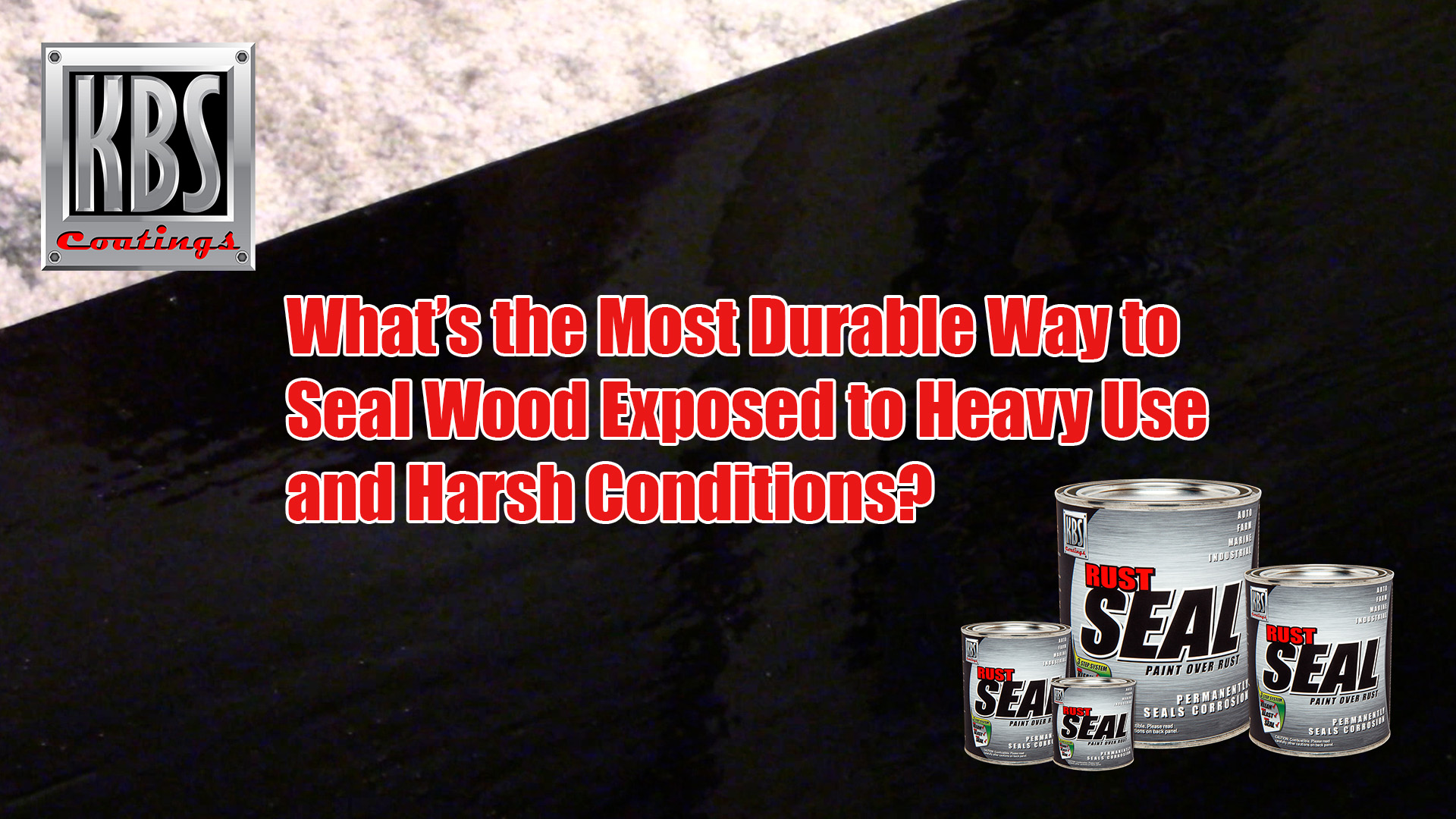
Traditional oil and water-based polyurethane sealers struggle on wood that takes real abuse. On trailer decks, workbench tops, utility shelving and shop floors, they do not hold up to standing moisture, dragged steel and spilled chemicals for long. Once water finds a path through, the wood swells, stains and starts breaking down under a coating that still looks intact.
- Why Do Polyurethane and Epoxy Wood Sealers Fail?
- Why Does RustSeal Seal Wood Better Than Polyurethane or Epoxy?
- When Should You Use RustSeal to Seal Wood?
- How Do You Prepare Wood for RustSeal?
- How Do You Apply RustSeal on Wood?
- How Much RustSeal Do You Need for a Wood Project?
- Can You Topcoat RustSeal on Wood?
- Frequently Asked Questions
- Conclusion
Why Do Polyurethane and Epoxy Wood Sealers Fail?
Polyurethane and epoxy wood sealers fail in harsh conditions for opposite reasons. Film-forming polyurethane sits on the surface and lets moisture through at every scratch, edge and fastener hole, so the wood swells and stains underneath. Epoxy is hard but has almost no flexibility, and wood never stops moving with temperature and humidity, so epoxy cracks, delaminates and peels.

Wood movement is what most sealer choices ignore. A workbench top in an unheated shop swings in moisture content between August and January, and every one of those cycles works at the bond line. A coating that cannot move with the wood is on a countdown from the day it goes on, no matter how hard the cured film is.
Why Does RustSeal Seal Wood Better Than Polyurethane or Epoxy?
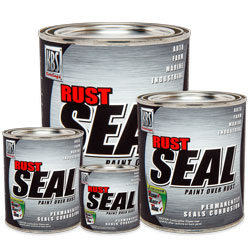
RustSeal is a 1K moisture-cured urethane, so it cures by pulling moisture out of the wood and the air rather than drying by evaporation alone. The resin soaks into the grain before it sets, forming a mechanical and chemical bond, then cures into a film that is hard but still flexible enough to move with the wood instead of cracking off it.

RustSeal's polymeric isocyanate formula and Advanced Cross-Linked Coatings Technology build a non-porous barrier that takes impact and abrasion without chipping or peeling. Wood is the ideal substrate for that chemistry: it is porous and it holds moisture, so it feeds the curing reaction from the inside instead of fighting it.
What Are the Key Benefits of Using RustSeal on Wood?
- Deep penetration. The resin soaks into the grain before it cures, so the bond is mechanical and chemical, not just a film sitting on top.
- Impermeable moisture barrier. Once cured, RustSeal blocks water vapor far better than conventional urethanes.
- Chemical resistance to water, oils, gasoline, cleaners and battery acid.
- Abrasion resistance that holds up on floors, workbenches, furniture and trailer decks.
- Self-leveling finish. High solids and the resin structure let brush marks flow out on their own.
- 11 colors in gloss, satin and matte, including Black, Silver, Grey, Off-White, Oxide Red, Galvanized and four safety colors.
When Should You Use RustSeal to Seal Wood?
Use RustSeal when the wood has to survive moisture, impact, chemicals and abrasion at once, and a household sealer is not going to get there. Trailer decks, shop floors, workbench tops, utility shelving, equipment platforms and outdoor furniture frames all fit. It is an industrial protective coating applied to wood, not a furniture finish.

RustSeal is the wrong choice for a dining table, a stair tread, or anywhere you want the grain to show through a clear finish. It is an opaque pigmented coating. If the look of the wood matters more to you than what gets dropped on it, buy a furniture finish instead.
How Do You Prepare Wood for RustSeal?
Prepping wood for RustSeal takes three steps: strip and sand the surface, wash it with KBS Klean, and confirm the wood is dry before you open the can. Skipping the drying check is the single most common way a wood job goes wrong, because trapped moisture turns into bubbles in the film.
Step 1: Remove Old Coatings and Sand the Surface
Strip any failed or flaking coating completely by sanding or scraping. Then sand the whole surface smooth to knock down splinters, raised fibers and high spots. If an existing paint or coating is still firmly adhered, leave it and scuff it with 320 grit so RustSeal has a tooth to grip.
Step 2: Clean the Wood with KBS Klean
Wash the wood to pull off dust, dirt, grime, grease and oil. Even fingerprints will interfere with adhesion.
- Mix KBS Klean with hot water at roughly 1:25. Hotter water cleans harder.
- Scrub with a sponge or bristle brush.
- Rinse with clean water before the KBS Klean dries on the surface, then let it dry.
Full dilution rates and soak times are on the KBS Klean directions page.

Step 3: Confirm the Wood Is Completely Dry
Give the wood 24 to 48 hours to dry after washing, longer in cool or still air. To check, tape a small square of plastic sheeting flat to the surface and look underneath after 24 hours. Any condensation means the wood needs more drying time before you coat it.
Moisture content matters in both directions. RustSeal needs moisture to cure, but too much of it makes the surface cure faster than the film underneath. Target 8 to 15 percent:
- Below 8 percent: the cure slows down.
- Above 15 percent: bubbles can form in the coating.
How Do You Apply RustSeal on Wood?
Apply RustSeal to wood in two stages: one thinned sealer coat that soaks into the grain, then a minimum of three thin full coats at roughly 2 mils each. Work between 55 and 82 degrees F in moderate to dry conditions, and recoat once the previous coat is dry to the touch, typically 2 to 6 hours.
Best Conditions for Applying RustSeal
- Apply between 55 and 82 degrees F (13 to 28 degrees C).
- Work in moderate to dry conditions. RustSeal is moisture-cured, so it is sensitive to what the air is doing.
- Avoid rainy or high-humidity days when keeping the surface dry is a fight.
- Humidity drives cure speed: high humidity shortens it, low humidity stretches it out.
- Never coat damp wood. Trapped moisture causes bubbling and poor adhesion.
Brush, Roll or Spray
RustSeal goes on with a bristle brush, foam brush, roller or spray equipment, and it self-levels well enough that brush marks flow out on their own. When brushing, coat an area and move on instead of working the brush back and forth, which forces the solvent out early and leaves the marks behind.
For spray work, thinning is usually not required, but reduce 5 to 10 percent if needed using only KBS #1 Thinner or xylene. Never reduce RustSeal with lacquer thinner. HVLP guns run at 25 to 35 psi air and fluid with a 1.0 to 1.6 mm tip. KBS sells a full-size HVLP spray gun and a mini HVLP spray gun for smaller pieces. Clean the gun immediately after spraying, because cured RustSeal does not come off with any solvent.
Stir RustSeal Thoroughly
Stir for several minutes before you start and often while you work. Touch the bottom of the can with the paddle and lift, repeatedly, to bring settled pigment and matting agents back into suspension. Do not shake the can instead of stirring, since that puts air bubbles into the film. Never paint straight out of the can; pour a working amount into a separate container and reseal the original.
How Do You Apply a Sealer Coat of RustSeal to Wood?
Thin RustSeal 30 to 50 percent with KBS #1 Thinner and apply one covering coat to saturate the wood. Thinned that far, it penetrates the fibers instead of bridging them, which is what locks moisture out from the inside. Let it cure 24 hours, then sand lightly with 280 to 320 grit to knock down the grain the first coat raised.
That sealer coat is the foundation for everything above it. Skip it and the full coats sit on the surface, which puts you back to the same failure mode as polyurethane.
Applying Full Coats of RustSeal
- Apply a minimum of three thin, even covering coats at roughly 2 mils each. Thin coats beat thick ones every time.
- Recoat once the previous coat is dry to the touch and does not leave a fingerprint, typically 2 to 6 hours. Stay inside 8 hours.
- Past 8 hours, wait a full 24 hours and scuff with 320 grit or a green scotch-brite pad before the next coat.
- The surface can be handled after about a day. Full cure takes 7 days.
Complete application details are on the RustSeal directions page.


How Much RustSeal Do You Need for a Wood Project?
Theoretical coverage is 400 sq. ft. per gallon at 2 mils dry film thickness, or about 200 sq. ft. per gallon at two coats on a smooth surface. Bare wood drinks the first coat, so expect 30 to 40 percent less. Budget roughly 120 to 140 sq. ft. per gallon on raw wood, and more if you are running a thinned sealer coat plus three full coats.
| Size | Coverage at 2 coats, smooth surface |
|---|---|
| 1/2 Pint (8 oz) | 12.5 sq. ft. |
| Pint (16 oz) | 25 sq. ft. |
| Quart (32 oz) | 50 sq. ft. |
| Gallon (128 oz) | 200 sq. ft. |
A 6 by 12 foot trailer deck is 72 sq. ft. of top surface. With the sealer coat and three full coats, plan on a gallon rather than trying to stretch a quart, and buy the extra thinner up front.
Can You Topcoat RustSeal on Wood?
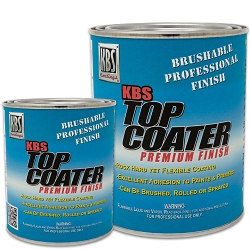
Yes, and you should on anything that sits in direct sunlight. Repeated UV exposure changes RustSeal's color and sheen, though its sealing and protective properties do not degrade. BlackTop, KBS Top Coater and KBS MAXX all fuse to RustSeal and hold their color outdoors.
A clear topcoat will not do the job here. Clear coatings like DiamondFinish Clear and KBS MAXX Clear cannot supply the UV protection RustSeal needs, so use an opaque topcoat.
For a deck or ramp that people walk on, topcoat with KBS Bed Liner mixed with sand or a traction additive. You keep the moisture barrier underneath and get a textured, UV-stable walking surface on top.
How Should RustSeal Be Prepped Before Topcoating?
Pick one of three windows, all of which get the coatings to bond and fuse together:
- Topcoat while RustSeal's final coat is dry to the touch and no longer leaves a fingerprint, usually 3 to 6 hours.
- Let RustSeal cure at least 24 hours, scuff with 320 grit, then topcoat.
- Let RustSeal cure at least 24 hours, dust it with Fusion SEP self-etching primer, give it 30 minutes, then topcoat.
Frequently Asked Questions About Sealing Wood with RustSeal
Can RustSeal be used on bare wood?
Yes. RustSeal is a moisture-cured urethane, and bare wood is porous and holds moisture, so the wood itself feeds the curing reaction. The resin soaks into the grain before it cures and locks in with both a mechanical and a chemical bond, which is why RustSeal holds on wood that flexes and moves with humidity.
How many coats of RustSeal does wood need?
Wood needs one thinned sealer coat plus a minimum of three thin covering coats at roughly 2 mils each. The sealer coat saturates the grain and blocks moisture, and the full coats build the wear surface. Thin coats always beat thick ones, because a heavy coat skins over and traps solvent underneath.
Do you have to thin RustSeal for the first coat on wood?
Yes. Thin the first coat 30 to 50 percent with KBS #1 Thinner so it penetrates the wood fibers instead of sitting on top of them. Use KBS #1 Thinner or xylene only. Lacquer thinner flashes off too fast and is not compatible with RustSeal.
What moisture content should wood be at before applying RustSeal?
Aim for 8 to 15 percent wood moisture content. RustSeal needs moisture to cure, so below 8 percent the cure slows down. Above 15 percent the coating can cure too fast at the surface and trap moisture, which shows up as bubbles in the film.
How much RustSeal do you need for a wood project?
Theoretical coverage is 400 sq. ft. per gallon at 2 mils dry film thickness, but plan on 30 to 40 percent less on bare wood because the grain drinks the first coat. A gallon covers about 200 sq. ft. at two coats on a smooth surface, so budget closer to 120 to 140 sq. ft. on raw wood.
How long does RustSeal take to cure on wood?
RustSeal is dry to the touch in 2 to 6 hours depending on temperature and humidity, the surface can be handled after about a day, and full cure takes 7 days. Humidity speeds the cure up and dry air slows it down, so the same job can move at very different speeds in July and January.
Does RustSeal need a topcoat on wood that sits in the sun?
Yes, if you care how it looks. Repeated direct UV exposure changes RustSeal's color and sheen, though its sealing and protective properties do not degrade. Topcoat with BlackTop, KBS Top Coater or KBS MAXX for an opaque UV-stable finish. A clear topcoat cannot supply that UV protection.
How do you make a RustSeal trailer deck non-slip?
Topcoat the cured RustSeal with KBS Bed Liner mixed with sand or a traction additive. That gives you the moisture barrier and grain penetration from RustSeal underneath, plus a textured, UV-stable walking surface on top for a trailer deck, ramp or utility platform.
Conclusion
Wood that takes heavy use needs a coating that moves with it and still keeps water out. RustSeal's moisture-cured urethane chemistry does both: it penetrates the grain, cures into a flexible non-porous barrier, and shrugs off oils, gasoline, cleaners and abrasion. Prep the wood, dry it, seal it with a thinned first coat, then build three full coats and topcoat if it sees sun.

Ready to seal your wood the durable way?
Everything you need for the job, made in the USA in Valparaiso, Indiana.
Tagged Products