

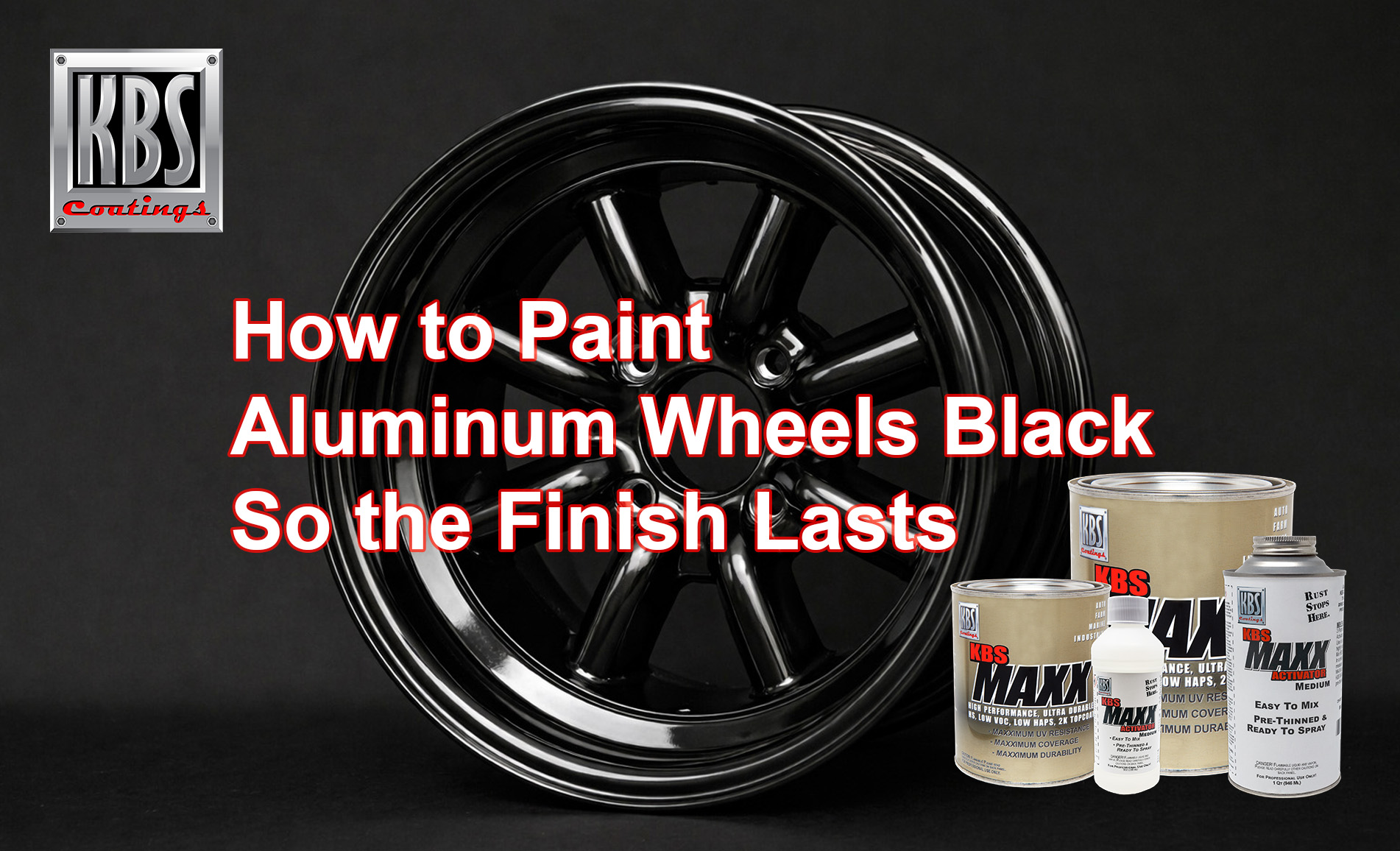
Painting aluminum wheels black holds up long term when the wheels are cleaned, scuffed, chemically prepped, and coated with a product built for direct-to-metal aluminum, such as KBS MAXX. Skipping any one of those steps is the most common reason a wheel paint job chips or peels early. This guide walks through cleaning with KBS Klean, etching with RustBlast, and applying KBS MAXX for a finish that holds up against heat, brake dust, and everyday road use.
- Why Paint Aluminum Wheels Black?
- Wheel Prep Before Painting
- Step 1: Remove the Wheels
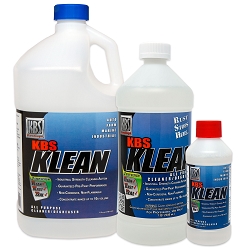
- Step 2: Clean and Degrease with KBS Klean
- Step 3: Scuff for Mechanical Adhesion
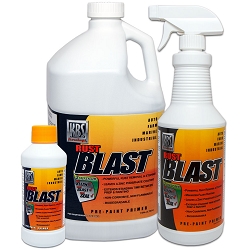
- Step 4: Chemically Prep with RustBlast
- What Is the Best Paint for Aluminum Wheels?
- Choosing a Wheel Paint Color
- How to Mix KBS MAXX
- How to Apply KBS MAXX to Aluminum Wheels
- Cure Times for KBS MAXX
- Frequently Asked Questions
- Conclusion
Why Paint Aluminum Wheels Black?
Black wheel paint gives a clean, performance-oriented look at a fraction of the cost of new wheels, and it hides brake dust better than silver or other light finishes. It is easier to maintain and touch up than bright or metallic finishes, and it pairs with nearly any vehicle color.
- Clean, performance-oriented look
- Cost-effective alternative to new wheels
- Hides brake dust better than silver and other light-colored finishes
- Easier to maintain and touch up than bright or metallic finishes
- Works with nearly any vehicle color
Wheel Prep Before Painting
Aluminum wheel paint needs four prep steps to hold up: remove the wheels, degrease with KBS Klean, scuff the surface for mechanical adhesion, and etch with RustBlast. Skipping any of these steps is the leading cause of peeling or chipping on painted aluminum wheels.
Step 1: Remove the Wheels
Remove the wheels and, ideally, the tires before painting. Painting over mounted tires risks poor coverage at the bead, masking failures, and chipping at the tire edge. If the tires have to stay on, mask them carefully to keep overspray off the rubber.
Step 2: Clean and Degrease with KBS Klean
KBS Klean removes brake dust, grime, and oil from aluminum wheels without leaving a residue that would block paint adhesion. Mix 1 part KBS Klean with 25 parts warm water, scrub with a sponge or bristle brush including bolt holes and spoke corners, then rinse and dry thoroughly.
Step 3: Scuff for Mechanical Adhesion
Aluminum wheels need to be scuffed before painting because paint does not adhere well to smooth aluminum. Use 320 to 400 grit sandpaper, or red or gray Scotch-Brite pads for complex spoke areas, and scuff evenly so no shiny spots remain. Avoid aggressive sanding on edges and spoke corners, and do not polish the surface since paint needs texture to hold onto. Clean again with KBS Klean after scuffing.
Step 4: Chemically Prep with RustBlast
KBS MAXX is a direct-to-metal coating for aluminum and ferrous metal, so it does not need a separate primer. Instead, RustBlast serves as a zinc phosphate pre-primer that chemically etches the aluminum, dissolves remaining corrosion, and creates an anchor pattern for adhesion. Spray RustBlast onto the surface and keep it wet for 10 to 20 minutes, scrubbing intermittently with a Scotch-Brite pad, then rinse thoroughly and let the surface dry completely. A whitish zinc-phosphate residue will remain after treatment; leave it in place, since it aids coating adhesion.
Stuck or unsure? Search the KBS Support Desk for instant answers
What Is the Best Paint for Aluminum Wheels?
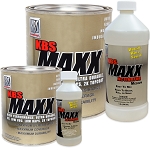
KBS MAXX is built for aluminum wheels because its Advanced Linked Coatings Technology cures to a finish that is hard yet flexible, resisting impacts and abrasion without cracking, chipping, or peeling. It performs as a base coat and clear coat in a single two-component system and is a permanently UV-stable, moisture-cured polyurethane.

Choosing a Wheel Paint Color
KBS MAXX comes in Gloss Black and Hot Rod Black (matte) for this project, plus 22 other colors and three clear coat sheens for wheels or other projects.
How to Mix KBS MAXX
KBS MAXX mixes at a 3:1 ratio of base to activator, applied between 50 and 82 degrees F in moderate humidity. Mix the KBS MAXX Base thoroughly with a mechanical mixer such as the KBS Hurricane Paint Mixer, then measure 3 parts Base to 1 part MAXX Activator into a clean container and mix until uniform. Mixed KBS MAXX doubles in viscosity within 30 minutes, so plan to spray it within that window. KBS MAXX and Activator come pre-thinned and ready to spray, but KBS #1 Thinner or xylene can be added if needed.
How to Apply KBS MAXX to Aluminum Wheels
KBS MAXX applies with conventional, HVLP, air-assisted airless, or airless spray equipment in a minimum of three thin, even coats. Multiple thin coats give better adhesion and durability than a few thick ones, and avoiding puddling or pooling is critical to a clean finish. The recoat window runs from 30 minutes up to 3 days after the previous coat.
Cure Times for KBS MAXX
KBS MAXX is dry to the touch in about 30 minutes, fully dry in 1 to 2 hours, hard cured in 3 to 4 hours, and fully cured in 7 days, all measured at 77 degrees F and 70 percent relative humidity. Let the coating reach full cure before putting the wheels back into service.
Stuck or unsure? Search the KBS Support Desk for instant answers
Frequently Asked Questions
Do aluminum wheels need primer before painting?
With KBS MAXX, no primer paint is needed since MAXX acts as a DTM coating for aluminum wheels. Instead, RustBlast is used to chemically prepare the surface and improve paint adhesion.
Why does paint peel off aluminum wheels?
Paint peels off aluminum wheels when the surface is not properly cleaned, scuffed, or chemically prepared, which prevents adhesion and lets heat, brake dust, and road contaminants undermine the coating.
Can you paint aluminum wheels without removing the tires?
Yes, aluminum wheels can be painted without removing the tires, but careful masking is required, and results may be less durable due to limited access to the bead and edges.
Is KBS MAXX heat resistant enough for wheels?
Yes, KBS MAXX is rated to 300 degrees F.
Still have questions? Search the KBS Support Desk for instant answers
Conclusion
A black aluminum wheel finish holds up when the prep gets the same attention as the paint. Clean thoroughly with KBS Klean, scuff for mechanical adhesion, etch with RustBlast, then apply KBS MAXX in thin, even coats and let it fully cure before the wheels go back into service. Done this way, painted aluminum wheels stand up to heat, brake dust, chemicals, and everyday road abuse for years, without the cost of replacing them.
Tagged Products