


Applying a clear coat over rust patina locks in the aged, weathered look of oxidized metal while stopping the corrosion underneath from spreading further. KBS DiamondFinish Clear and KBS MAXX Clear both seal a stable rust patina without hiding it, so the finish keeps its character instead of looking freshly painted. This guide covers what rust patina is, why people choose to preserve it, and how to prep and apply the right KBS clear coat for the job.
What Is Rust Patina?
Rust patina is a stable, naturally oxidized layer that forms on steel or iron after ongoing exposure to moisture and oxygen. Unlike active rust, which keeps flaking and eating into the metal, a settled patina holds a relatively fixed layer of oxidation that many restorers treat as a finish in its own right rather than a defect to remove.
Rust patina shows up on classic cars, motorcycles, sculptures, architectural elements, and furniture, where its texture and depth read as character rather than damage. That look is exactly why patina preservation has become standard practice among restorers and custom builders instead of a shortcut around a full refinish.
Why Do People Want to Preserve Rust Patina?
People preserve rust patina because it gives a surface a raw, one-of-a-kind look that stripping and repainting cannot recreate, and because the patina itself may be part of a piece's history. Reasons this approach wins out over refinishing include:
- Aesthetic appeal - a rugged, one-of-a-kind visual finish with depth and texture no paint can match
- Cost efficiency - preserving the original surface avoids the labor and cost of a full strip and refinish
- Historic value - on classic vehicles or period structures, the patina is often part of the item's identity
Left unprotected, that same patina keeps oxidizing and can eventually degrade into damaging, flaking rust. Sealing it with a clear coat is what keeps the look frozen at its current stage instead of continuing to deteriorate.
Step 1: Prepare the Rust Patina Surface
A rust patina surface needs to be dry, degreased, and free of loose or powdery rust before any clear coat goes on. Skipping prep is the most common reason a clear coat fails to bond or traps corrosion underneath instead of stopping it.
- Remove flaky or powdery rust with a wire brush, 600-grit or finer sandpaper, or a red Scotch-Brite pad. Sand only enough to create a stable surface, not so aggressively that the patina itself comes off.
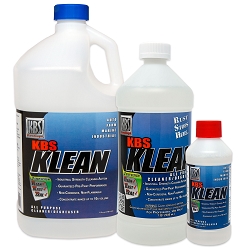
- Degrease with KBS Klean, a water-based cleaner that leaves no oily residue behind. Solvent-based cleaners can leave a film that interferes with clear coat adhesion.
To use KBS Klean: mix it with warm water per the label directions, scrub the surface with a sponge or scrub brush including corners and crevices, then rinse completely and dry thoroughly. Compressed air works well for drying textured or porous surfaces without leaving lint behind. Full mixing ratios and directions are on the KBS Klean TDS and Application Directions.

KBS Klean is a concentrated, water-based metal cleaner and degreaser that leaves no residue behind, making it the right first step before any KBS coating.
Step 2: Choose the Right Clear Coat for Rust Patina
KBS Coatings offers three clear coats for sealing rust patina, and all three stop corrosion while keeping the weathered look intact. The right choice depends on how much durability the project needs and how it will be applied.
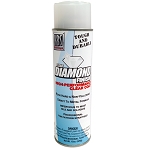
- DiamondFinish Clear 1K Aerosol - a professional-grade acrylic resin spray with strong clarity, durability, and adhesion directly over rust patina. Permanently UV stable, needs no hardener, and resists yellowing, cracking, and peeling. Includes a full-finger adjustable fan spray tip for controlled application.
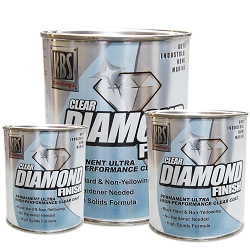
- DiamondFinish Clear (can) - a moisture-cured, single-part polyurethane built for higher outdoor durability while keeping the same clarity, UV stability, and resistance to yellowing and cracking. Can be brushed, rolled, or sprayed.
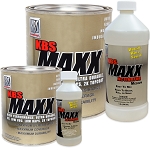
- KBS MAXX Clear - a two-component, low-VOC polyurethane for maximum durability on automotive bodywork and high-wear surfaces, with strong gloss retention, impact resistance, and fast dry times. Can be brushed, rolled, or sprayed.
No mixing, no equipment. UV stable and flexible. Best for small to mid-size rust patina projects.
Shop AerosolMoisture-cured polyurethane for outdoor durability. Single-part, no activator needed.
Shop DiamondFinish ClearTwo-component polyurethane for automotive-level protection and fast dry times.
Shop MAXX ClearStep 3: Apply the Clear Coat
Applying DiamondFinish Clear 1K Aerosol to Rust Patina
DiamondFinish Clear 1K Aerosol applies best between 50 and 85 degrees F at 70 percent relative humidity or lower, in two thin covering coats. Shake the can for at least one minute after the mixing ball starts to rattle, then hold it 8 to 12 inches from the surface and spray in light, even, overlapping strokes.
- Apply multiple thin coats rather than fewer heavy ones for proper curing
- Recoat once the previous coat is dry to the touch, ideally within 15 minutes of the prior coat curing, or wait at least 48 hours
- Full cure is typically reached within 48 hours
Complete spray instructions are on the DiamondFinish Clear 1K Aerosol TDS and Application Directions.
Applying DiamondFinish Clear (Can) and KBS MAXX Clear to Rust Patina
DiamondFinish Clear (can) and KBS MAXX Clear both cure faster in humid conditions because they are moisture-cured, so avoid applying either in wet or high-humidity environments to prevent rapid, uneven curing. Apply both in temperatures between 50 and 82 degrees F in moderate to dry conditions.
- Stir DiamondFinish Clear gently but thoroughly with a paint paddle before use, lifting from the bottom of the can upward
- Mix KBS MAXX Clear Base with a KBS Hurricane Paint Mixer or a mechanical mixing blade until smooth, then combine 3 parts mixed base to 1 part MAXX Activator and mix thoroughly
- Apply a minimum of three thin, even coats, avoiding puddling and pooling
- When brushing or rolling, apply and move on rather than working back over wet product, which forces solvents out early and causes brush marks
- Recoat once the previous coat is dry to the touch and leaves no fingerprint, typically 2 to 4 hours depending on temperature and humidity, ideally within 8 hours of the previous coat
- The work piece can be handled after 1 day, with full cure in at least 7 days; keep it out of rain, high humidity, and abrasion during that window
Thinning is usually unnecessary when brushing. If needed, thin up to 10 percent with KBS #1 Thinner or xylene. For rolling, use a low-nap mohair roller cover; DiamondFinish Clear can be thinned 10 to 20 percent with KBS #1 Thinner or xylene to improve flow and self-leveling. For spray equipment, always wear an air-supplied or NIOSH/MSHA-approved organic vapor and particulate respirator with eye protection, and thin DiamondFinish Clear 10 to 15 percent, up to 30 percent if needed, with KBS #1 Thinner or xylene only.
See our Paint Spraying Guidelines for additional spray technique, and the DiamondFinish Clear TDS and Application Directions for complete instructions on the can version.
Stuck or unsure? Search the KBS Support Desk for instant answers
How Does Clear Coat Protect Rust Patina?
A properly applied clear coat over rust patina locks in the current look, stops further rusting, and builds a durable barrier against dirt, moisture, UV exposure, and chemicals. Cutting off moisture and oxygen is what actually halts the oxidation process; the clear coat itself is the seal that keeps those elements out going forward.
Applying KBS DiamondFinish Clear over rust patina delivers both outcomes at once: long-term corrosion protection and the preserved, rugged look of the original surface. Whether the project is a barn-find classic, a custom sculpture, or an industrial installation, the process stays the same: prep properly, choose the right clear coat, and apply thin, even coats.
Frequently Asked Questions
Can you put clear coat over rust?
Yes, as long as the rust is a stable patina rather than active flaking corrosion. Clean the surface with KBS Klean, knock down any loose or powdery rust, and apply KBS DiamondFinish Clear or KBS MAXX Clear to seal the patina and stop further oxidation.
Will clear coat stop rust from spreading?
Yes. A properly applied clear coat cuts off the moisture and oxygen that drive continued corrosion, which locks the patina at its current state instead of letting it keep degrading into flaking rust.
Which KBS clear coat is best for preserving rust patina?
DiamondFinish Clear 1K Aerosol is the easiest option for small to mid-size projects since it needs no mixing or equipment. DiamondFinish Clear in the can steps up outdoor durability for brush, roll, or spray application. KBS MAXX Clear is the two-component option for automotive-level protection on high-wear surfaces.
How many coats of clear coat does rust patina need?
DiamondFinish Clear 1K Aerosol typically needs two thin covering coats. DiamondFinish Clear (can) and KBS MAXX Clear need a minimum of three thin, even coats when brushed, rolled, or sprayed. Multiple thin coats always outperform fewer thick ones for adhesion and cure.
Still have questions? Search the KBS Support Desk for instant answers
Conclusion
Preserving rust patina comes down to the same three steps every time: clean the surface with KBS Klean, knock back any loose or powdery rust without sanding away the patina itself, then seal it with the KBS clear coat that matches the project's durability needs. Done right, a barn-find fender or a weathered sculpture keeps its character while the corrosion underneath stops for good.
Tagged Products