

Rusty exhaust headers need bare metal prep, a coat of XTC Zinc Rich Primer, and a topcoat of XTC High Temperature Coating cured at 350 degrees F to stop the finish from cracking, flaking, or peeling under exhaust heat. Skipping any one of those three steps is the most common reason header paint fails within a season.
Updated September 2026 by the KBS Coatings technical team.
| Products | XTC Zinc Rich Primer, XTC High Temperature Coating |
|---|---|
| Application temperature | 50 to 82 degrees F |
| Recoat time | 1 to 2 hours between coats if not primed; one coat of XTC over primer |
| Heat cure | At least 8 hours flash off, then 350 degrees F for 20 to 50 minutes |
| Temperature resistance | Up to 1500 degrees F (liquid XTC), 1200 degrees F (XTC aerosol and XTC Primer) |
Why Exhaust Header Paint Peels
Exhaust header paint peels when the coating cannot bond tightly to the metal, flex through constant thermal expansion, and seal out moisture. Painting over active rust guarantees failure, because rust is porous and keeps expanding and trapping moisture beneath the film. Headers can exceed 1200 degrees F near the exhaust ports and cycle through that heat every drive, which ordinary automotive paint is not built to survive.
Most failures trace back to the same shortcuts: skipping or rushing rust removal, leaving oil or residue on the surface, using a paint that is not rated for exhaust temperatures, applying it too thick, or skipping the heat cure. Each shortcut lets moisture back under the coating and starts the cycle over.
How to Prep Rusty Exhaust Headers for Paint
Prepping rusty exhaust headers for paint means removing them from the vehicle, degreasing with KBS Klean, stripping rust down to a clean anchor profile, and degreasing a second time before any primer goes on. Skipping the second cleaning leaves dust and blast residue that block adhesion just as badly as the original rust did.
- Remove the headers from the vehicle. Painting them in place prevents thorough cleaning, rust removal, and even coating coverage.
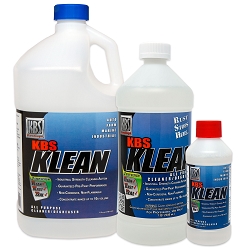
- Degrease with KBS Klean. Mix 10 parts warm water to 1 part KBS Klean, scrub with a sponge or brush, paying extra attention to flanges, bends, and welds, then rinse with clean water and let dry completely.
- Remove all rust and old coating. Sandblasting is the ideal method because it leaves the best anchor pattern for adhesion. Without a sandblaster, use a wire wheel or 60 to 80 grit sandpaper. It is not necessary to reach bare, perfectly clean metal everywhere; XTC Zinc Rich Primer bonds well to any remaining flash rust.
- Degrease a second time with KBS Klean to remove dust and residue from rust removal, then allow the headers to dry completely before coating.
Priming Headers with XTC Zinc Rich Primer
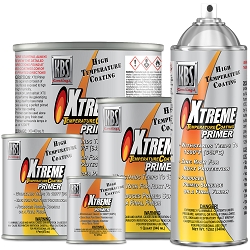
XTC Zinc Rich Primer is not required for XTC to adhere to properly prepped bare steel, but it is worth applying on headers because its zinc content works like galvanizing, sacrificing itself to stop corrosion on parts that face heat, humidity, condensation, and road salt. Apply it at roughly 1.0 mil dry film thickness, then top coat with one coat of XTC High Temperature Coating.
XTC Zinc Rich Primer is rated for continuous service up to 1200 degrees F and can also be left as a finish coat on its own if a topcoat is not needed. Apply between 50 and 82 degrees F in light, even coats; heavy or thick coats are the most common cause of blistering.
Applying XTC High Temperature Coating
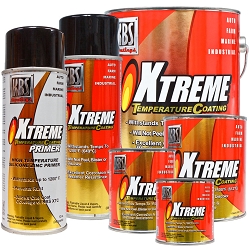
Apply XTC High Temperature Coating in one coat over primer, or in two thin coats of about 1.0 mil each with 1 to 2 hours between coats if the headers were not primed. Ideal application temperature is 50 to 82 degrees F, and XTC can be sprayed, brushed, or rolled.
If XTC needs to flow better for spraying, thin it up to 5 percent using KBS #1 Thinner only; never use lacquer thinner, which can hinder performance. Multiple thin coats always beat one heavy coat: XTC is not formulated to perform well applied thick, and overbuilding the film is a common cause of cracking and peeling later. XTC is available in 10 colors and clear.
How to Heat Cure XTC on Exhaust Headers
XTC will not reach full hardness until it is heat cured, and on installed headers that means running the engine through a staged heat cycle. Allow at least 8 hours of solvent flash off after the final coat, then idle the engine until the coating begins to smoke, immediately shut it off, and let the headers cool to room temperature before repeating.
- Let the coating flash off for a minimum of 8 hours before any heat is applied.
- Start the engine and let it idle until the XTC begins to smoke, then shut the engine off and allow the headers to cool completely to room temperature.
- Repeat that cycle three times total.
- On the fourth cycle, let the engine run until the smoke fully dissipates before shutting it off, then let the headers cool gradually and naturally.
Full hardness is reached at 350 degrees F held for 20 to 50 minutes; KBS's published spec lists 20 to 30 minutes and the wider window is also an accepted bake range. Ventilate fully during the first heat cycles, since the coating can emit vapors as it breaks in, and avoid rushing the initial cycles so the resins temper into the substrate properly.
What You Need
- KBS Klean: degreases the headers before and after rust removal.
- XTC Zinc Rich Primer (recommended): skip only if applying two full coats of XTC directly to bare metal instead of one coat over primer.
- XTC High Temperature Coating: the topcoat rated for header and exhaust temperatures.
- KBS #1 Thinner (optional): needed only if thinning XTC for spray application.
- Hurricane Paint Mixer: XTC and XTC Primer are heavily pigmented and need several minutes of mechanical mixing to reach a fully uniform state.
- Chemical-resistant gloves, safety glasses, and a NIOSH/MSHA approved organic vapor respirator when spraying.
Stuck or unsure? Search the KBS Support Desk for instant answers
Frequently Asked Questions About Painting Rusty Exhaust Headers
How can I remove rust from exhaust headers?
Remove rust from exhaust headers by sandblasting for the best paint anchor profile, or by wire brushing and sanding with 60 to 80 grit paper if sandblasting is not available. Degrease with KBS Klean before and after rust removal so no oil, dirt, or blast residue is left behind to block adhesion.
Can exhaust headers be painted?
Yes, exhaust headers can be painted with a coating rated for exhaust temperatures, such as XTC High Temperature Coating, which protects metal in continuous service up to 1500 degrees F in liquid form or 1200 degrees F as an aerosol. Ordinary automotive paint is not rated for that heat and will burn off or peel.
What type of paint is best for headers?
The best paint for headers is a dedicated high temperature coating system rather than a single step spray paint, such as XTC Zinc Rich Primer under XTC High Temperature Coating. The system bonds aggressively to steel, stays flexible through heat cycling, and seals out moisture, which a generic high heat spray paint does not do as well.
What kind of paint to use on an exhaust manifold?
Use the same high temperature system on an exhaust manifold as on headers: XTC Zinc Rich Primer for corrosion protection, then XTC High Temperature Coating, heat cured at 350 degrees F. XTC protects manifolds and headers up to 1500 degrees F in liquid form and 1200 degrees F as an aerosol.
Still have questions? Search the KBS Support Desk for instant answers
Painting Rusty Headers the Right Way
Header paint failure is not inevitable. Clean and prep the metal, prime with XTC Zinc Rich Primer for corrosion protection, topcoat with XTC High Temperature Coating, and give the finish a full staged heat cure, and the result is a durable, heat resistant coating that holds up to repeated thermal cycling instead of cracking, flaking, or peeling within a season.
Related guides: Do You Need Primer for High-Temp Paint?, or browse all KBS application guides.
Tagged Products