

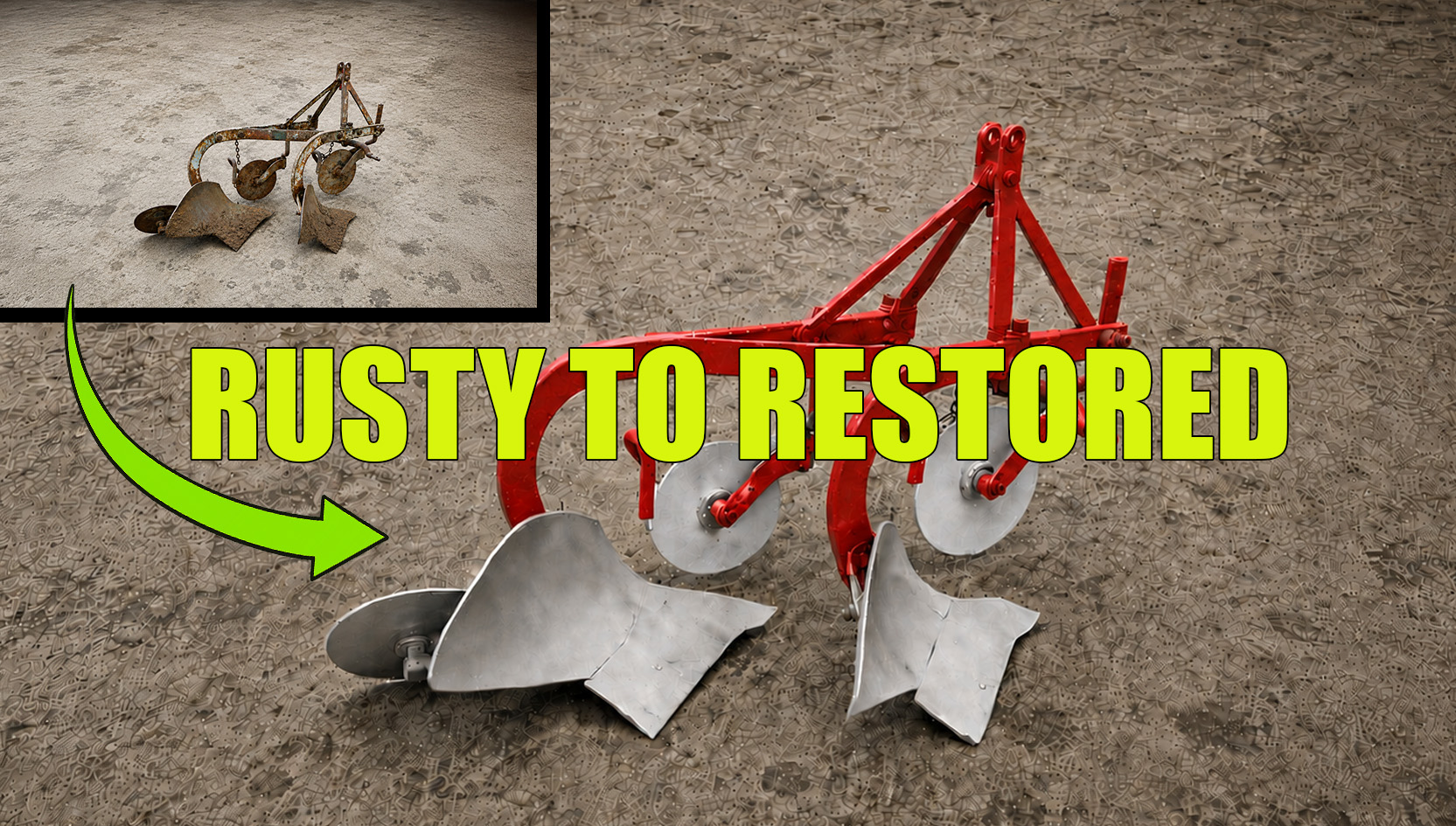
You can paint a rusty farm plow without sandblasting it or taking it apart. If the metal is still structurally sound, remove the loose rust and failing paint, degrease the frame with KBS Klean, etch what is left with KBS RustBlast, seal it under KBS RustSeal, and finish with KBS MAXX. The rust stops where the coating seals it.
The plow in this project is a Ferguson two-bottom, 3-point moldboard plow, but the preparation and coating steps work the same on disc harrows, cultivators, drags, trailers, and most other steel implements that have spent their life outdoors.
What You Need
Get the complete kit, or buy each product on its own. Orders placed by 3 PM Central ship the same day.

- How Do You Stop Rust on a Farm Plow?
- Do You Have to Remove All the Rust First?
- What Parts of a Farm Plow Should You Paint?
- What You Need to Paint a Rusty Farm Plow
- Which KBS Kit Do You Need for a Plow?
- How to Prepare a Rusty Farm Plow for Paint
- How to Treat the Rust That Stays
- How to Seal the Rust with RustSeal
- How to Topcoat a Farm Plow with KBS MAXX
- How Long to Cure Before Using the Plow
- How to Keep the Plow from Rusting Again
- Frequently Asked Questions
- Conclusion
How Do You Stop Rust on a Farm Plow?
You stop rust on a farm plow in four steps: degrease the metal with KBS Klean, knock off the loose rust and failing paint, etch the remaining corrosion with KBS RustBlast, and seal the metal under two coats of KBS RustSeal. RustSeal is non-porous once cured, so it locks water and oxygen away from the steel and the corrosion has nothing left to feed on.
A UV stable topcoat goes on last. That is what this guide walks through:
- Judging whether the plow is worth coating or needs metal repair first.
- How much rust actually has to come off.
- Which parts of the plow to paint and which to leave bare.
- Cleaning and etching the metal so the coating bonds.
- Sealing the frame with RustSeal.
- Topcoating with KBS MAXX for sun and weather resistance.
- Curing and storing the plow so the finish lasts.
Do You Have to Remove All the Rust Before Painting a Farm Plow?
No. RustSeal bonds directly to tight surface rust, so only the loose material has to come off. Remove flaking rust, heavy scale, and any paint that is lifting or cracking, since that layer will eventually separate from the steel and take the new finish with it. Rust that is firmly attached can stay, and once it is cleaned, etched, and sealed it is out of the corrosion cycle for good.
Concentrate your effort where corrosion has built thick scale or is pushing the old paint off the metal. A wire wheel on a drill or angle grinder handles most of that work, and sandpaper feathers the edges where sound paint meets bare steel. There is no reason to grind the whole plow frame down to shiny metal.
Do inspect the heavily corroded areas before you commit to painting. Deep pitting, cracks, thin spots, and rust-through are metal repair problems, not paint problems. Fix or replace those components first, because a coating over a failing beam or hitch bracket just hides the problem.
What Parts of a Farm Plow Should You Paint?
Paint everything on the plow that does not run through the soil. The frame, beams, hitch components, brackets, standards, and hardware all take RustSeal and a topcoat well, and those are the parts that rust while the plow sits in a fencerow between seasons. The ground-engaging surfaces get different treatment.
Leave the moldboards, shares, landsides, and coulters unpainted if the plow is going back to work. Soil moving across those surfaces under load is an abrasive, and it will scour any coating off within a few passes. Painting them costs you the paint and buys nothing.
Clean and polish those surfaces instead. A smooth moldboard lets the soil slice, roll, and turn the way the plow was designed to move it, and a rusty, pitted one drags, sticks, and adds draft you pay for in fuel. Between seasons, wipe the bare steel down with a water-displacing film such as WD-40 to keep flash rust off until the next use.
What You Need to Paint a Rusty Farm Plow
Gather everything before you start, because the coating steps have timing windows you do not want to break to run to town. What you need depends on how rough the plow is and whether you plan to brush, roll, or spray.
Tools and Supplies
- Pressure washer or garden hose
- Paint scraper
- Hand wire brushes
- Drill or angle grinder with wire-wheel attachments
- Sandpaper, 320 grit, and sanding pads
- Scotch-Brite pads, clean scrub pads, and rags
- Gloves, eye protection, and a respirator suited to the products you are using
Cleaning, Rust Preparation, and Coatings
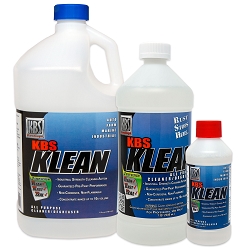
- KBS Klean for stripping grease, oil, dirt, and field residue off the metal
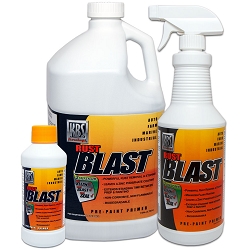
- KBS RustBlast for neutralizing the remaining rust and etching the bare steel
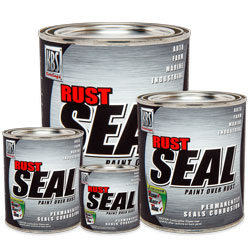
- KBS RustSeal for sealing the prepared metal against moisture and oxygen
- KBS MAXX for the UV stable finish coat
- KBS #1 Thinner if you need to reduce either coating for spray equipment
- Poly bristle brushes, high-density foam rollers, or an HVLP spray gun, depending on how you plan to apply the coatings

Which KBS Kit Do You Need for a Farm Plow?
Most single-bottom and two-bottom plow frames measure out between 30 and 60 square feet, which puts the Stop Rust Quart Kit and its 50 square feet of two-coat coverage in the right range for a typical job. The kit ships a quart each of KBS Klean, RustBlast, and RustSeal in your choice of 11 colors, plus gloves, brushes, and a stir stick.
Step up or down from there based on the implement:
System Sampler Kit
12.5 sq ft
Brackets, hardware, and test patches.
Stop Rust Quart Kit
50 sq ft
The usual fit for a plow frame.
Stop Rust Gallon Kit
200 sq ft
Larger implements and multi-bottom plows.
KBS MAXX is ordered separately. One gallon covers roughly 450 square feet at 2 mils per coat, and a quart covers roughly 112 square feet, so a quart handles most plow frames with room for a second coat.
How to Prepare a Rusty Farm Plow for Paint
Surface preparation decides how long the finish lasts, and it is where most farm equipment paint jobs go wrong. Grease, field dirt, loose paint, and flaking rust all keep RustSeal from reaching the metal, and a coating that never touched steel has nothing to hold onto. Work through cleaning first, then mechanical rust removal.
Clean and Degrease the Plow
Wash the caked mud, grease, and crop residue off with a pressure washer or garden hose before anything else, then degrease the surfaces you plan to paint with KBS Klean. Solvent cleaners leave an invisible film that wrecks adhesion, which is why this step uses a water-based cleaner that rinses away clean.
Use KBS Klean as directed:
- Dilute KBS Klean with hot water to match how dirty the plow is. Hotter water cleans harder:
- 1:1 for heavily soiled surfaces.
- 1:5 for moderately soiled surfaces.
- 1:10 for lightly soiled surfaces.
- 1:25 for non-ferrous metals such as aluminum, brass, or copper.
- Apply with a sponge or bristle brush and scrub for 5 to 10 minutes, working into corners, brackets, weld seams, and enclosed cavities where grease collects.
- Do not let KBS Klean dry on the metal. Rinse thoroughly with clean water while it is still wet.
- Let the plow dry completely. Trapped water in a box beam or bracket will cause problems in every step that follows, so blow those areas out with compressed air if you have it.
- Full KBS Klean application directions and dilution rates.

Remove Loose Rust and Failing Paint
Take off everything that is not firmly attached to the steel using a scraper, wire brush, wire wheel, or sanding equipment. Tightly bonded surface rust stays, because RustBlast and RustSeal are built to handle it. The test is simple: if an edge lifts under a scraper or a fingernail, it goes.
Sound existing paint can stay in place. Scuff it and feather the edges where it meets bare metal so RustSeal has a tooth to grip and the repair does not telegraph through the finish as a visible ridge.
Work the fasteners, brackets, weld seams, and joints harder than the flat surfaces. Those are the places corrosion collects, and they are also the places a wire wheel skips over if you are not deliberate about it.

How Do You Treat the Rust That Stays on the Plow?
Treat it with KBS RustBlast, which neutralizes the remaining rust, etches the exposed steel, and leaves behind a zinc phosphate conversion coating. That phosphate layer is what RustSeal grips, and it is the difference between a coating that sits on the surface and one that bonds. Skipping this step is the most common reason farm equipment paint peels.
Apply RustBlast
- Apply KBS RustBlast full strength to the dry surface with a spray bottle, brush, roller, or backpack sprayer. Ideal working temperature is 55 to 90 degrees F, and it works better as the metal warms.
- Re-apply as often as needed to keep the surface wet. Hold it wet for a minimum of 30 minutes on smooth surfaces, 40 to 60 minutes on moderately rusted surfaces, and 1 to 2 hours on heavy rust. Do not let it dry on the metal.
- Scrub with a Scotch-Brite pad, again favoring corners, brackets, and enclosed cavities where corrosion hides.
- Rinse thoroughly with clean water before RustBlast dries, which prevents a heavy zinc phosphate buildup that can interfere with sealing.
- Dry the plow completely. Compressed air clears water out of box sections, bolt holes, and other traps and speeds the whole thing up.
- A light white powder residue is left behind. That is the zinc phosphate, it aids RustSeal adhesion, and it should not be removed.
- Coat the plow within 7 days of the RustBlast treatment.
- Full RustBlast application directions.

How to Seal the Rust with RustSeal
KBS RustSeal needs a minimum of two thin coats at 2 mils each to seal a plow frame properly. RustSeal is a single-component, moisture-cured coating that pulls humidity out of the air to cure into a non-porous film, which is what shuts moisture and oxygen out of the rust underneath and stops the corrosion cycle.
Cured RustSeal is hard but still flexible, so it takes the impacts, flexing, and abrasion a plow frame sees without chipping or peeling. It is rated to 600 degrees F once fully cured, and it self-levels well enough to hide most brush marks.
Apply RustSeal
- Pick your method: brush, roller, or spray equipment. If you spray, wear an air-supplied NIOSH or MSHA approved organic vapor particulate respirator.
- Apply between 55 and 82 degrees F. RustSeal is moisture cured, so stay out of rain and high humidity where the surface cannot be kept dry.
- Stir thoroughly from the bottom of the can for several minutes, lifting repeatedly to bring the settled pigment back into suspension. Do not shake, which puts air bubbles in the film.
- Do not paint out of the can. Pour a working amount into a separate steel or glass container and reseal the original immediately. Never pour unused paint back in.
- Thinning is usually unnecessary. If your spray equipment needs it, reduce 5 to 10% with KBS #1 Thinner or Xylene only, then strain through a 100 micron filter. Never reduce RustSeal with lacquer thinner.
- Apply a minimum of two thin, covering coats at 2 mils each. Thin coats cure through completely; heavy coats skin over and trap solvent underneath, which is what causes bubbling.
- Recoat once the previous coat is dry to the touch and leaves no fingerprint, typically 2 to 6 hours. If more than 8 hours pass, wait a full 24 hours and scuff the cured coat with a 320 grit green Scotch-Brite pad before the next coat.
- Clean brushes and spray equipment immediately with KBS #1 Thinner or lacquer thinner. Once RustSeal cures, no solvent removes it.
- Full RustSeal application directions.

How to Topcoat a Farm Plow with KBS MAXX
A plow that lives outdoors needs a UV stable topcoat over RustSeal, and KBS MAXX is the two-component polyurethane built for that job. Sunlight will shift the color and sheen of bare RustSeal over time, though its rust protection holds. KBS MAXX blocks the UV, sets the final color, and hardens the surface.
The pairing is also measurably tougher. In ASTM B117 salt spray testing, two coats of RustSeal followed by one coat of KBS MAXX reached 2,000 hours. KBS MAXX applied on its own reached 1,000 hours. On a plow that sits out through winter, that difference is the whole point of running both.
Prepare RustSeal for Topcoating
There are three ways to get RustSeal and KBS MAXX to bond and fuse together. Pick whichever fits your schedule:
- Topcoat inside the window. Apply KBS MAXX over RustSeal that is 3 to 8 hours old, once the final coat is dry to the touch. No sanding needed.
- Scuff the cured film. Let the final RustSeal coat cure at least 24 hours, scuff with 320 grit, then topcoat.
- Dust with self-etching primer. Let the final RustSeal coat cure at least 24 hours, apply a light dust coat of Fusion SEP Self-Etching Primer, let it cure 1 hour, then topcoat.
Mix KBS MAXX
KBS MAXX mixes 3 parts Base to 1 part Activator and has a 30 minute pot life, so measure out only what you can lay down in that window. It is a high solids coating, and thorough mixing is what makes the difference in both durability and gloss.
- Mix the MAXX Base thoroughly first, before the Activator goes anywhere near it. A KBS Hurricane Paint Mixer or a similar mixing blade on a variable speed drill is strongly recommended over a stir stick.
- Once the Base is smooth, measure 3 parts Base to 1 part MAXX Activator into a clean container and mix again until the consistency is uniform.
- MAXX and MAXX Activator are pre-thinned and ready to brush, roll, or spray. If your equipment needs reduction, add KBS #1 Thinner or Xylene at 5 to 10% and strain through a 100 micron filter. Do not use lacquer thinner as a reducer; it is not compatible and will compromise the finish.
- The mixed material doubles in viscosity in about 30 minutes. Do not pour it back into the original can.
Apply KBS MAXX
- Apply between 45 and 110 degrees F, and keep the surface temperature at least 5 degrees F above the dew point. Metal sitting near the dew point carries condensation you cannot see, and that shows up later as an adhesion failure.
- Apply thin, even coats at 1.5 to 2.0 mils DFT each. Thin coats adhere better and cure harder than heavy ones.
- Avoid puddling and pooling around bolt heads, brackets, and inside corners.
- Recoat any time from 30 minutes out to 3 days, with no scuffing required in that window.
- Pay extra attention to edges, weld seams, brackets, and bolt heads. Those are the thin spots on a brushed or sprayed finish and the first places corrosion comes back.
- Full KBS MAXX application directions.

How Long Should a Farm Plow Cure Before You Use It?
Allow 7 days for KBS MAXX to reach full cure before the plow goes back in the field. It is touch dry in about 30 minutes and hard enough to handle in 3 to 4 hours, but the chemical and abrasion resistance you paid for develops over the full week. Dirt and rocks hitting a coating on day two do damage that the same impact would not do on day eight.
Dry times at 77 degrees F:
- Touch dry: about 30 minutes
- Through dry: 1 to 2 hours
- Hard dry, resistant to handling and light abrasion: 3 to 4 hours
- Full cure: 7 days
Cure is a function of time, temperature, and film build, so a cold shop or heavy coats stretch every one of those numbers.
Stuck or unsure? Search the KBS Support Desk for instant answers
How to Keep a Farm Plow from Rusting Again
Keep the plow clean and fix coating damage as it happens, and the finish will outlast the next several seasons. Knock the soil, mud, and vegetation off after use, especially around brackets, joints, and anywhere debris packs in and holds moisture against the steel. Wet dirt sitting in a corner all winter is how a good paint job fails early.
Look the painted surfaces over each season and touch up chips and deep scratches before bare metal starts rusting. A small brush-in repair takes minutes; letting it spread under the surrounding film means stripping and redoing the whole section.
The bare moldboards, shares, landsides, and coulters need their own attention in storage. Clean and dry them, then coat the bare steel with a temporary protective film such as WD-40. Store the plow under cover and off the ground where you can, and out of standing water where you cannot.
Frequently Asked Questions About Painting a Farm Plow
Can you paint farm equipment without sandblasting?
Yes. Sandblasting is not required as long as the surface is properly prepared by scraping, wire brushing, wire wheeling, or sanding, then cleaned with KBS Klean and etched with RustBlast. Sandblasting is still worth the cost on heavy scale, multiple layers of failing paint, or corrosion packed into areas a wire wheel cannot reach.
How much paint do you need for a farm plow?
Most single-bottom and two-bottom plow frames fall in the 30 to 60 square foot range, which the Stop Rust Quart Kit covers at 50 square feet with two coats of RustSeal. The System Sampler Kit covers 12.5 square feet and suits small brackets or a test patch. The Stop Rust Gallon Kit covers 200 square feet for larger implements. One gallon of KBS MAXX covers roughly 450 square feet at 2 mils per coat.
What temperature should you paint a farm plow at?
Apply RustSeal between 55 and 82 degrees F and apply KBS MAXX between 45 and 110 degrees F. Keep the surface temperature at least 5 degrees F above the dew point when applying KBS MAXX. RustSeal is moisture cured, so avoid rain and high humidity where the surface cannot stay dry.
Does RustSeal need a topcoat on a farm plow?
Yes, on any surface that sits in direct sunlight. Prolonged UV exposure changes the color and sheen of RustSeal, though its rust protection does not degrade. A farm plow stored outdoors should get a UV stable topcoat such as KBS MAXX, which also sets the finished color.
Can you paint a farm plow with a brush?
Yes. RustSeal and KBS MAXX are both designed to be brushed, rolled, or sprayed, and both self level well enough to flow out brush marks. Brush an area once and move on rather than working the brush back over it, which forces the solvent out early and leaves the marks behind.
Should you paint the moldboards and shares on a farm plow?
No, not if the plow is going back to work. Soil abrasion wears any coating off the moldboards, shares, landsides, and coulters in short order. Clean the rust off those surfaces and polish them smooth instead so soil scours and rolls properly, then protect the bare steel with a temporary film such as WD-40 during storage.
How long should the paint cure before using the plow?
Allow 7 days for KBS MAXX to reach full cure before putting the plow back in the field. It is touch dry in about 30 minutes, through dry in 1 to 2 hours, and hard enough for handling in 3 to 4 hours, but full chemical and abrasion resistance takes the full week. Cold weather and heavy film build extend that time.
Still have questions? Search the KBS Support Desk for instant answers
Protect Your Farm Plow from Rust for Years to Come
Repainting a rusty farm plow does not take a full restoration or a trip to the blast cabinet. Pull off the loose rust and failing paint, degrease and etch what is left, seal the frame under two coats of KBS RustSeal, and finish with KBS MAXX. Keep it clean and stored under cover, and the plow stays protected and presentable for years.
The same process works on the rest of what is sitting in the fencerow. See how it applies elsewhere in how to seal a rusted galvanized stock tank, or browse the full library of KBS application guides and restoration projects.

Tagged Products