

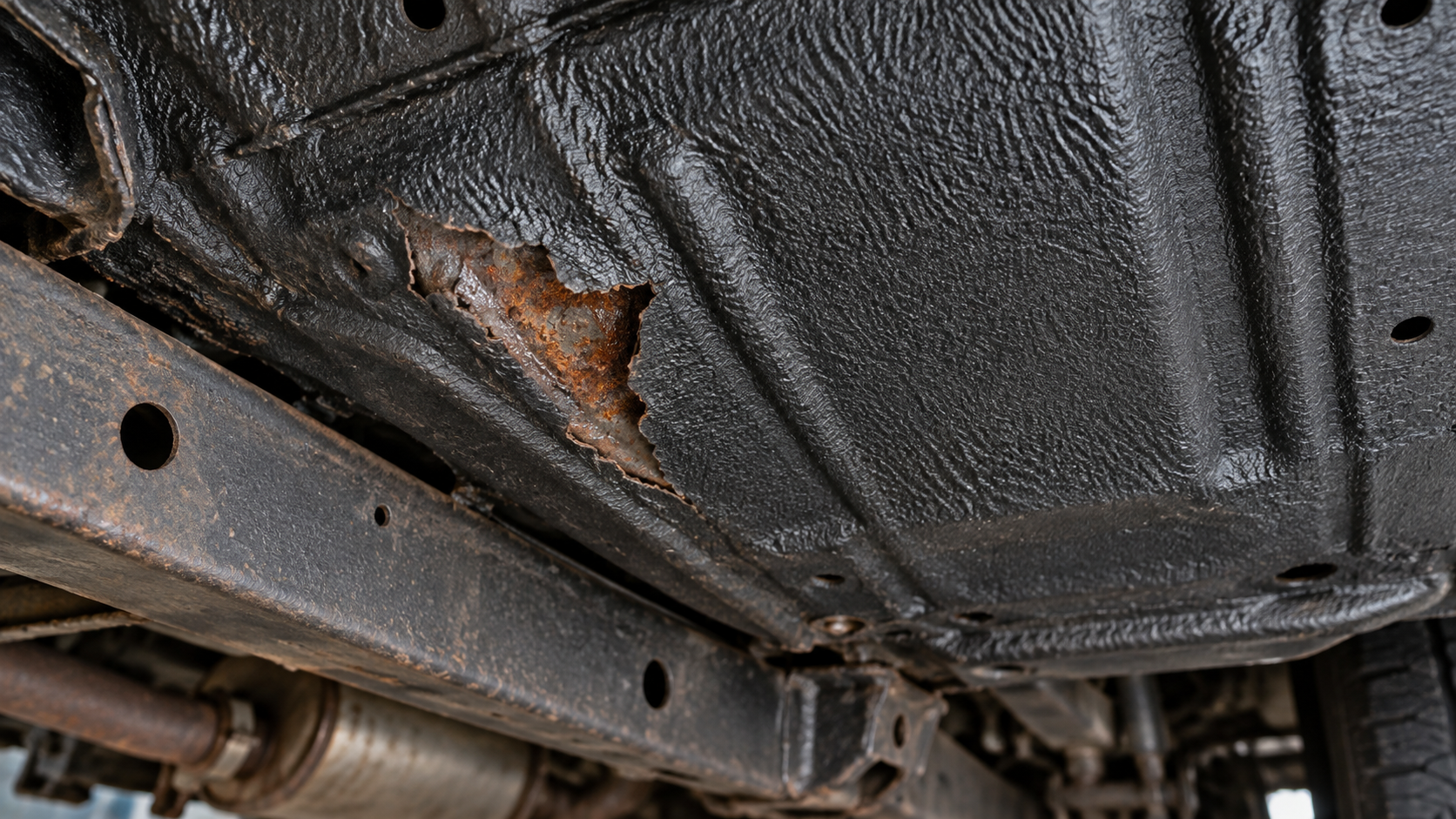
Rubberized undercoating does not cause rust. It blocks road salt, water and stone chips, and it quiets the underside of a vehicle. It traps rust under exactly one condition: when it is sprayed over metal that is not clean, dry and already rust protected. A rubberized film is a moisture barrier, and a moisture barrier works in both directions. Over prepared metal it keeps salt water out. Over damp or corroding steel it keeps that water in, where the metal cannot dry and the corrosion runs on unseen.
That is the whole argument behind every video telling you not to use the stuff. The videos are right about what they are showing and wrong about the cause. This guide covers what the coating actually does, the mechanism that turns it into a rust trap, whether your vehicle needs it at all, and the order of operations that keeps it doing its job.
- What Rubberized Undercoating Actually Does
- The One Condition That Turns Undercoating Into a Rust Trap
- Why Metal Under a Sealed Film Corrodes Faster
- What Happens When the Film Gets Chipped
- The Half of the Vehicle Undercoating Never Reaches
- Should You Undercoat Your Vehicle?
- The Correct Order of Operations
- What It Costs to Redo a Job That Was Undercoated Over Rust
- Frequently Asked Questions
- Conclusion
What Rubberized Undercoating Actually Does
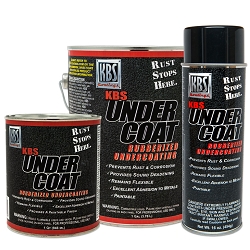
Rubberized undercoating is a flexible rubber or asphalt based film sprayed onto the underside of a vehicle to block road salt, water and stone chips and to deaden road noise. KBS UnderCoat dries to the touch in 60 minutes and reaches full cure in 2 to 4 hours, bonds to bare or painted metal and fiberglass without a separate primer, and stays paintable if you want a color coat over it later.
What it is not is a rust treatment. There is no converting or encapsulating chemistry in an undercoating. It is a mechanical barrier and an abrasion layer, and it is very good at that job: wheel wells, floor pans, frames and gas tank shields all take a constant beating from gravel and salt spray that no paint film survives on its own. Asking a barrier coating to also fix corrosion is where the trouble starts, because a barrier applied over active rust is just a lid.
The One Condition That Turns Undercoating Into a Rust Trap
Undercoating traps rust when it is applied over a surface that is not clean, dry and already rust protected. Once an impermeable film covers damp or corroding steel, the water already under the film has nowhere to go and oxygen can no longer reach the metal evenly. Both of those conditions accelerate corrosion rather than slow it, and the damage is hidden under a coating that still looks perfect from the ground.
The long standing automotive reference How a Car Works puts it plainly in its underbody sealant procedure: if there is already considerable rust, applying a sealant will accelerate corrosion rather than protect. The same source opens with the reason: a sealant will be effective only if the underside of the car is completely clean.
Why Metal Under a Sealed Film Corrodes Faster
Steel under a sealed film corrodes faster because of a differential aeration cell. Where a metal surface sits in moisture with uneven oxygen access, the oxygen starved areas become anodic and corrode while the oxygen rich areas become cathodic and are protected. An undercoating applied over a damp or rusty patch creates precisely that gradient: the trapped area is the anode, the exposed metal around it is the cathode, and the anode is what dissolves.
Corrosion scientists have a name for the version of this that happens under paint. Filiform corrosion, also called underfilm corrosion, is described as a special case of crevice corrosion, and it shows up as fine tunnels of corrosion product running underneath a bulged and cracked coating. Water reaches the advancing head of the filament by osmotic action, drawn through the film itself by the concentration of dissolved iron already on the steel. Once that cell is running, the coating is supplying the water that keeps it moving.
What Happens When the Film Gets Chipped
A chip in a thick rubberized film is worse than a chip in ordinary paint, because the film around the breach keeps working. Water enters through the gap, spreads sideways between the coating and the metal, and then cannot evaporate because the surrounding film is still intact and still waterproof. The result is a wet pocket with restricted oxygen, which is the exact condition described above, spreading outward from a hole the size of a pea.
This is why an undercoated underside still needs an annual look. Chips, cracks and edges lifting along seams are the failure points, and they are cheap to fix while they are small. Keeping the film continuous is most of the maintenance the coating ever asks for.
The Half of the Vehicle Undercoating Never Reaches
Undercoating only reaches the outside face of the metal, and vehicles rot from the inside out. Water and road salt collect inside rocker panels and boxed frame rails, and neither factory paint nor an aftermarket undercoating reaches that interior surface. A vehicle can carry a flawless black underside and still be perforating outward from inside a rocker that nobody has ever treated.
The collision repair trade treats this as settled practice. 3M's corrosion protection guidance calls cavity wax the first line of defense in the repair sequence, applied inside sealed cavities before seam sealers and before any external coating goes on. I-CAR's guidance on when to apply corrosion protection says cavity waxes are normally applied after refinish materials but before installing trim. Both put a dedicated product inside the cavity as a separate step from anything sprayed on the outside, because one cannot substitute for the other.
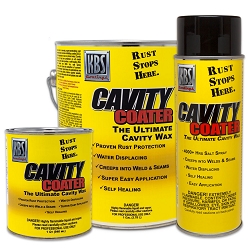
KBS Cavity Coater is that product on the KBS side. It wicks into welds and seams by capillary action instead of sitting on the surface, displaces water on contact, cures to a self healing film, and is rated for more than 4,000 hours of ASTM B-117 salt spray on steel. It goes over bare, painted or lightly rusted metal once loose scale is knocked off, which is what makes it usable on an assembled vehicle you are not taking apart.
Should You Undercoat Your Vehicle?
Whether you should undercoat depends on two things: how old the vehicle is, and whether it sees road salt. A new vehicle in a dry climate does not need an aftermarket undercoating, because factory corrosion protection on a modern car is built to last. Consumer Reports makes the case against dealer add on rustproofing on exactly that basis, noting that the frame, exterior paint and interior fabrics on new cars are designed to last a decade or longer. A fifteen year old truck that spends every January in brine is a different problem.
| Vehicle age | Salt belt, road salt every winter | Coastal or high humidity, no road salt | Dry climate, no road salt |
|---|---|---|---|
| New, under 3 years | Treat the enclosed cavities with Cavity Coater now. Leave the factory exterior coating alone until it shows chips. The inside of the rockers and rails is the part the factory protects least. | Cavity Coater inside. Exterior undercoating is optional and mostly buys you stone chip and noise control. | Nothing needed. Wash the underside after dusty or muddy use and inspect once a year. |
| 3 to 10 years | Run the full sequence. Clean, RustSeal every bare or rusted spot, KBS UnderCoat over the cured RustSeal, Cavity Coater inside last. | Cavity Coater inside. Spot treat any surface rust with RustSeal, then UnderCoat the wheel wells and rocker bottoms where chipping is worst. | Spot treat rust as it shows up. Undercoat only where you want the chip and noise protection. |
| Over 10 years, or a restoration | Assume rust is present whether you can see it or not. Nothing goes on until the rust is treated. RustSeal is the foundation, UnderCoat is the wear layer, Cavity Coater finishes the job from inside. | Same sequence, with extra attention to pinch welds, seams and the bottom edges of doors where moisture sits. | Treat the surface rust you find with RustSeal. UnderCoat here is about chips and noise more than corrosion. |
The cavity treatment shows up in every row of that table except the dry climate ones. It is the cheapest step on the list and it protects the surface that actually fails, which is why it belongs on a new truck as much as on a twenty year old one, even though it is the last thing you spray.
The Correct Order of Operations
The correct order is clean, seal the metal, undercoat the outside, then treat the cavities last. That last part surprises people who expect to work from the inside out, but it is what the KBS Cavity Coater directions require: nothing bonds on top of Cavity Coater, and it is normal to get overspray on the exterior while you are working a wand through an access hole. Put the cavity treatment on first and you have contaminated every surface the undercoating still needs to stick to.
Step 1: Clean the Underside Down to a Sound Surface
Scrape off loose scale, flaking paint and any old undercoating that is lifting or cracked. Wash the underside with KBS Klean diluted 5 to 1, rinse it, and let it dry thoroughly. Surfaces have to be free of dirt, dust, oil, grease and anything else that interferes with adhesion. If old undercoating is sound and well bonded, it can stay; if you can get a scraper under an edge, it comes off.
Step 2: Seal the Bare and Rusted Metal With RustSeal
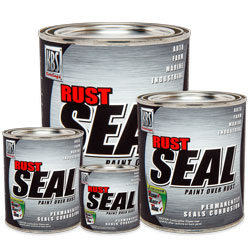
Treat the bare and rusted areas with RustBlast, then apply a minimum of two thin coats of RustSeal at roughly 2 mils each and let the final coat cure at least 24 hours. RustSeal is the layer that actually stops the corrosion. It is formulated to bond over bare or lightly rusted steel, so full removal is not required, and it cures to a non porous film. This step is the one that separates a lasting job from a lid over a problem.
Step 3: Apply KBS UnderCoat Over the Cured RustSeal
Mask first, then coat. Cover the exhaust system, brake lines, suspension pivots, grease fittings, shock and strut shafts, sensors, wiring connectors and jacking points, and tape over every box section drain hole. Then spray, brush or roll KBS UnderCoat over the cured RustSeal in light coats, about 10 minutes between aerosol coats or 2 hours between brush and roll coats, holding an aerosol can 10 to 12 inches off the surface. Keep it off anything in direct contact with heat, such as mufflers and exhaust components.
Step 4: Treat the Enclosed Cavities With Cavity Coater Last
Wait until the exterior coatings have completely cured, then work from inside. Push the Cavity Wand onto the Cavity Coater aerosol, feed it through a 1/4 inch drain or assembly hole, and withdraw it at about one foot per second while spraying. Apply a thin, even coat of about 1 mil, cover completely without over saturating, wait 10 minutes for it to wick into the seams and welds, then wipe any excess off the outside with a rag dampened in mineral spirits. Work between 70 and 80 degrees F for best results.
Stuck or unsure? Search the KBS Support Desk for instant answers


For smaller jobs, the spot treating undercar rust guide walks through the same logic on a single corroded area rather than a whole underside. If you are covering a full frame, the Frame Coater Kit bundles the cleaning, etching and sealing steps together. Bulk UnderCoat and Cavity Coater both spray through the Schutz Underseal Spray Gun, and the aerosol version of Cavity Coater takes the Cavity Wand.
What It Costs to Redo a Job That Was Undercoated Over Rust
Redoing an underside that was undercoated over rust costs several times what doing it correctly the first time would have. The reason is labor, not materials. Cured rubberized undercoating does not wipe off. Getting it back to sound metal means scraping, solvent and usually media blasting, done overhead, on a lift, panel by panel, before the rust underneath has even been looked at.
AAA's 2026 survey of repair shops found that almost half of all shops price labor between $120 and $159 per hour, with the national picture running from under $100 to over $200. Stripping the rockers and wheel wells on one vehicle is not a one hour job. Add the rust repair that the stripping uncovers, and a job that was supposed to be preventive maintenance turns into body work. If the corrosion ran long enough to perforate, you are buying panels.
Against that, the material for doing it right is a cleaner, a rust treatment, a rust encapsulating coating, an undercoating and a can of cavity wax. The whole list is a fraction of the labor bill for undoing the shortcut version. The expensive part of this job has never been the products. It is the hours, and the hours are decided by what is under the film.
Frequently Asked Questions About Rubberized Undercoating
Is rubberized undercoating good or bad?
Rubberized undercoating is good on metal that is clean, dry and already rust protected, and bad on metal that is not. The film itself does not cause corrosion. It blocks road salt, water and stone chips, and it deadens road noise. The damage comes from spraying it over damp or rusting steel, where it seals moisture against the metal and hides the corrosion while it keeps spreading.
How long does rubberized undercoating last?
A rubberized undercoating lasts as long as the film stays unbroken. KBS does not publish a fixed service life for KBS UnderCoat because the film is doing a mechanical job and its life depends on what hits it. Inspect the underside once a year, look for chips, cracks and lifted edges along seams and wheel wells, and touch those areas up before winter.
What is the best rubberized undercoating?
The best rubberized undercoating is the one applied over a prepared, rust protected surface, because preparation decides the outcome more than the product does. KBS UnderCoat is a solvent based rubberized coating that bonds to bare or painted metal and fiberglass without a separate primer, stays flexible, deadens road noise, and stays paintable if you want a color coat over it.
Where should you not spray undercoating?
Do not spray undercoating on exhaust components, mufflers or any surface in direct contact with heat. Mask off brake lines so they stay inspectable, along with suspension pivots, grease fittings, shock and strut shafts, driveshafts, sensors, wiring connectors and jacking points. Tape over every box section drain hole. Blocking a drain hole traps the water that hole exists to release.
Can you spray undercoating over existing rust?
No. Sealing an untreated rusted surface under an impermeable film makes the corrosion worse, not better, because the moisture already in the rust cannot escape. Treat the rust first. RustSeal is formulated to go over bare or lightly rusted steel after cleaning and etching, and KBS UnderCoat bonds well to cured RustSeal.
Do you still need cavity wax if the outside is already undercoated?
Yes. Undercoating only reaches the outside face of the metal, and rocker panels, boxed frame rails, doors and floor seams rot from the inside out where salt and water collect. Cavity Coater is the product that treats that side. It wicks into welds and seams by capillary action, displaces water on contact, and is rated for more than 4,000 hours of ASTM B-117 salt spray on steel.
Still have questions? Search the KBS Support Desk for instant answers
Conclusion
The people warning you off rubberized undercoating have usually seen one thing: a black film peeled back to reveal scaling metal underneath. That is real, and it is worth taking seriously. It is also a prep failure, not a product failure. A moisture barrier does what a moisture barrier does, and if you put one over wet or rusting steel it will hold the water there for years.
Do the sequence in order and the same coating works the way it is supposed to. Clean the metal, stop the rust with RustSeal, put KBS UnderCoat on as the wear and salt layer, and finish inside the cavities with Cavity Coater once everything else has cured. Two days of work, most of which is waiting for RustSeal to cure. Then inspect it every fall and touch up the chips.
Tagged Products