

To stop rust on a steel fence, first remove loose corrosion and determine whether the surface needs a quick rust-conversion repair or a complete rust-prevention system. KBS Rust Converter works on uniformly rusty steel, while RustSeal over KBS Klean and RustBlast provides the longest-lasting protection for bare metal, treated rust, and sound existing coatings. Finish UV-exposed RustSeal with BlackTop or KBS Top Coater to preserve the fence's color and sheen.
Choose Rust Converter or RustSeal for Your Steel Fence
The right repair depends on the condition of the fence and how much preparation you can perform. Both options stop active rust, but they serve different project needs.
| Option | Best For | Surface Requirement | Topcoat |
|---|---|---|---|
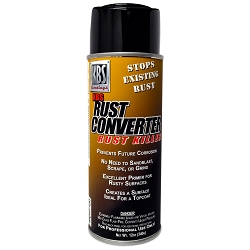
| KBS Rust Converter | Faster repairs on uniformly rusty areas | Rusty ferrous metal only, not mixed rusty and non-rusty areas | Optional after a 24-hour cure |
| KBS 3-Step System with RustSeal | Longest-lasting protection and full-fence restoration | Bare metal, RustBlast-treated rust, and sound coatings scuffed for adhesion | Recommended for prolonged direct sunlight |
Rust Converter: A Faster Repair for Uniformly Rusty Steel
KBS Rust Converter reacts with iron oxide and changes the rusty surface into a stable, matte-black, paintable layer. It requires less preparation than the complete RustSeal system, but the surface must already be rusty.
RustSeal: The Long-Term Rust Prevention System
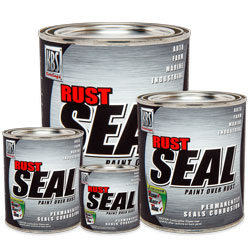
RustSeal is a single-component, moisture-cured urethane coating that forms a hard yet flexible barrier against moisture and oxygen. Use it after proper KBS Klean and RustBlast preparation when durability is the priority or the fence contains a mix of bare steel, treated rust, and sound existing paint.
BlackTop or KBS Top Coater: UV-Stable Final Finish
RustSeal's protective properties remain effective outdoors, but prolonged sunlight can change its color or sheen. Apply an opaque topcoat such as BlackTop or KBS Top Coater to maintain a consistent finished appearance. BlackTop is available in Gloss Black, OEM Satin Black, and Flat Black, while KBS Top Coater offers a broader color range.

Inspect the Fence Before You Start
Coatings can stop and prevent corrosion, but they cannot restore steel that has lost structural strength. Walk the full fence line and repair or replace weakened metal before coating.
- Rust depth: Look for flaking, scaling, deep pitting, or holes that indicate metal loss.
- Structural condition: Check for leaning posts, bent rails, loose panels, and failed welds.
- Joints and fasteners: Inspect connections where water can collect.
- Fence base: Give extra attention to steel near soil, vegetation, sprinklers, and standing water.
- Existing coating: Mark every area with peeling, bubbling, cracking, or poor adhesion.
Supplies and Tools for Steel Fence Rust Repair
- Wire brush, scraper, or 320-grit sandpaper
- KBS Klean and a bristle brush or scouring pad
- RustBlast for the RustSeal process
- KBS Rust Converter or RustSeal
- BlackTop or KBS Top Coater for the UV-stable finish
- Quality brushes, a low-nap roller, or suitable spray equipment
- Masking materials and drop cloths
- Protective gloves, safety glasses, and all respiratory protection required by the product label and directions
If you plan to spray RustSeal or a KBS topcoat, review the product-specific setup before mixing. Keep KBS #1 Thinner available for approved thinning and immediate cleanup, and consider the full-size KBS HVLP Spray Gun for long fence sections or the KBS HVLP Mini Spray Gun for smaller sections and detail work. Never use lacquer thinner to reduce RustSeal.
How to Use Rust Converter on a Steel Fence
Choose Rust Converter when the repair area is uniformly rusty and a faster process matters more than maximum system durability. Do not use it on bare steel, non-rusty metal, or an area that mixes rusty and non-rusty surfaces.
Prepare the Fence for Rust Converter
- Remove loose, flaky rust and debris with a wire brush or sandpaper. Leave the stable rust that the converter needs for its chemical reaction.
- If the surface is dirty, oily, or greasy, clean it with diluted KBS Klean, rinse thoroughly, and let it dry completely.
- Mask adjacent surfaces and protect the surrounding area from overspray.
Review the complete KBS Klean application directions before cleaning.
Apply Rust Converter
- Use the aerosol when the can is between 50°F and 90°F.
- Shake the can for at least one minute after the rattle begins, then shake it occasionally during use.
- Hold the can 8 to 12 inches from the steel and spray with steady, even strokes.
- Watch for the rust to turn black as the conversion reaction occurs.
- Allow 24 hours before applying another coat or a different topcoat.
Dry time varies with film thickness, temperature, and humidity. The published 10-minute touch-dry time is measured at 72°F, 50% humidity, and a 1.5 mil film thickness. Read the full KBS Rust Converter application directions before spraying.
Topcoat Rust Converter if Desired
Rust Converter can remain as a matte-black converted surface or receive a compatible topcoat after 24 hours. For a more uniform exterior finish, apply BlackTop, KBS Top Coater, or another topcoat allowed by the Rust Converter directions.
KBS Rust Converter
Fast conversion for uniformly rusty steel.
RustSeal
Durable barrier for full-fence restoration.
BlackTop
UV-stable black finish for outdoor exposure.
How to Restore a Steel Fence with RustSeal
For the longest-lasting repair, use the complete KBS 3-Step process: clean with KBS Klean, prepare the steel with RustBlast, then seal it with RustSeal. Apply an opaque, UV-stable topcoat when the fence receives prolonged direct sunlight.
1. Remove Loose Rust and Failing Paint
Remove loose rust, scale, and peeling paint with a wire brush, scraper, or sandpaper. Scuff well-adhered existing paint with 320-grit sandpaper so the new coating can bond.
Abrasive blasting is another option. If the steel is freshly blasted with clean media, free of grease and contamination, handled with clean gloves, and promptly coated, follow the current RustSeal directions for the approved blasted-metal process.
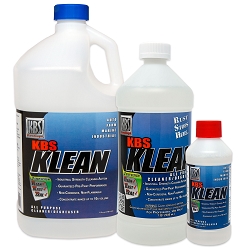
2. Clean with KBS Klean
- Dilute KBS Klean with hot water according to the contamination level. Current directions call for 1:1 for heavily soiled surfaces, 5:1 for moderately soiled surfaces, and 10:1 for lightly soiled surfaces.
- Apply the solution liberally and scrub for 5 to 10 minutes, or as long as needed to produce a clean surface.
- Do not allow KBS Klean to dry on the fence.
- Rinse thoroughly with water.
See the complete KBS Klean directions and dilution chart.
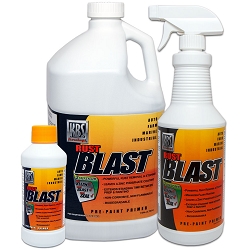
3. Treat with RustBlast
- Shake RustBlast, then apply it full strength to the dry steel with a spray bottle, brush, or roller.
- Keep the surface wet for at least 30 minutes on smooth or lightly rusted steel, 40 to 60 minutes on moderately rusted steel, or 1 to 2 hours on heavily rusted steel.
- Do not let RustBlast dry during treatment.
- Rinse thoroughly with water and allow the fence to dry completely. A slight zinc phosphate residue can remain and helps coating adhesion.
See the complete RustBlast application directions.
4. Apply RustSeal
- Apply in dry conditions with an ideal temperature range of 55°F to 82°F.
- Stir RustSeal thoroughly from the bottom to the top. Do not shake it.
- Brush, roll, or spray a thin, covering coat. Avoid overworking the brush or roller.
- Apply a minimum of two thin coats for a general fence application. Use at least three thin coats for marine or industrial service.
- Recoat when the prior coat is dry to the touch and does not leave a fingerprint, typically in 2 to 6 hours.
- If more than 8 hours pass, wait 24 hours, then lightly scuff the cured coat with 320-grit sandpaper or a green Scotch-Brite pad before recoating.
Thin coats are critical. Heavy coats, early recoating, rain, and humid conditions can cause bubbling by trapping solvent beneath a cured surface skin. Review the full RustSeal application directions before coating.
5. Topcoat RustSeal for Outdoor Exposure
Use BlackTop, KBS Top Coater, or another compatible opaque coating to protect RustSeal's appearance in direct sunlight. A clear coating does not provide the solid-color UV barrier specified in the RustSeal directions.
Choose one of these three application windows:
- Apply the topcoat when the second or final RustSeal coat is dry to the touch and does not leave a fingerprint, usually 3 to 6 hours depending on conditions.
- Let RustSeal cure for at least 24 hours, scuff it with 320-grit sandpaper, then apply the topcoat.
- Let RustSeal cure for at least 24 hours, apply a light dust coat of Fusion Self-Etch Primer, let the primer cure for 30 minutes, then apply the topcoat.
Frequently Asked Questions About Steel Fence Rust Repair
Should I use Rust Converter or RustSeal on a rusty steel fence?
Use KBS Rust Converter for uniformly rusty areas when you need a faster, simpler repair. Use the KBS 3-Step System with KBS Klean, RustBlast, and RustSeal when you want the longest-lasting protection or need to coat a mix of bare metal, treated rust, and sound existing paint.
Can KBS Rust Converter be applied to bare or partly rusted metal?
No. KBS Rust Converter is designed for rusty ferrous metal and should not be applied to non-rusty surfaces or areas that contain a mix of rusty and non-rusty metal. Use RustSeal with the recommended preparation process for mixed surfaces.
How long should KBS Rust Converter dry before topcoating?
Allow KBS Rust Converter to cure for 24 hours before applying a second coat or a different topcoat. It is typically dry to the touch in about 10 minutes at 72°F, 50% humidity, and a 1.5 mil film thickness.
How many coats of RustSeal should I apply to a steel fence?
Apply a minimum of two thin, covering coats of RustSeal for a general steel fence application. KBS specifies a minimum of three thin coats for marine or industrial applications.
How long should I wait between coats of RustSeal?
Recoat RustSeal when the prior coat is dry to the touch and does not leave a fingerprint, typically within 2 to 6 hours. If more than 8 hours pass, wait 24 hours, then lightly scuff the cured coat with 320-grit sandpaper or a green Scotch-Brite pad before recoating.
Does RustSeal need a topcoat on an outdoor fence?
Yes, an opaque topcoat is recommended when RustSeal will receive prolonged direct sunlight. UV exposure can change RustSeal's color or sheen even though its rust protection remains effective, so use BlackTop, KBS Top Coater, or another compatible solid-color topcoat.
Restore and Protect Your Steel Fence
Use Rust Converter for a quick repair on uniformly rusty steel. For a complete restoration, clean with KBS Klean, prepare with RustBlast, seal with at least two thin coats of RustSeal, and finish with an opaque UV-stable topcoat. Careful inspection, correct surface preparation, and thin coats will do more for durability than rushing the application.
Ready to Restore Your Steel Fence?
Choose the option that matches the condition of your fence and the result you want.
Complete Fence Restoration
Best for: Cleaning, preparing, sealing, and topcoating bare or rusty steel with one coordinated system.
Get the Complete All-In-One KitQuick Repair on Rusty Areas
Best for: Uniformly rusty steel when you want a faster repair with less surface preparation.
Choose KBS Rust ConverterLong-Term Rust Protection
Best for: Sealing prepared bare metal, treated rust, and sound existing coatings against moisture and oxygen.
Choose KBS RustSealUV-Stable Black Finish
Best for: Protecting RustSeal's appearance outdoors with a durable black topcoat.
Choose KBS BlackTopStill not sure which process fits your fence?
Ask KBS Technical SupportTagged Products