

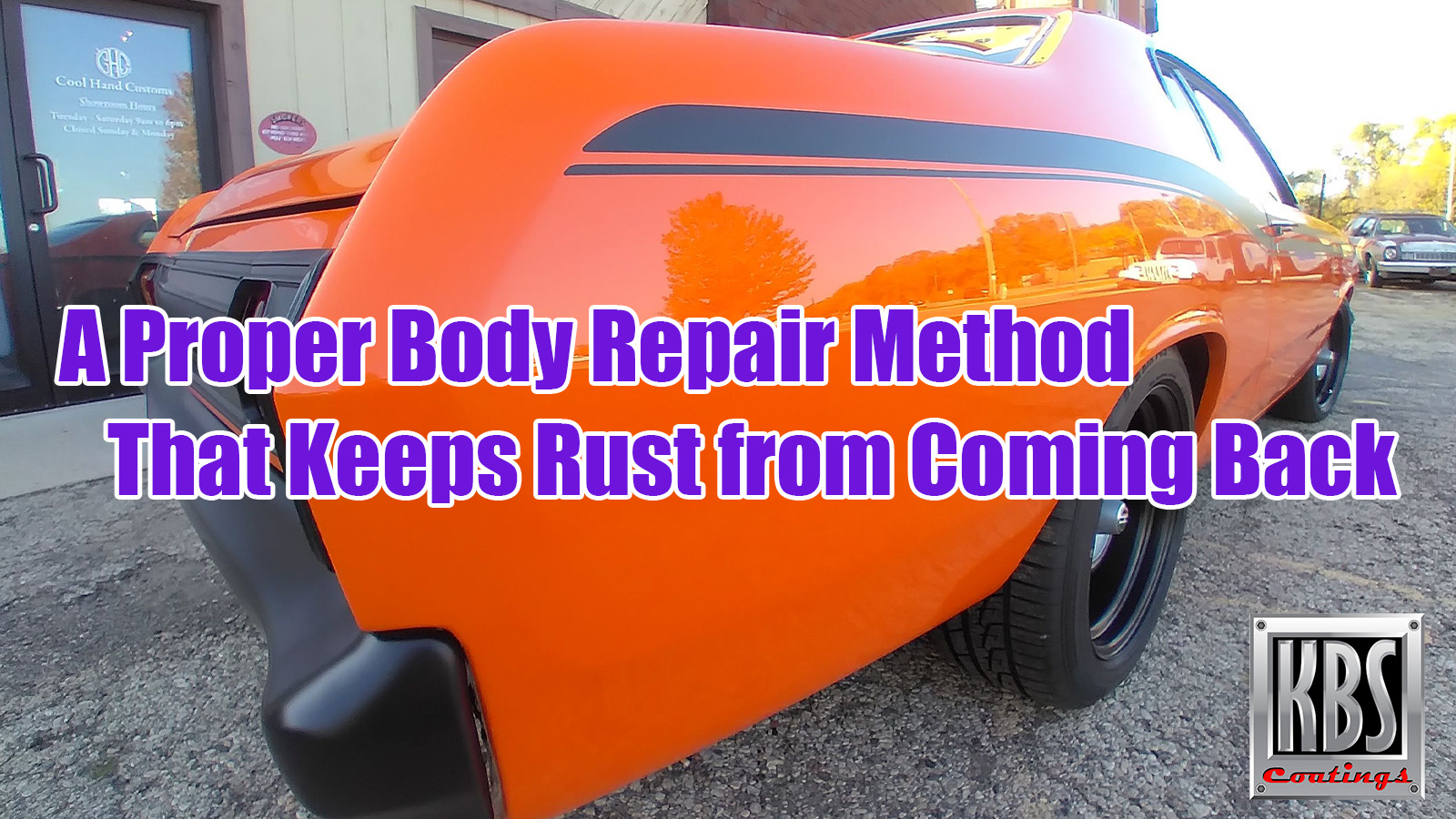
When you repair a damaged body panel, it is easy to leave a trace of rust behind without realizing it. Even a small amount can keep growing under new filler and paint, and any spot where metal stays exposed to air or moisture, behind a panel, under a seam, or beneath filler, can start rusting again later.
The fix is a rust prevention process that seals the repair completely before anything else goes on top of it. This guide walks through a proven rustproofing method using the KBS Coatings system, so a collision or body repair stays rust-free for good.
- Why Does Rust Return After Auto Body Repair?
- What Makes RustSeal Ideal for Preventing Rust After Collision Repair?
- How to Prepare Metal for RustSeal
- Apply RustSeal for Long-Term Protection
- Apply a Top Coat for UV Stability
- Applying Body Filler or Putty Over RustSeal
- Protect Hidden Areas with Cavity Coater
- Frequently Asked Questions
- Conclusion
Why Does Rust Return After Auto Body Repair?
Rust comes back after body repair when the original corrosion was never fully neutralized or when air and moisture still have a path to the metal. Even a small gap in primer, filler, or paint lets rust re-form underneath, often from incomplete cleaning or priming after grinding or welding.
The key to rust prevention after body repair is completely isolating the metal from air and moisture. RustSeal provides a durable, impervious rust preventive coating that locks both out permanently.
What Makes RustSeal Ideal for Preventing Rust After Collision Repair?
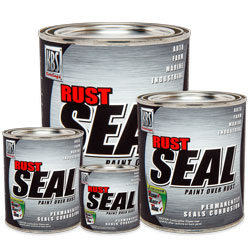
RustSeal is a rust preventive coating that forms a permanent barrier between bare metal and the environment. It is a 1K moisture-cured urethane that dries to a rock-hard yet flexible finish, does not chip or peel, and can go directly onto rusted, treated, or bare metal.
RustSeal works as the foundation for every layer that follows: primers, fillers, putties, and paint. It can also be applied over fillers and putties already on the metal, as long as no moisture is trapped underneath before coating, since trapped moisture creates rust of its own.
RustSeal can be applied by brush, roller, or spray, and once cured it forms a seamless, impermeable coating that resists water, salt, chemicals, and impact. Using it as a base coat seals a repair against oxygen and moisture from the start.
How to Prepare Metal for RustSeal: Cleaning and Surface Conditioning
Metal needs to be free of debris and contaminants, micro-etched for adhesion, and fully treated for any remaining light surface rust before RustSeal goes on. KBS Klean handles the cleaning step and RustBlast handles the rust treatment.
If patch panels or new body panels are being welded in, treat both the existing panel and the replacement panel with KBS Klean and RustBlast before welding.
Step 1: Remove Loose Rust and Paint
Use a wire brush, 320-grit sandpaper, or sandblasting to remove loose rust and paint. This gives RustSeal a solid, stable surface to bond to. RustSeal can still be applied over light surface rust once it has been treated with RustBlast, so sanding all the way to bare metal is not required.
Sandblasting is the fastest and most thorough option. When sandblasting, KBS Klean is not needed; RustSeal can go directly onto newly sandblasted metal that has been handled with gloved hands, with no prep beyond blowing off loose dust. Lightly scuff any well-adhered original paint with 320-grit sandpaper before proceeding.
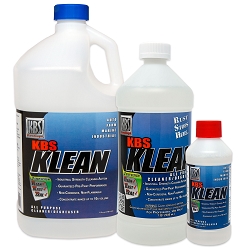
Step 2: Clean the Surface with KBS Klean
KBS Klean is a water-based degreaser and cleaner that removes dirt, grease, and grime without leaving a residue that hinders adhesion. Mix it with warm water, scrub with a sponge or bristle brush, then rinse and dry thoroughly. Full instructions: KBS Klean directions.
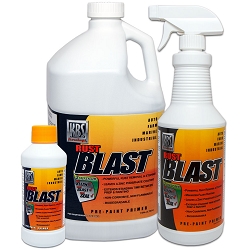
Step 3: Neutralize Rust with RustBlast
RustBlast penetrates, dissolves, and neutralizes rust on bare metal and rusted areas while etching the surface for RustSeal adhesion. Spray it on and keep it wet for 30 minutes to 2 hours depending on how much rust is present, scrubbing intermittently with a Scotch-Brite pad, then rinse and dry thoroughly.
A whitish zinc-phosphate residue will remain after treatment. That residue prevents flash rust, so do not remove it. Full instructions: RustBlast directions.
Stuck or unsure? Search the KBS Support Desk for instant answers
Apply RustSeal for Long-Term Protection
RustSeal serves as the rust-preventive foundation for primers, fillers, and putties, and it can also go over previously repaired areas where filler is already in place. No moisture should be trapped beneath those materials before coating, since trapped moisture leads to rust under the coating.

Choose brushing for small repairs or spray equipment for the smoothest finish on larger areas. Apply between 55 and 82°F, avoiding rain or high humidity, and stir the can from bottom to top before use. Thinning is generally not needed when spraying; if it is, 5 to 10% is normally enough.
Apply at least three thin, overlapping coats rather than a few thick ones. Once a coat is dry to the touch, typically 2 to 6 hours, apply the next coat within 8 hours. The area can be handled after 1 day, and full cure takes 7 days. Full instructions: RustSeal directions.
If patch or new body panels were welded in after cleaning and treating with KBS Klean and RustBlast, repeat both steps at the repair site before applying RustSeal, and coat the repair on both the front and back side to fully seal the metal.
Apply a Top Coat for UV Stability
RustSeal is not intended as a final finish for surfaces exposed to direct sunlight, since UV light can alter its color or sheen. Its rust protection stays fully effective regardless; a top coat is for protecting the cosmetic finish, and RustSeal can be top coated with any opaque paint system.
Apply a top coat once the second or final coat of RustSeal is dry to the touch and does not leave a fingerprint, usually 3 to 6 hours. There are two paths from there: let the RustSeal fully cure for at least 24 hours and scuff it with 320-grit sandpaper before top coating, or let it fully cure, dust it with KBS Fusion SEP Self-Etching Primer, let that cure for 30 minutes, then apply the top coat.
Applying Body Filler or Putty Over RustSeal
RustSeal gives body filler and putty a rock-solid, rust-free foundation once it has fully cured for at least 24 hours. From there, promote adhesion between RustSeal and the filler with one of two methods: scuff the RustSeal with 320-grit sandpaper for mechanical grip, or apply a dust coat of KBS Fusion SEP Self-Etching Primer.
Either method lets the filler bond mechanically and chemically while RustSeal keeps oxygen and moisture sealed out underneath, which is what keeps body filler from hiding rust.
Protect Hidden Areas with Cavity Coater
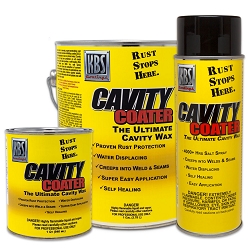
KBS Cavity Coater Aerosol protects seams, welds, and enclosed cavities that a brush or spray gun cannot reach. Applied with the Reusable Cavity Wand and its 48 inch hose with a 360 degree spray tip, it wicks into joints and forms a corrosion-inhibiting film after excess is wiped away.
Use it after RustSeal, fillers, and putties have been applied. Remove loose scaly rust and clean with KBS Klean where possible; the surface must be dry. Apply at 70 to 80°F: shake the can extremely well before and during use, hold it 8 to 12 inches from the surface, and apply a thin, even coat about 1 mil thick, covering completely without over-saturating.
Wait 10 minutes for the coating to wick into seams and weld joints, then remove excess with a rag dampened in mineral spirits. For enclosed cavities, attach the Reusable Cavity Wand to the aerosol, insert it, and withdraw at about 1 foot per second, repeating for full coverage. Full instructions: Cavity Coater directions.
RustSeal
Rust preventive base coat
RustBlast
Rust remover and metal treatment
Cavity Coater
Hidden cavity rust protection
Frequently Asked Questions About Rustproofing Body Repairs
Why does rust come back after auto body repair?
Rust comes back after body repair when the original corrosion was never fully neutralized or when air and moisture still have a path to the metal. Even a small gap in primer, filler, or paint lets rust re-form underneath, often from incomplete cleaning or priming after grinding or welding.
Can RustSeal be applied over light surface rust?
Yes. RustSeal can be applied over light surface rust once it has been treated with RustBlast, so sanding all the way down to bare metal is not required.
How long does RustSeal need to cure before top coating?
RustSeal is dry to the touch in 2 to 6 hours and can be top coated once the final coat no longer leaves a fingerprint, usually 3 to 6 hours. For a full cure before scuffing and top coating, wait at least 24 hours; full cure of the coating itself takes 7 days.
Does RustSeal need a top coat?
RustSeal is not intended as a final finish for surfaces exposed to direct sunlight, since UV light can alter its color or sheen over time. Its rust protection stays fully effective either way, but a top coat protects the cosmetic finish.
How do you protect hidden cavities and seams from rust?
KBS Cavity Coater Aerosol protects seams, welds, and enclosed cavities that a brush or spray gun cannot reach. Applied with the Reusable Cavity Wand and its 48 inch hose with a 360 degree spray tip, it wicks into joints and forms a corrosion-inhibiting film after excess is wiped away.
Still have questions? Search the KBS Support Desk for instant answers
Conclusion
Cleaning, etching, sealing, and rustproofing every surface is what keeps a body repair from rusting again. The KBS Coatings system, KBS Klean, RustBlast, RustSeal, and Cavity Coater, works together as a complete rust prevention strategy for professional body shops and DIY restorers alike. Follow the sequence in full, and primers, fillers, and paint all bond to metal that stays permanently sealed against moisture and oxygen.
Tagged Products