

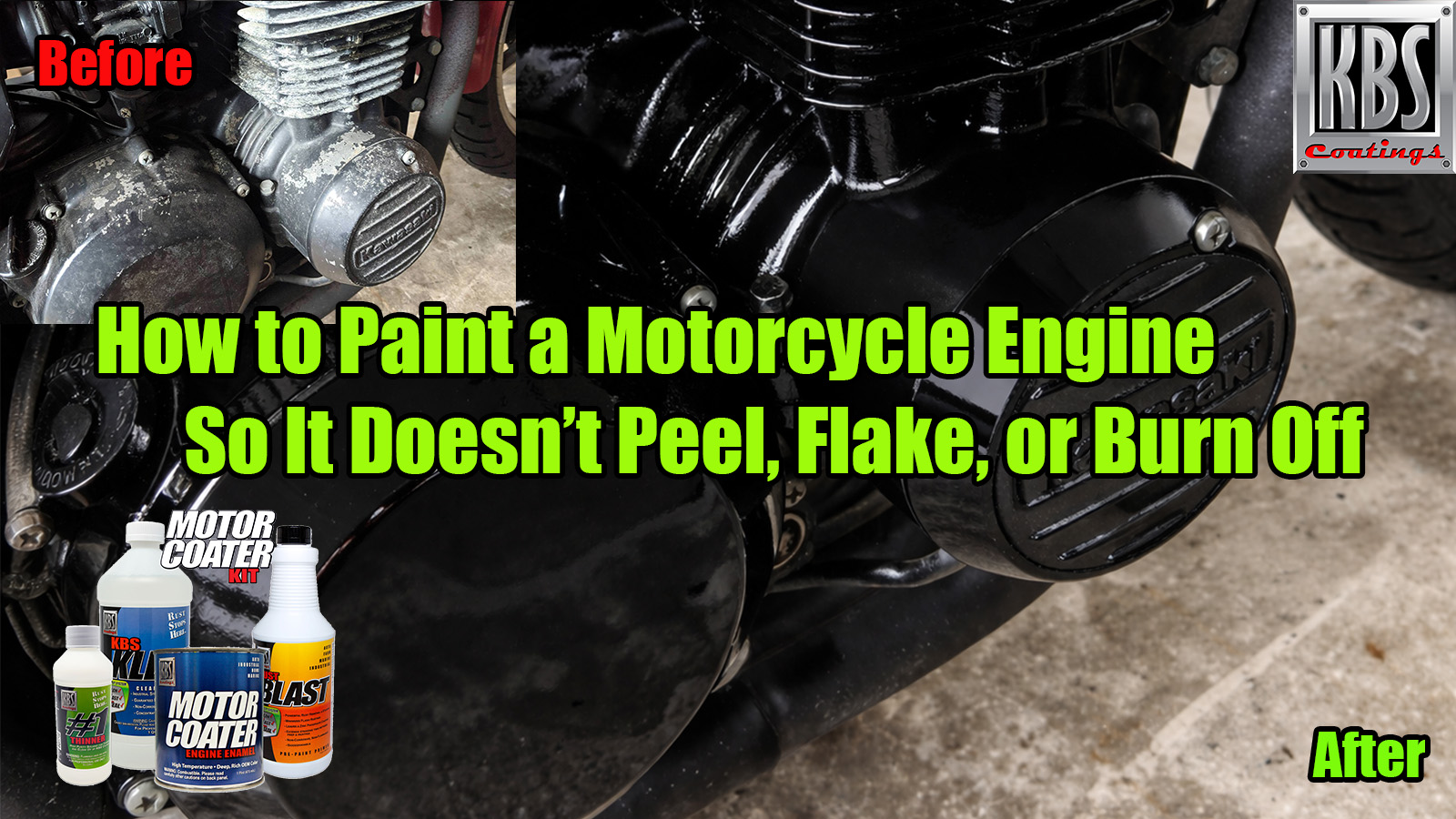
To paint a motorcycle engine so the finish does not peel, flake, or burn off, degrease the castings with KBS Klean, etch them with RustBlast, then brush or spray one to two thin coats of Motor Coater, an engine enamel that resists heat to 500°F and bonds direct to aluminum and cast iron with no primer. Apply between 55 and 82°F. Motor Coater is dry to touch in 2 to 4 hours and fully cured in 7 days.
Nearly every engine paint job that fails comes apart for one of four reasons: contamination left on the castings, corrosion painted over instead of removed, a paint that was never rated for engine heat, or coats laid on too thick. This guide covers all four and walks the job start to finish.
Updated October 2026 by the KBS Coatings technical team.
- Why Motorcycle Engine Paint Fails
- What Comes in the KBS Motor Coater Kit
- How Hot Does a Motorcycle Engine Get?
- What Is the Best Paint for a Motorcycle Engine?
- Do You Need Primer Under Engine Paint?
- How to Prepare a Motorcycle Engine for Paint
- How to Prep an Aluminum Engine Case
- Can You Paint a Motorcycle Engine Without Removing It?
- Step by Step: How to Paint a Motorcycle Engine
- Common Mistakes That Cause Engine Paint to Fail
- Frequently Asked Questions
- What Makes a Motorcycle Engine Paint Job Last
Why Motorcycle Engine Paint Fails
Motorcycle engine paint fails for four reasons: contamination left on the castings, corrosion painted over instead of removed, a coating that was never rated for engine temperatures, and coats applied too thick. Three of the four happen before the paint ever leaves the can, which is why prep decides the outcome more than the brand of paint does.
- Contaminants block adhesion. Dirt, oil, grease, fuel, silicone, oxidation, and cleaner residue left on a casting keep paint from bonding, which shows up later as peeling, fisheyes, or outright failure.
- Painting over corrosion. Loose, untreated rust is not a stable surface. The coating on top of it lifts, bubbles, and peels while the oxidation underneath keeps spreading.
- Paint not rated for engine temperatures. Coatings built for ambient use crack, discolor, and burn off once the engine gets hot.
- Thick coats trapping solvent. Paint laid on heavy skins over on the surface and traps solvent underneath, which stops proper off-gassing and leaves the film soft or wrinkled.

What Comes in the KBS Motor Coater Kit
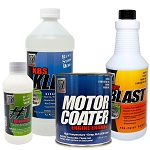
The Motor Coater Kit contains eight items, so the prep and the coating arrive matched rather than sourced separately. It is sized for a single engine and everything around it.
- KBS Klean, quart. Water based cleaner and degreaser concentrate that removes the oil, grease, and fingerprints that ruin adhesion.
- RustBlast, quart. Acid etch and rust remover that leaves a zinc phosphate film for Motor Coater to grip. Works on aluminum, brass, and copper as well as steel.
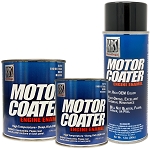
- Motor Coater in a pint, quart, or 12 oz aerosol, in any of 42 OEM matched colors. Diesel colors ship as quarts.
- KBS #1 Thinner, 8 oz. Slow evaporating reducer for spray work and the correct cleanup solvent.
- Nitrile gloves, a brush, a stir stick, and printed step by step instructions with the dwell times and cure windows.
An 8 oz can of RustSeal Galvanized can be added at checkout for castings that are pitted, coarse, or previously rusted.

How Hot Does a Motorcycle Engine Get?
A motorcycle engine block typically runs 150 to 250°F, the cylinder head runs 300 to 450°F, and surfaces near the exhaust ports can spike past 500°F. The coating has to be rated for the peak temperature, not the average, because the hottest part of the casting sets the requirement.
- Engine block: 150 to 250°F
- Cylinder head: 300 to 450°F
- Near the exhaust ports: spikes past 500°F
Why Do Standard Engine Paints Fail?
Standard paint fails on an engine because heat breaks down its binder. Once the binder softens, the film loses grip on the metal, oxidation discolors the pigment, and the repeated heat cycles of riding and cooling crack the surface until it flakes and peels away.
What Is the Best Paint for a Motorcycle Engine?
Use a high temperature engine enamel rated for at least 500°F. Motor Coater Engine Enamel is an acrylic enamel built on a ceramic resin system, which is what lets it carry underhood heat to 500°F without blistering, flaking, cracking, or peeling. It also resists oil, gasoline, and transmission fluid, and it stays UV stable, so an exposed engine does not chalk or fade in sunlight.
Motor Coater comes in 42 colors matched to factory engine finishes, so a rebuilt motor goes back in looking the way it did leaving the plant. It brushes, rolls, or sprays, and it self levels as it flows out.

Do You Need Primer Under Engine Paint?
No. Motor Coater bonds direct to cast iron and aluminum with no zinc primer once the casting has been cleaned with KBS Klean and etched with RustBlast. A freshly sandblasted casting can be coated directly after the loose dust is blown off. The etch creates the mechanical profile a primer would otherwise provide, which is why skipping primer costs you nothing here.
RustSeal is an optional extra step rather than a required one. On a casting that is pitted, coarse, or was previously rusted, an 8 oz can of RustSeal Galvanized under the color coat smooths the surface and adds a second corrosion barrier. Let the last coat of RustSeal cure at least 8 hours before Motor Coater goes on.


How to Prepare a Motorcycle Engine for Paint
Preparation decides whether the finish lasts, and it takes longer than painting does. The sequence is fixed: strip loose rust and old paint, degrease with KBS Klean, then etch with RustBlast. Each step depends on the one before it, because the cleaner the casting is when RustBlast goes on, the deeper the etch, and the harder Motor Coater grips.
Cleaning and Degreasing
Oil seepage, road grime, and baked-on residue have to come off before anything else, because even a fingerprint will keep paint from bonding at that spot. KBS Klean is a water based concentrate that lifts those contaminants without leaving the residue a solvent cleaner leaves behind.
Dilute it with warm water, since warmer water makes the cleaning action stronger. Scrub for 5 to 10 minutes for general cleaning, longer on a heavily soiled casting, then rinse clear and let it dry. Do not let KBS Klean dry on the surface before you rinse.

Removing Rust and Corrosion
Loose rust has to come off mechanically and what remains gets treated chemically. Wire wheeling, sanding, or sandblasting handles the flaking material, and RustBlast handles the rest. RustBlast is a rust remover, zinc phosphate pre-primer, and metal etch in one, so it neutralizes oxidation and leaves a micro-etched profile in the same pass.
You do not have to chase down every last speck of rust before coating. What matters is that nothing is loose and the surface has been etched.

How to Prep an Aluminum Engine Case
Aluminum needs a shorter RustBlast dwell than steel: 10 to 20 minutes, then a thorough rinse and a complete dry. The same applies to brass and copper. Leaving RustBlast on aluminum for the hour or two a heavily rusted steel part needs is the most common prep mistake on motorcycle engines, since most cases, covers, and heads are aluminum rather than ferrous.
A slight white powder residue after rinsing is normal. That is the zinc phosphate film, and it helps Motor Coater adhere, so leave it. What you want to avoid is letting RustBlast dry on the casting, which builds that film up too heavily and works against the seal. A treated part can sit uncoated for up to 7 days, as long as the surface is kept completely clean.
Why Prep Determines Adhesion
Paint grips a clean, profiled surface, not bare metal on its own. A polished or contaminated casting gives the coating nothing to key into, which is why the same can of paint can last for decades on one engine and lift off another within a season. On new, smooth, or shiny metal, scuff lightly with 120 grit before running the KBS Klean and RustBlast steps.
Can You Paint a Motorcycle Engine Without Removing It?
Yes, you can paint a motorcycle engine while it is still mounted, provided you can reach the surfaces you need to prep and mask everything that must stay clean. Painting in place saves the teardown, but it costs you access, and any surface you cannot clean and etch is a surface where the coating will eventually let go.
Three things decide whether it is workable on your bike:
- Access to the surfaces you need to prep and coat.
- Whether you can mask off everything that must not be painted.
- Application method, spraying or brushing.
Pros of Painting in Place
- Less labor.
- No teardown required.
Challenges
- Tight areas that are hard to reach.
- Overspray onto parts you did not intend to paint.
- Coverage limits on the back side of castings.
Why Brushing Works Well With the Engine in Place
Brushing beats spraying on a mounted engine because it puts paint only where you aim it and reaches into tight areas a gun cannot. Motor Coater self levels as it flows out, so brush marks disappear and a brushed engine finishes smooth without a gun or a booth. Do not overwork the brush: coat an area and move on rather than going back over it repeatedly.
Metallic colors are the exception. Those spray better than they brush, so plan on spray equipment if you have chosen a metallic.
Step by Step: How to Paint a Motorcycle Engine
The job runs seven steps, and the first four are all preparation. Work through them in order and do not start the coating steps until the casting is clean, etched, dry, and masked.
Step 1: Remove Rust and Paint
Remove all loose flaking rust with a wire brush or wire wheel. Sandpaper at 320 grit or sandblasting does the same job. Remove existing paint with a chemical stripper such as KBS Strip or by blasting.
If you cannot get all the paint off, scuff what remains with 400 grit. Anything you leave behind has to be firmly adhered, because the new coating is only as stable as what is under it.

Step 2: Clean and Degrease
Remove all surface contamination with KBS Klean.
- Mix KBS Klean with warm water. Dilution varies with the type and amount of contamination and with whether the metal is ferrous or non-ferrous.
- Scrub with a sponge or bristle brush, 5 to 10 minutes for general cleaning.
- Rinse clear before the cleaner dries on the surface.
- Dry thoroughly.
Keep dilution rates and dwell times to a minimum on alloys and non-ferrous metals. Full dilution guidance is on the KBS Klean directions page.

Step 3: Etch the Metal With RustBlast
Apply RustBlast full strength to the clean, dry casting and keep the surface wet for the whole dwell. Dwell time depends on the metal and on how much corrosion you are dealing with.
- Aluminum, brass, and copper: 10 to 20 minutes.
- Steel, smooth or lightly rusted: a minimum of 30 minutes.
- Steel, moderately rusted: 40 to 60 minutes.
- Steel, heavily rusted or corroded: 1 to 2 hours.
Scrub intermittently with a Scotch-Brite pad, then rinse thoroughly with water and let the casting dry completely. Do not let RustBlast dry on the surface before rinsing.
The whitish zinc phosphate residue that remains aids adhesion, so leave it in place. Full instructions are on the RustBlast directions page.

Step 4: Mask Off Components
Mask intake openings, exhaust ports, throttle bodies, wiring, sensors, spark plug holes, fuel lines, hoses, belts, and sealing surfaces. Protect bearings, seals, and electrical components. Masking takes longer than most people plan for, and it is cheaper than cleaning paint off a sealing face afterward.

Step 5: Apply Motor Coater
Apply Motor Coater by brush, roller, or spray gun between 55 and 82°F, out of rain and high humidity. In most cases a single full coat covers completely with full color depth.
- Stir, do not shake. Work the stirrer from the bottom of the can to the top for several minutes to disperse settled pigment. Shaking introduces air bubbles that show in the finish.
- Thinning. Spraying does not generally require it, but 5 to 10 percent is normally adequate if you need it. Use KBS #1 Thinner or xylene only, never lacquer thinner.
- Spray pressure. 35 to 45 psi for siphon and pot guns, 25 to 35 psi for gravity and top container guns. The KBS HVLP Mini Spray Gun suits the tight quarters of a motorcycle engine, and the full size KBS HVLP Spray Gun handles larger work.
- Aerosol. Shake at least one minute after the mixing ball rattles, hold the can 6 to 8 inches from the surface, and move in overlapping strokes rather than one continuous pass.
- Thin coats only. Heavy coats wrinkle as they cure.

Step 6: Apply a Second Coat Inside the Recoat Window
If you want a second coat, apply it within 30 minutes of the first or wait a full 7 days. The window in between is the one to avoid: the first coat is partly cured but not fully through, and fresh solvent on top of it can lift or wrinkle what is underneath. Two thin coats outperform one heavy coat.
Step 7: Let Motor Coater Cure
Motor Coater is dry to touch in 2 to 4 hours and reaches full cure in 7 days at room temperature. It is an ambient air-cured coating, so no heat and no oven step are required. Humidity and temperature shift the dry times either way.
To speed it up, air cure the final coat at ambient temperature for at least 1 hour, then heat the part to 140 to 180°F for 20 to 30 minutes. Force curing is optional. Full instructions are on the Motor Coater directions page.
Stuck or unsure? Search the KBS Support Desk for instant answers
Common Mistakes That Cause Engine Paint to Fail
Most failed engine paint jobs trace back to one of five mistakes, and four of them happen during prep rather than during painting.
- Painting over oil, grease, or other contamination.
- Rushing or skipping the cleaning and etching steps.
- Applying the coating too thick and trapping solvent underneath.
- Using a paint that was never rated for engine heat.
- Recoating between 30 minutes and 7 days, or handling the part before it has cured.
Frequently Asked Questions About Painting a Motorcycle Engine
How to paint a motorcycle exhaust?
To paint a motorcycle exhaust, use XTC Xtreme Temperature Coating instead of an engine enamel. Exhaust pipes, headers, and turbo housings run far hotter than the 500°F limit of Motor Coater, so an engine enamel will not hold up there. Bulk XTC is rated to 1500°F and XTC aerosols to 1200°F. Motor Coater covers the block, heads, cases, covers, and calipers up to the point where the exhaust begins. The KBS guide on how to paint a motorcycle exhaust covers the full job.
Can you paint a motorcycle engine?
Yes, you can paint a motorcycle engine, in place or out of the frame, as long as the castings are degreased, etched, and coated with a paint rated for engine heat. Painting in place works when you can reach the surfaces and mask everything that must stay clean. Brushing is often easier than spraying around a mounted engine because it gives you control in tight areas.
What type of paint is best for a motorcycle engine?
A high temperature engine enamel that bonds direct to metal. General purpose rattle can paint, lacquer, and house enamel soften and discolor at engine temperatures because their binders break down under heat. Motor Coater is an acrylic enamel built on a ceramic resin system, rated for underhood heat to 500°F, and it also resists oil, gasoline, and transmission fluid.
Do you need to primer an engine before painting?
No primer is needed with Motor Coater. It bonds direct to cast iron and aluminum with no zinc primer once the surface has been cleaned with KBS Klean and etched with RustBlast. On a casting that is pitted or was previously rusted, an optional 8 oz can of RustSeal Galvanized under the color coat smooths the surface and adds a second corrosion barrier.
What is the best coating for a motorcycle engine?
The Motor Coater Kit, because it supplies the prep and the coating as one matched system: KBS Klean to degrease, RustBlast to etch, and Motor Coater in any of 42 OEM matched colors. Prep and coating quality are what decide whether an engine paint job lasts. Parts that run hotter than 500°F, such as exhaust pipes and headers, need XTC instead.
How much Motor Coater do you need for one motorcycle engine?
A pint of Motor Coater is usually enough for an entire engine. A single full coat covers with full color depth in most cases, so a pint covers a typical motorcycle engine with material left for touch up. Motor Coater is also sold in a 12 oz aerosol, a gallon, and a 5 gallon pail. The Motor Coater Kit ships with either the pint or the aerosol.
Do you need to clear coat a painted motorcycle engine?
No. Motor Coater cures to a high gloss, UV stable finish that does not need a clear coat. If you want extra gloss and chemical resistance anyway, wait at least 7 days after the last coat of Motor Coater, then apply DiamondFinish Clear or KBS MAXX Clear. Clear coating sooner than 7 days risks lifting the color coat.
Still have questions? Search the KBS Support Desk for instant answers
More questions about this paint? See the Motor Coater FAQ hub.
What Makes a Motorcycle Engine Paint Job Last
A motorcycle engine paint job that lasts comes down to three things: a casting that is clean, an etched surface for the coating to key into, and a paint rated for the heat it will see. Degrease with KBS Klean, etch with RustBlast, apply Motor Coater in thin coats, and respect the recoat window. Do that and the finish stays put instead of peeling, flaking, or burning off.

Shop the Products Used in This Guide
Everything you need for the job in one kit, or buy the steps individually.
Shop the Motor Coater Kit Shop Motor Coater Shop KBS Klean Shop RustBlast
Related guides: How to Paint a Motorcycle Exhaust, How to Restore an Engine Bay Without Removing the Engine, How to Paint Rusty Exhaust Headers, or browse all KBS application guides.
Tagged Products