

We get this question almost every week: can I brush your metallic colors, or do I have to spray them? The short answer is yes, you can brush them, and plenty of customers get results they are happy with. The honest answer is that a metallic color will always look its best sprayed. Spraying is the only method that lets the aluminum flake land on the surface randomly instead of being pushed around by a brush.
That gap is not as wide as most people expect, though. Almost everything that makes a brushed metallic look streaky comes down to a handful of habits, and every one of them is fixable. This guide covers why metallic behaves differently from a solid color, which KBS metallics are the most forgiving to brush, the exact technique that gets you closest to a sprayed finish, and what to do if the first coat comes out blotchy.
- Which KBS Colors Are Metallic
- Why Metallic Paint Streaks When You Brush It
- Brush vs Spray vs Roll and Tip
- What You Need Before You Start
- How to Brush a Metallic Color, Step by Step
- Five Mistakes That Cause Streaking
- How to Fix a Streaky Metallic Finish
- Notes on Specific KBS Products
- Frequently Asked Questions
- The Short Version
Which KBS Colors Are Metallic
Metallic colors show up across several KBS product lines, and each one behaves a little differently under a brush. The table below covers every metallic we currently stock along with how forgiving it is to brush.
| Product | Metallic Colors | Type | How It Brushes |
|---|---|---|---|
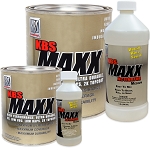
| KBS MAXX | Silver Metallic (Gloss), Silver Metallic Satin (Matte), Gunmetal Metallic (Gloss), Relic Metallic Blue (Gloss), Relic Metallic Blue (Matte), Silverpine Green Metallic (Gloss) | 2K polyurethane, single stage | Brushes well in small mixed batches. The satin and matte versions hide stroke marks best. Watch the pot life. |
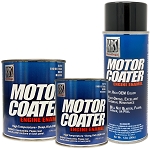
| Motor Coater | Aluminum, Pontiac Metallic Blue, 68 Caravelle Metallic Blue, 69-72 AMC Engine Metallic Blue, Austin Healey Moss Green Metallic | 1K high heat engine enamel, 500°F | The most forgiving metallics we sell. The self leveling ceramic resin flows brush marks out on its own. |
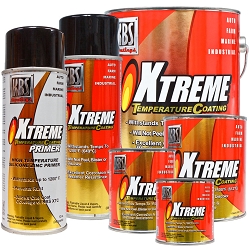
| XTC | Aluminum (Matte Metallic), Stainless Steel (Matte Metallic), Charcoal Metallic (Matte Metallic), Pontiac Metallic Blue (Matte Metallic) | 1K extreme temperature, 500°F to 1500°F | All matte, so flake variation barely reads. Easiest metallics in the line to brush. |
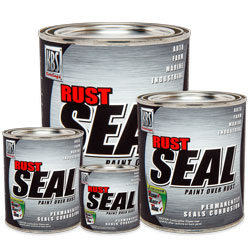
| RustSeal | Silver (Gloss), Galvanized (Matte) | 1K moisture cured rust preventive coating | Good flow and leveling. Silver Gloss shows more stroke than the matte Galvanized finish. |
| KBS Top Coater Chrome | Chrome | 1K aerosol | Aerosol only. This one cannot be brushed. |
Sheen matters more than anything else in that table. A matte or satin metallic scatters light across the whole surface, which blurs the difference between bright flake and dark flake. A gloss metallic reflects light in a straight line, which makes every flake row visible. If you are set on brushing and you have a choice between a gloss and a satin version of the same color, take the satin.
Why Metallic Paint Streaks When You Brush It
A solid color gets its color from pigment particles that are, for practical purposes, the same color from every angle. A metallic gets its look from tiny aluminum flakes suspended in the resin, and those flakes are essentially small mirrors.
A flake lying flat against the surface bounces light straight back at you and reads bright. A flake tipped up on edge sends light off sideways and reads dark. In a well sprayed metallic the flakes land at a wide mix of angles, and your eye averages all of that into a smooth, deep, sparkly finish that shifts as you walk around the part.
A brush changes that. Bristles physically push the flake as they pass through the wet film, and the flake ends up aligned with the direction of the stroke. Now the bright flakes and the dark flakes are organized into rows, and rows are exactly what your eye is good at picking out. That is the streaking. It is an optical effect from flake orientation, not a defect in the coating and not something wrong with the batch.
Two consequences follow from that, and they drive the whole technique:
- Every stroke direction has to agree. If half the part got brushed left to right and half got brushed top to bottom, you will see the seam between them for the life of the paint job.
- The less you disturb the wet film, the better. The flake settles toward flat on its own as solvent leaves. Overworking a brush keeps churning it right up until the film sets.
Brush vs Spray vs Roll and Tip
| Method | Finish on a metallic | Best for | Trade off |
|---|---|---|---|
| Spray | Best. Random flake orientation, full depth and sparkle. | Body panels, wheels, anything where appearance is the point. | Equipment, air supply, masking, overspray, cleanup. |
| Roll and tip | Very good on flat panels. Close to sprayed at arm's length. | Large flat areas: hoods, doors, trailer sides, equipment panels. | Needs speed and a helper on big panels. Awkward on complex shapes. |
| Brush | Good with careful technique. Some directional flake alignment is normal. | Small parts, brackets, engines, frames, tight or contoured areas. | Stroke direction shows more than it would in a solid color. |
Roll and tip is worth knowing about because it splits the difference. You roll a thin, even coat on with a fine foam roller, then immediately follow with a soft dry brush held at a shallow angle to knock down the stipple. The roller spreads material without organizing the flake the way a brush does, and the tipping pass only touches the very top of the film. On a hood or a trailer side it will beat brushing every time.
If you decide spraying is worth it after all, the Preval Sprayer converts most of our coatings into an aerosol for small parts, and the KBS HVLP Spray Gun handles full projects.
What You Need Before You Start
- Your metallic coating, plus enough of it to finish the whole part in one session
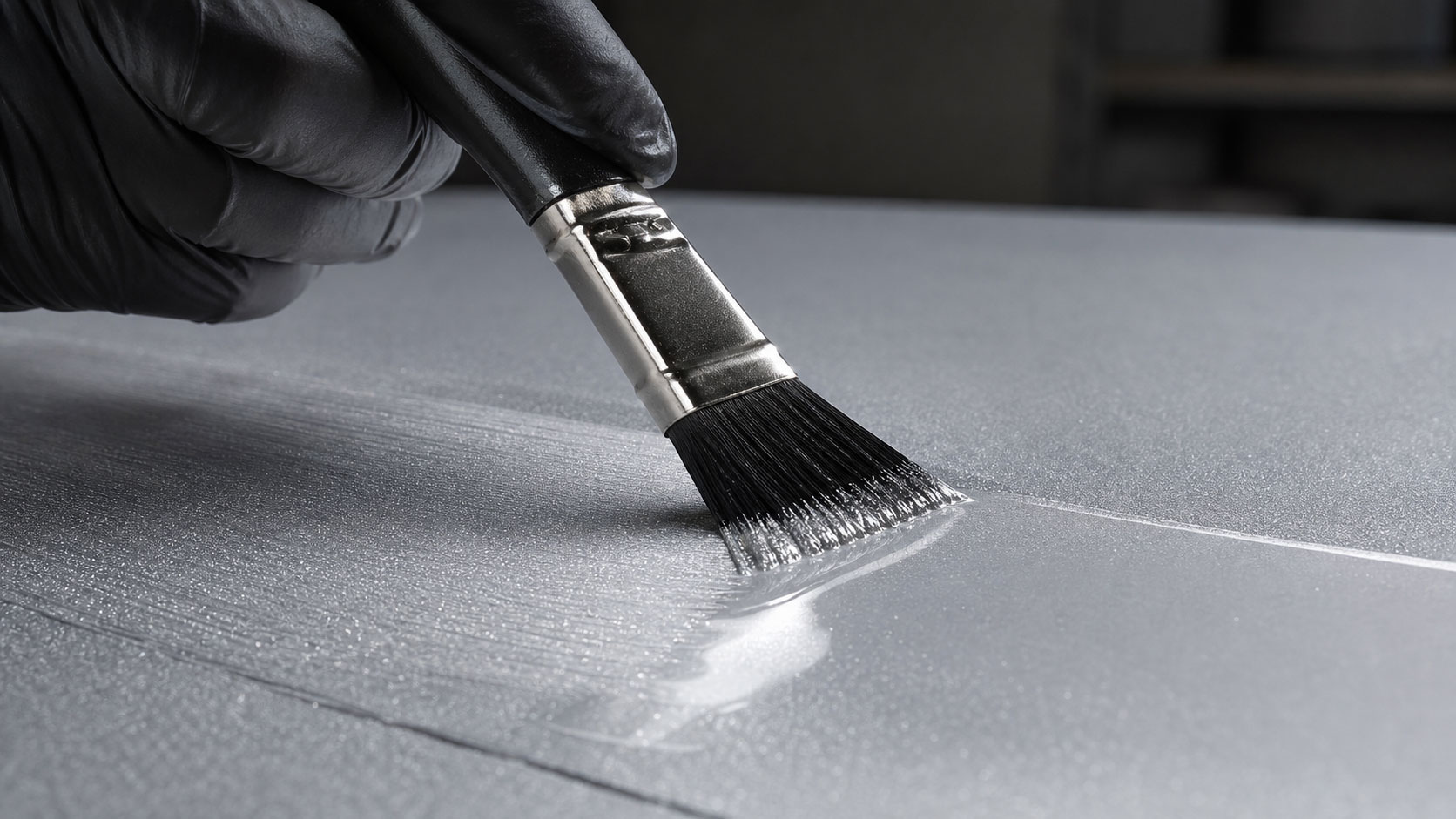
- A soft poly bristle brush with a chisel trim, sized so you can cover a section in a few strokes
- KBS #1 Thinner, for small viscosity adjustments and cleanup. Roughly 10% is a reasonable starting point if the material feels heavy.
- A stir stick or paint mixer, and a graduated mixing cup if you are using a 2K product
- Nitrile gloves and a lint free tack cloth
- A scrap panel prepped the same way as the real part, for a test pass
The scrap panel is the one people skip. Metallics look different on a screen, different in the can, and different again once they are on metal under your shop lights. Ten minutes on a scrap panel tells you whether your brush, your viscosity, and your stroke length are working before you find out on the part that matters.
How to Brush a Metallic Color, Step by Step
1. Stir thoroughly, and never shake
Aluminum flake is heavier than the resin around it, so it settles. Stir from the bottom of the can upward until the stick stops dragging through sediment, usually two to three minutes. Do not shake a moisture cured coating like RustSeal or DiamondFinish Clear. Shaking whips air and moisture into the material, and that comes back later as bubbles in the film.
2. Use a soft, fine, chisel trim brush
Brush choice does more for a metallic than almost anything else you can control. Stiff or coarse bristles plow the flake into rows and leave heavier stroke marks in the film. A soft poly bristle brush with a chisel trim lays material down and releases it cleanly, which gives the flake a chance to settle flat while the solvent flashes. Skip cheap foam brushes here; they tend to leave micro bubbles that show badly in a reflective metallic.
3. Control your temperature and light
Work between 65 and 85°F, out of direct sun, and never on hot metal. When the surface is hot the coating flashes before the flake has time to level, and the stroke pattern gets locked in exactly where the bristles left it. Sun on a panel also hides streaking while you work and reveals it an hour later. Position a light source so you can see the surface from a low angle as you go.
4. Break the part into small sections
Divide the piece along seams, body lines, and edges into sections you can lay down and tip off in about a minute. Stop at a natural break, never in the middle of an open panel. A lap line in a solid color is often invisible; a lap line in a metallic almost never is, because the two sides of it have different flake orientation.
5. Load light and lay it on
Dip about a third of the bristle length, and knock off the excess on the rim rather than the side of the can. Lay the material onto the surface in a few loaded strokes to spread it evenly, then stop. This is the hardest habit to break, because scrubbing back and forth feels like it should even things out. It does the opposite. It drags the flake into stripes and forces solvent out faster than the coating was designed to release it, which the coating repays with brush marks and bubbles.
6. Tip off in one direction
Within about a minute of laying the coating on, take an almost dry brush, hold it at roughly a 30 degree angle to the surface, and drag just the tips through the wet film with almost no pressure. One pass. Every tipping stroke on the entire part should run the same direction, and that direction should be the one the part is normally viewed from. On a fender that means front to back. On a frame rail that means along the rail.
7. Re-stir between loads
Flake keeps settling in the open can the whole time you are working. If you brush for twenty minutes without stirring, the last section gets noticeably less flake than the first, and that difference shows as a color shift. A quick stir every few minutes fixes it.
8. Build two or three thin coats
Each thin coat leaves the flake at a slightly different angle, so the layers average each other out. Two or three thin coats will look more even than one heavy coat every time. Thin coats also avoid solvent entrapment, where a skin forms over a still wet film and traps solvent gas underneath as bubbles. On RustSeal, apply the next coat once the previous one is dry to the touch and does not leave a fingerprint, typically 2 to 6 hours depending on temperature and humidity.
9. Consider a clear topcoat
A clear coat over a cured metallic evens out the gloss, adds depth, and softens whatever flake variation is left. Clear is also much easier to apply smoothly than a metallic color, because there is no flake in it to organize. DiamondFinish Clear and KBS MAXX Clear both work. The one thing a clear will not do is protect RustSeal from UV, so see the product notes below before you clear a RustSeal Silver part that lives outdoors.
Five Mistakes That Cause Streaking
- Overworking the brush. Going back and forth over an area that is already covered is the single biggest cause of streaked metallic. Lay it on, tip it off, walk away.
- Changing stroke direction partway through. Rotating a part on the bench and continuing to brush is an easy way to end up with two grain directions on one panel.
- Working too hot. A hot panel or a hot shop flashes the coating before the flake levels. If the surface is warm to the touch, wait.
- Not re-stirring. Flake settles fast. Twenty minutes of brushing without stirring produces a visible color shift from the first section to the last.
- One thick coat instead of two thin ones. A heavy coat sags, traps solvent, and holds whatever flake pattern the brush left it with. Thin coats self correct.
How to Fix a Streaky Metallic Finish
Most streaky first coats do not need to come off. Let the coating cure per its directions, scuff the surface lightly and evenly so the next coat has something to bite, clean off the sanding dust, and apply another thin coat using the technique above. The second coat scatters flake at a different angle than the first, and the two average out. A third coat averages further.
If light streaking is still visible after two or three coats, a clear topcoat will usually take it the rest of the way. Clear adds a smooth reflective layer over the top, so your eye reads the clear surface first and the flake variation underneath becomes much harder to pick out.
Stripping and starting over is only warranted when the film itself has a problem: runs, sags, or bubbles from solvent entrapment. Those are film defects, and no amount of coats on top will hide them.
Notes on Specific KBS Products
KBS MAXX metallics
KBS MAXX is a 2K polyurethane mixed 3 parts base to 1 part activator, and pot life drives everything about brushing it. Mixed material has a working pot life of under 4 hours at 70°F, but for brush and roll work you should mix only what you can apply in 30 to 60 minutes. As mixed material sits it thickens, and thickened material drags flake much worse than fresh material. Small batches keep viscosity consistent from your first section to your last. KBS MAXX is permanently UV stable, so a metallic MAXX finish holds its color and gloss outdoors without a topcoat.
Motor Coater Aluminum and metallic blues
Motor Coater is the friendliest metallic in the line for brush work. The self leveling ceramic resin system is formulated so brush marks flow out on their own, which gives the flake extra time to settle before the film sets. A pint or a 12 oz aerosol is usually enough for an entire automotive engine. Motor Coater is also UV stable, so an Aluminum engine block or a set of metallic blue valve covers will not chalk or fade.
XTC metallics
All four XTC metallics are matte, which makes them the most forgiving metallics we sell for brush application. A matte surface scatters light in every direction, so the bright and dark flake rows that would show in a gloss finish blend together. XTC is the right choice above 500°F, where Motor Coater stops.
RustSeal Silver
RustSeal Silver has good flow and leveling and brushes well, but there is a UV caveat that matters for metallic specifically. RustSeal is not intended as a final finish in direct sun. Prolonged UV exposure changes its color and sheen, and on a metallic that shows up as the flake going flat and dull. Its rust protection does not degrade, only the appearance. A clear topcoat will not solve this, because a clear cannot provide the needed UV protection. If a RustSeal Silver part lives outdoors, topcoat it with an opaque UV stable coating such as KBS MAXX or KBS Top Coater. Under a car, on a frame, or anywhere out of direct sun, RustSeal Silver works fine as a final finish.
Frequently Asked Questions About Brushing Metallic Paint
These are the questions our technical team fields most often about metallic colors and brush application. If yours is not here, our team in Valparaiso, Indiana is happy to talk through your specific part.
Yes. Every brushable KBS coating that comes in a metallic color can be applied with a brush, including RustSeal Silver, Motor Coater Aluminum and the Motor Coater metallic blues, KBS MAXX Silver Metallic and Gunmetal Metallic, and the XTC metallic colors. The one exception is KBS Top Coater Chrome Spray Paint, which is an aerosol only product. Metallic colors will always look their best sprayed, because spraying is the only method that lets the flake land randomly instead of being dragged by a brush. With good technique you can get very close to a sprayed appearance.
Metallic color comes from tiny aluminum flakes suspended in the coating, and those flakes act like small mirrors. Flakes lying flat reflect a lot of light and look bright, while flakes standing on edge reflect very little and look dark. A brush physically drags the flake into rows aligned with the stroke, so the bright and dark areas line up into visible stripes. The streaking is an optical effect from flake orientation, not a defect in the coating.
A soft, fine, chisel trim brush with poly bristles. The KBS Paint Brush with black poly bristles and a chisel trim is formulated for exactly this, and is the brush we recommend for 1K and 2K topcoats. Stiff or coarse bristles plow the flake into rows and leave heavier brush marks. Avoid cheap foam brushes on metallics as well, because they tend to leave micro bubbles in the film.
A small amount of thinning helps the coating flow out and gives the flake more time to level, especially in warm weather. Roughly 10% is a reasonable starting point. Use KBS #1 Thinner only, add it in small increments, and stir it in fully before testing on scrap. Over thinning is a real risk on metallics, because a thin film lets the flake float and pool, which shows up as blotchy mottling instead of clean streaks. Check the directions for the specific product you are using before you thin.
Matte and satin metallics hide brush streaking far better than gloss metallics, because a low sheen surface scatters light and blurs the difference between bright and dark flake areas. XTC Aluminum, XTC Stainless Steel, XTC Charcoal Metallic, and KBS MAXX Silver Metallic Satin are the easiest metallics in our line to brush well. Gloss metallics such as KBS MAXX Silver Metallic Gloss and Gunmetal Metallic show every mistake, so they reward careful technique.
Usually yes. Let the coating cure, scuff the surface lightly and evenly, clean it, then apply another thin coat with better technique. A second and third thin coat average out the flake orientation from the coat underneath. If light streaking remains after that, a clear topcoat will soften it further. Stripping is only necessary when the film has runs, sags, or trapped solvent bubbles.
It does, and pot life is the reason. Once KBS MAXX is mixed at 3 parts base to 1 part activator it has a working pot life of under 4 hours at 70 degrees Fahrenheit, but for brush and roll work you should mix only what you can apply within 30 to 60 minutes. As mixed material ages in the cup it thickens, and thickened material drags the flake much worse. Small batches keep the viscosity consistent from the first section to the last.
It helps in most cases. A clear coat evens out the gloss, adds depth, and visually softens minor flake variation, and clear is much easier to apply smoothly than a metallic color. One caution: on RustSeal, a clear topcoat does not provide UV protection. RustSeal Silver used in direct sunlight should be topcoated with an opaque UV stable coating such as KBS MAXX or KBS Top Coater rather than a clear.
On large flat panels, the roll and tip method usually beats brushing alone. You roll a thin even coat with a fine foam roller, then immediately tip it off with a soft dry brush in one direction. The roller distributes material without dragging the flake in a single direction, and the tipping pass removes the stipple. On small, complex, or heavily contoured parts a brush alone is easier to control.
Request a free painted out color sample from KBS Coatings. Screen images cannot reproduce how metallic flake shifts with viewing angle and lighting, so a physical sample is the only reliable way to judge a metallic before you commit to a quart or a gallon.
The Short Version
Spray a metallic if you can. If you cannot, brush it with a soft chisel trim brush, work in small sections at a moderate temperature, lay the coating on instead of scrubbing it, tip it off once in a single direction, re-stir the can as you go, and build two or three thin coats instead of one heavy one. Pick a satin or matte metallic over a gloss if the choice is available, and finish with a clear if you want to close the last of the gap.
Do that and a brushed metallic will look far better than most people expect. Our technical team in Valparaiso, Indiana talks customers through this every week, on parts ranging from valve covers to trailer frames. If you are unsure which product or color fits your part, ask before you order.
Tagged Products