

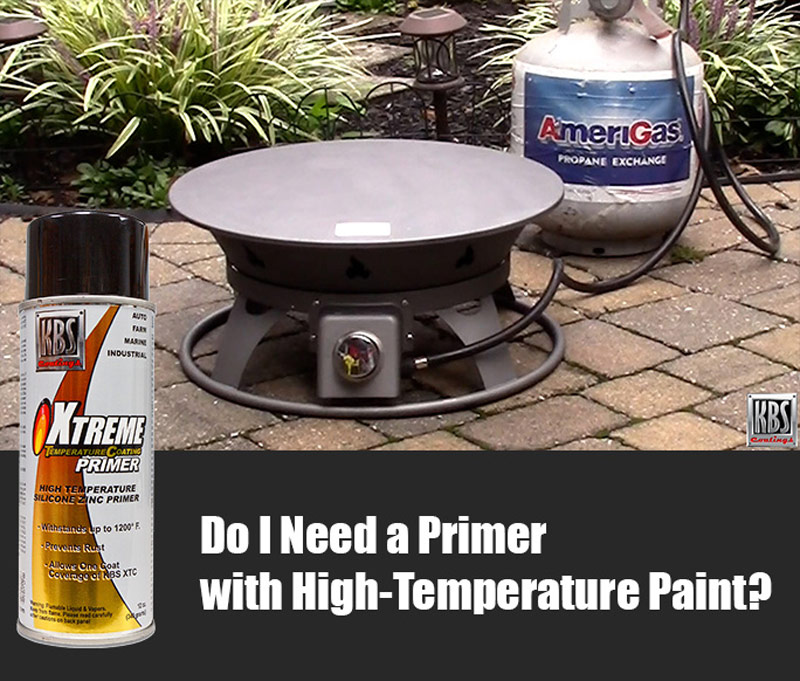
Whether high temperature paint needs a primer depends on the product: KBS XTC bonds directly to properly prepared bare metal with no primer required, while XTC Primer is available as an optional step that adds rust and corrosion protection under the color coat. This guide covers when to use XTC Primer, when to skip it, and how to apply and heat cure the complete system.
Do You Need Primer for High-Temperature Paint?
No, XTC does not require primer for adhesion. Once the metal is properly prepped and degreased, XTC bonds directly to bare steel, cast iron, and other common substrates on its own. Primer becomes worth adding when the part needs extra rust prevention or when surface imperfections need hiding, not because XTC will fail to stick without it.
This surprises people who are used to automotive primer-surfacer systems where skipping primer is a real adhesion risk. High-temperature coatings like XTC are formulated differently: the film itself is built to key into a properly profiled metal surface, so the primer step is about corrosion resistance and cosmetics, not bonding.
When XTC Primer Is Worth Using
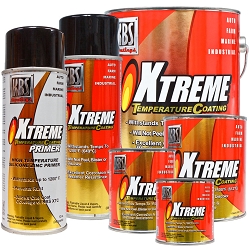
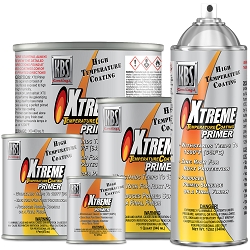
XTC Primer earns its place on bare steel prone to rust, on parts that see moisture or temperature swings, and anywhere maximum rust protection matters more than saving a step. It is a zinc-rich, 1200F-rated coating designed specifically to sit under XTC color coats.
- Rust Prevention: Adds a corrosion-resistant barrier under the topcoat.
- Hide: Covers pitting, old paint ghosting, and other surface imperfections the color coat alone would show through.
- Bare, rust-prone metal: Steel and iron parts that will see moisture or humidity swings benefit most.
- Manufacturer guidance: When a part's OEM or a shop's own spec calls for a primer step, follow it.
XTC Primer can also be left as the finish coat on its own. It is rated to 1200F and does not have to be topcoated with a color of XTC, which makes it a fast option when appearance matters less than protection.
Applying XTC Primer and XTC
Apply XTC Primer and XTC in four steps: prep the bare metal, degrease with KBS Klean, apply thin coats, then heat cure. Both products go on by brush, roller, aerosol, or spray gun, always in thin, even coats rather than one heavy pass.
1. Surface Preparation
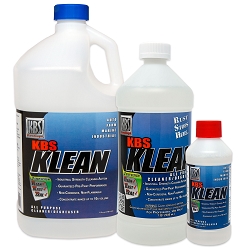
Remove loose or flaking rust and old paint with 320 grit sandpaper, a wire brush, or sandblasting, then rough the surface to a 60-80 grit anchor pattern so the coating has something to grip. Degrease with KBS Klean mixed 10 parts water to 1 part KBS Klean, scrub, rinse thoroughly, and dry completely before painting. Even a thin layer of oil or dirt left behind can stop a high-temperature coating from bonding properly.
2. Priming (If Using XTC Primer)
Apply one thin coat of XTC Primer at approximately 1.0 mil dry film thickness by brush, roller, aerosol, or spray gun. If topcoating with XTC, one coat of primer is typically enough; if leaving XTC Primer as the finish coat, apply two thin coats instead. Allow 15 to 30 minutes between sprayed coats or 8 hours between brushed or rolled coats, and let the primer dry 1 to 2 hours before topcoating with XTC.
3. Applying XTC
Apply two thin coats of XTC at 1.0 to 2.0 mils dry film thickness each if not using XTC Primer, or one coat over cured XTC Primer. Allow 1 to 2 hours between brushed or rolled coats, or 15 to 30 minutes between sprayed coats. Apply when the air and metal temperature are between 50 and 82 degrees F.
Temperature Curing the Paint
Both XTC Primer and XTC need a heat cure to reach full hardness, at approximately 350 degrees F. The published bake window is 20 to 30 minutes, and KBS has confirmed up to 50 minutes at 350F is also acceptable, so there is real flexibility in how long a part stays in the oven or on the grill.
Wait at least 8 hours after the final coat before curing, so the solvent has fully flashed off. Heat the part until the coating begins to smoke, then remove it and let it cool naturally to room temperature. Repeat that heat-and-cool cycle three times. On the fourth cycle, heat until the coating smokes again and keep it heated until the smoke fully dissipates, then let it cool one final time. This gradual break-in is what gives the coating proper adhesion; skipping ahead to a longer single cure risks blistering.
For headers and manifolds, this can be done directly on the engine instead of an oven or BBQ: idle the engine until the coating smokes, shut it off, and let it cool between cycles. Ventilate the area well during the first few heat cycles, since the coating can emit vapors as it cures.
Stuck or unsure? Search the KBS Support Desk for instant answers


Frequently Asked Questions About XTC Primer
Can I use high temperature paint without primer?
Yes. XTC bonds directly to properly prepared bare metal with no primer at all. Sandblast or sand the surface to 60-80 grit, degrease with KBS Klean at a 10:1 water ratio, and XTC adheres on its own. Primer is optional, not required for adhesion.
What primer is recommended for high-temperature paint?
Use a primer formulated for the same temperature range as the topcoat. KBS XTC Primer is a zinc-rich coating rated to 1200F, built specifically to pair with XTC Xtreme Temperature Coating and add rust protection under the color coat.
Does Rustoleum high heat paint need a primer?
Rustoleum's own high heat paint technical sheet states priming is not recommended for that product. Primer requirements vary by brand and formulation, so always check the specific coating's own directions rather than assuming one high-temp paint's primer rule applies to another.
Does XTC Primer have to be topcoated, or can it be left as the finish?
XTC Primer can be left as the finish coat and does not have to be topcoated. It is rated to 1200F on its own. Topcoating with a color of XTC adds a wider color choice and the higher 1500F continuous rating of liquid XTC.
How long do you have to wait before heat curing XTC?
Wait at least 8 hours after the final coat before heat curing, to let the solvent flash off completely. Curing too soon traps solvent under the film and causes blistering during the heat cycles.
What temperature and how long do you heat cure XTC?
Heat the coated part to approximately 350F. The published bake window is 20 to 30 minutes, and up to 50 minutes at 350F is also acceptable. Cycle the heat three times, letting the part cool to room temperature between cycles, then run a fourth cycle until the coating smokes and the smoke fully dissipates before the final cool-down.
Still have questions? Search the KBS Support Desk
Conclusion
XTC does not require a primer to bond to properly prepared metal, so the real question is whether the job needs the extra rust protection XTC Primer provides. Bare steel exposed to moisture, pitted surfaces, or parts where maximum corrosion resistance matters are the cases where adding it pays off. Either way, surface prep, thin coats, and the full heat cure sequence are what actually make the system hold up at temperature.
Tagged Products