

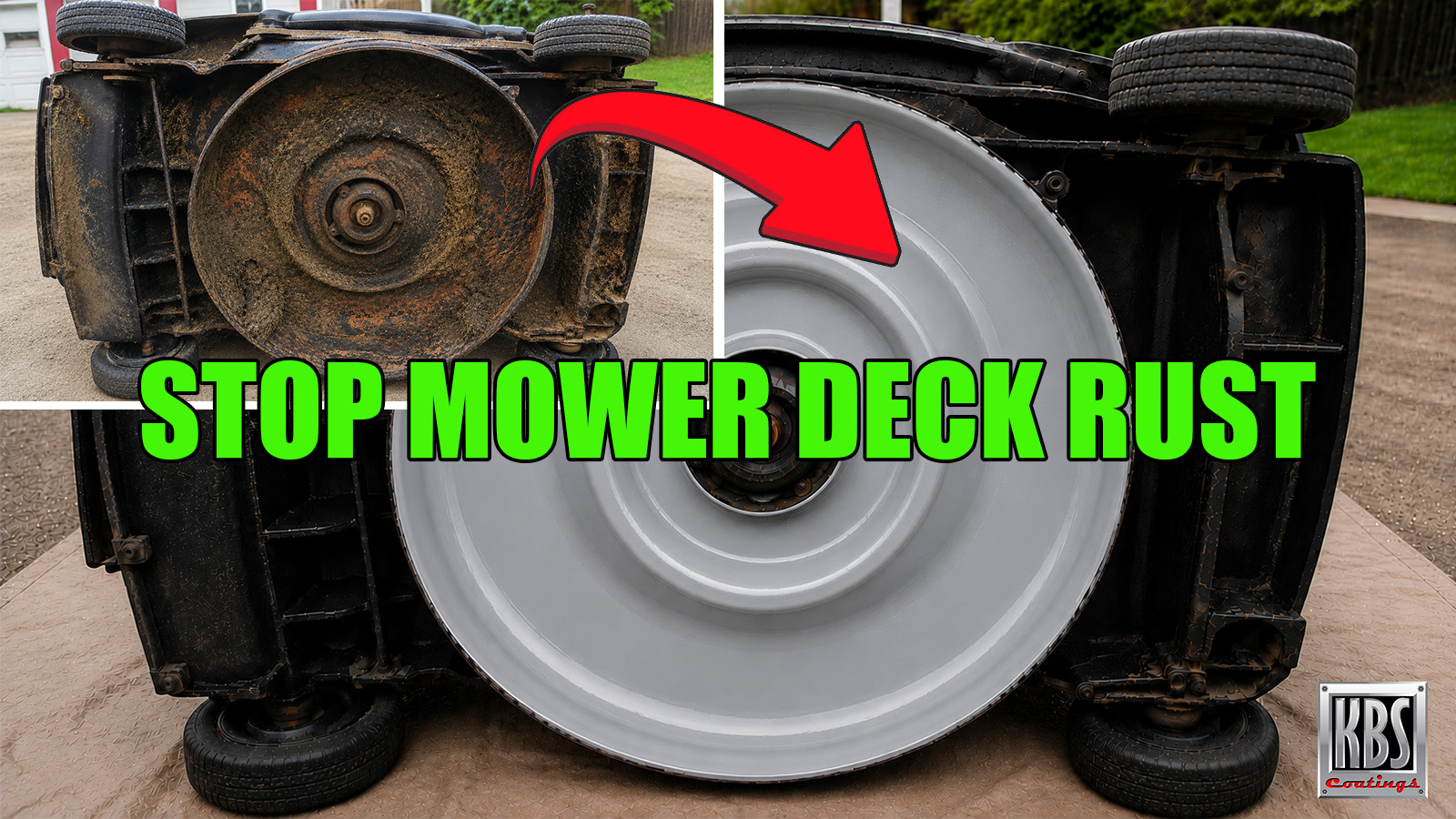
The best way to prevent mower deck rust is to remove grass buildup and loose rust, thoroughly clean and prepare the metal surface, and apply a durable rust-preventive coating. This article demonstrates the process using the KBS Coatings 3-Step Rust Prevention System of KBS Klean, KBS RustBlast, and KBS RustSeal for lasting corrosion protection.

Ready to stop mower deck rust for good?
The KBS 3-Step System gives you a complete, proven process — from degreasing to final coat — in one kit.
Why Do Mower Decks Rust?
Mower deck rust occurs when moisture remains in contact with steel for extended periods. Lawn mower deck rust typically begins when water and oxygen reach exposed metal surfaces and gradually spread over time. While aluminum mower decks do not rust, they are still susceptible to corrosion.
The underside of a mower deck is particularly vulnerable because it is constantly exposed to rain, humidity, dew, and wet mowing conditions. During operation, grass clippings, dirt, and debris accumulate on the underside of the deck. Wet grass can trap moisture against the metal, while dirt and debris can restrict airflow and slow drying. In addition, abrasive materials such as sand and soil can gradually wear away painted surfaces, exposing bare steel.
The combination of moisture, accumulated debris, and surface wear creates ideal conditions for rust and mower deck corrosion to develop on the underside of a mower deck.

What Problems Can Mower Deck Rust Cause?
A rusted mower deck can develop a variety of problems that affect durability and mowing performance. The severity of these issues generally increases as rust spreads and metal deterioration becomes more extensive.
Structural Weakening
As rust consumes the steel, the metal gradually becomes thinner and weaker. Areas exposed to constant accumulation of moisture and debris are often the first to deteriorate. Over time, this loss of material can reduce the strength of the deck and make it more susceptible to damage.
Rust-Through and Holes
Advanced rust can eventually penetrate the steel, creating holes and perforations in the mower deck. Once rust-through occurs, the deck becomes increasingly vulnerable to further deterioration and may require extensive repairs or replacement.
Increased Maintenance and Repair Costs
The longer rust is allowed to progress, the more costly repairs can become. Surface rust is often relatively easy to address, but extensive oxidation may require welding, patching, or complete deck replacement. Preventing rust early is generally less expensive than repairing severe rust damage.
Reduced Mowing Performance
Rust can create rough, uneven surfaces on the underside of the mower deck. As corrosion and deterioration increase, airflow beneath the deck may be disrupted, potentially affecting grass discharge and overall cutting performance.
What Is the Best Way to Prevent Mower Deck Rust?
The best way to stop and prevent mower deck rust is to remove loose rust and failed coatings, clean the metal surface with a degreaser, treat bare metal with a rust converter, and apply a moisture-cured rust prevention coating such as KBS RustSeal. Regular inspection and cleaning after each use help extend coating life and prevent corrosion from returning.
Key Steps:
- Remove loose rust and failed coatings
- Clean the deck thoroughly
- Prepare the metal surface
- Apply a rust preventive coating
- Perform routine maintenance
While many rust prevention products are available, the most effective rust prevention systems follow the same basic principles of cleaning, surface preparation, and moisture exclusion.
The following steps demonstrate how the KBS Coatings 3-Step Rust Prevention System is used for this process.
What You Need to Refinish a Rusted Mower Deck
- KBS Klean – Water-based cleaner and degreaser for removing oil and grime
- KBS RustBlast – Rust remover and zinc phosphate surface prep
- KBS RustSeal – Moisture-cured coating that stops and prevents rust
- KBS #1 Thinner – For thinning KBS RustSeal as needed
- Wire Wheel, Sandpaper or Sandblaster – For removing loose rust and smoothing surfaces
- Scotch-Brite Pads – Help break up stubborn contamination
- Sponge – For applying cleaners and rinsing surfaces
- Scrub Brush – Agitates heavy dirt and rust areas
- Paint Brushes or Spray Equipment – For applying coatings evenly
KBS 3-Step Rust Prevention System
Everything above starts with these three products. Used together, they clean, prep, and seal metal against rust permanently.
1. Remove Existing Rust and Failed Coatings
Before applying a protective coating, any existing rust, loose paint, or failing coatings should be removed. Rust can continue to spread beneath a new coating, while loose or deteriorated coatings can prevent proper adhesion. Applying a coating over unstable surfaces often leads to premature peeling, flaking, and coating failure.
For removal, use one of the following:
- Wire wheel
- 320-grit sandpaper
- Sandblasting
If some coating is still firmly adhered:
- Scuff with 320-grit sandpaper to give KBS RustSeal a tooth to grip.
Note that light surface rust can remain when treated with KBS RustBlast and coated with KBS RustSeal, which reduces labor time. KBS RustSeal can also be applied directly to newly sandblasted metal surfaces that have been handled with gloved hands. No further preparation other than blowing off loose dust is required.

2. Thoroughly Clean the Mower Deck
After loose rust and failed coatings have been removed, the mower deck should be thoroughly cleaned before any coating is applied. Grass buildup, dirt, grease, oil, and other contaminants can interfere with adhesion and prevent the coating from properly bonding to the metal surface. Cleaning also helps expose hidden rust or damaged areas that may require additional preparation.
For this step, KBS Klean is used to remove dirt, grease, oil, grass residue, and other contaminants from the mower deck surface. Unlike some cleaners that can leave residue behind and reduce coating adhesion, KBS Klean rinses clean to ensure the metal surface is ready for the next stage of preparation.
Use KBS Klean as directed:
- Mix KBS Klean with hot water.
- Dilution rates will vary according to the type and degree of contaminants, as well as whether the metal is ferrous or non-ferrous.
- Scrub with a bristle brush and Scotch-Brite pad.
- Rinse with water and dry completely.
- Follow the KBS Klean application instructions, including recommended dilution rates.

3. Properly Prepare the Metal Surface
Proper surface preparation is critical for long-term coating performance. Once loose rust and coatings have been removed and contaminants cleaned from the surface, the metal must be prepared to promote strong adhesion. A properly prepared surface helps the coating bond more effectively, improving durability and resistance to moisture, wear, and future rust formation.
For this step, KBS RustBlast is used as a rust treatment for the lawn mower deck. KBS RustBlast is applied to bare metal or areas with light rust or corrosion to dissolve existing oxidation and leave a micro-etched surface profile that promotes superior adhesion for KBS RustSeal.
Use KBS RustBlast as directed:
- Spray it on and keep wet for 30 minutes to 2 hours, depending on rust or corrosion severity.
- For aluminum, apply KBS RustBlast for 10–20 minutes.
- Scrub intermittently with a Scotch-Brite pad.
- Rinse and dry thoroughly.
- A whitish zinc-phosphate residue will remain. This is beneficial and prevents flash rust. Do not remove it.
- Follow the RustBlast application instructions.
As a reminder, light surface rust does not need to be completely removed, as KBS RustSeal can be applied directly over surface rust treated with KBS RustBlast.

4. Apply a Durable Rust Protective Coating
What Is the Best Thing to Coat a Lawn Mower Deck With?
The best thing to coat a lawn mower deck with is a durable rust prevention coating that creates a barrier against moisture, oxygen, grass residue, and other contaminants that contribute to corrosion. The coating should also provide strong adhesion, abrasion resistance, and long-term durability in the harsh environment underneath a mower deck.
For this step, KBS RustSeal is used. KBS RustSeal is a rust preventive coating that provides a permanent barrier between metal and moisture, chemicals, and other corrosive contaminants. It is a 1K moisture-cured urethane formula engineered to stop rust permanently.
KBS RustSeal is hard but flexible and resists impacts and abrasion to avoid cracking, chipping, and peeling. The coating self-levels for a smooth finish that hides brush marks and can be applied directly to rusted, treated, or bare metal surfaces. KBS RustSeal is available in 11 colors.
RustSeal reduces prep labor because light surface rust can remain and be coated over, sealing it off and stopping further corrosion. Even deep rust pitting, rust inside weld seams, and areas where it is difficult to thoroughly remove rust can be sealed and encapsulated with KBS RustSeal to stop further progression.
How to Apply RustSeal to a Mower Deck
After the mower deck is prepared, KBS RustSeal is applied as a mower deck rust prevention coating.
Use KBS RustSeal as directed:
- Choose your application method: Brushing, rolling, or spraying.
- Optimal temperature: Apply between 55–82°F, avoiding rain or high humidity.
- Mix thoroughly: Stir from the bottom of the can to the top before use.
- Thinning/Reducing: When spraying, thinning is generally not required, but if needed, 5–10% is normally adequate. Use KBS #1 Thinner.
- Apply in thin overlapping coats: Apply two to three thin, even coats. Multiple thin coats are better than a few thick ones.
- Re-coating: Once the previous coat is dry to the touch, usually 2–6 hours, apply additional coats within 8 hours.
- Coating over rust: KBS RustSeal can be applied over light surface rust treated with KBS RustBlast.
- Cure time: While the mower deck can be handled after 1 day, wait 7 days for full cure before reassembly or use.
- Follow the RustSeal application instructions.

Get the Products Used in This Article
The complete KBS system for mower deck rust prevention.
Perform Routine Inspection and Maintenance
Even the most durable coating benefits from periodic inspection and maintenance. Regularly checking the mower deck for accumulated grass, dirt, debris, coating damage, or developing rust can help identify issues before they become more serious. Routine cleaning after each use — removing grass clippings and rinsing the underside — reduces moisture retention and extends coating life. Periodic touch-up of any chipped or worn areas keeps the protective barrier intact throughout the mowing season.
Additional Benefits of Coating a Mower Deck
While applying a rust preventive coating stops and prevents corrosion, coating a mower deck provides other benefits as well.
Easier Cleaning and Maintenance
A durable mower deck coating can help simplify routine cleaning and maintenance by creating a surface that is easier to wash and inspect. Regular maintenance tasks can often be completed more quickly, helping keep the mower deck in good condition throughout the mowing season.
Reduces Grass Buildup
A smooth, durable mower deck coating can help reduce grass buildup by making it more difficult for clippings and debris to adhere to the underside of the deck. Reduced buildup can help maintain proper grass discharge, improve airflow beneath the deck, and minimize areas where moisture can become trapped against the metal surface.
Protection Against Abrasion and Wear
A durable mower deck coating helps protect against wear from grass, dirt, sand, and debris. By acting as a protective barrier, it helps reduce surface deterioration and extend mower deck life.
Preservation of Equipment Value
Corrosion protection helps preserve the condition of a mower deck by preventing rust from weakening the metal and causing premature deterioration. By maintaining the deck's structural integrity and appearance, effective rust protection can help extend equipment life and support its long-term resale value.
Common Mistakes That Lead to Mower Deck Coating Failure
Understanding the most common causes of mower deck coating failure can help improve coating performance, extend its service life, and maximize protection against moisture, corrosion, abrasion, and debris. The following mistakes are among the most common reasons mower deck coatings fail prematurely.
Coating Over Loose Rust
Loose rust creates an unstable surface that prevents a coating from properly bonding to the metal. As the rust continues to progress beneath the coating, adhesion fails, allowing corrosion to spread unchecked.
Inadequate Surface Preparation
Proper surface preparation is critical for coating adhesion. Failure to adequately clean, remove contaminants, or create a suitable surface profile can result in peeling, flaking, and premature coating failure.
Using the Wrong Type of Coating
Not all coatings are designed to withstand constant exposure to moisture, abrasion, and debris impact. Using an unsuitable coating can result in reduced durability, corrosion protection, and service life.
Neglecting Ongoing Maintenance
Routine inspection and maintenance help identify coating damage before corrosion develops. Without periodic cleaning, inspection, and touch-up repairs, minor coating defects can worsen and shorten overall service life.
Frequently Asked Questions About Mower Deck Corrosion and Coatings
Below are answers to the most common questions about mower deck rust prevention, rust repair, surface preparation, and protective coatings.
1. How do I prevent a mower deck from rusting?
Prevent mower deck rust by regularly removing grass buildup, cleaning the deck after each use, repairing any damaged coating areas promptly, and applying a durable protective coating that blocks moisture and corrosion from reaching bare metal.
2. What is the best coating for a mower deck?
The best mower deck coating provides strong adhesion, moisture resistance, abrasion protection, and long-term durability to protect the metal from rust, wear, and deterioration. KBS RustSeal is a moisture-cured urethane coating formulated specifically for these conditions.
3. How do I remove rust from a mower deck?
Remove rust using a wire wheel, sandpaper, or abrasive blasting. After rust removal, clean and prepare the surface with a degreaser and rust converter before applying a protective coating.
4. Can a rusted mower deck be repaired?
Many rusted mower decks can be repaired if corrosion has not severely weakened the metal. Early mower deck rust repair is typically easier and less costly than replacing the deck.
5. Does mowing wet grass cause mower deck rust?
Wet grass can contribute to mower deck rust by trapping moisture against the metal surface. Regular cleaning after wet mowing conditions helps reduce moisture retention and corrosion risk.
6. Should all rust be removed from a mower deck before applying a coating?
Loose and unstable rust should be removed before coating. Some rust preventive coatings, including KBS RustSeal, can be applied over properly treated light surface rust, depending on product specifications.
7. Can Mower Deck Rust Be Stopped Permanently?
Rust can be stopped permanently if moisture and oxygen are prevented from reaching the metal surface. This requires removing loose rust, properly preparing the metal, and applying a durable coating that creates a complete protective barrier against corrosion.
Key Takeaways for Long-Term Mower Deck Rust Protection
Preventing mower deck rust requires proper cleaning, rust removal, surface preparation, and a durable protective coating. Using the KBS Coatings 3-Step Rust Prevention System of KBS Klean, KBS RustBlast, and KBS RustSeal, combined with routine maintenance, can stop and prevent rust and help extend mower deck life.

Stop Mower Deck Rust. Start With KBS.
The KBS 3-Step System cleans, preps, and seals metal against rust permanently. Whether you are repairing an older deck or protecting a new one, RustSeal delivers lasting results.
Shop RustSeal Shop RustBlast Shop KBS Klean