

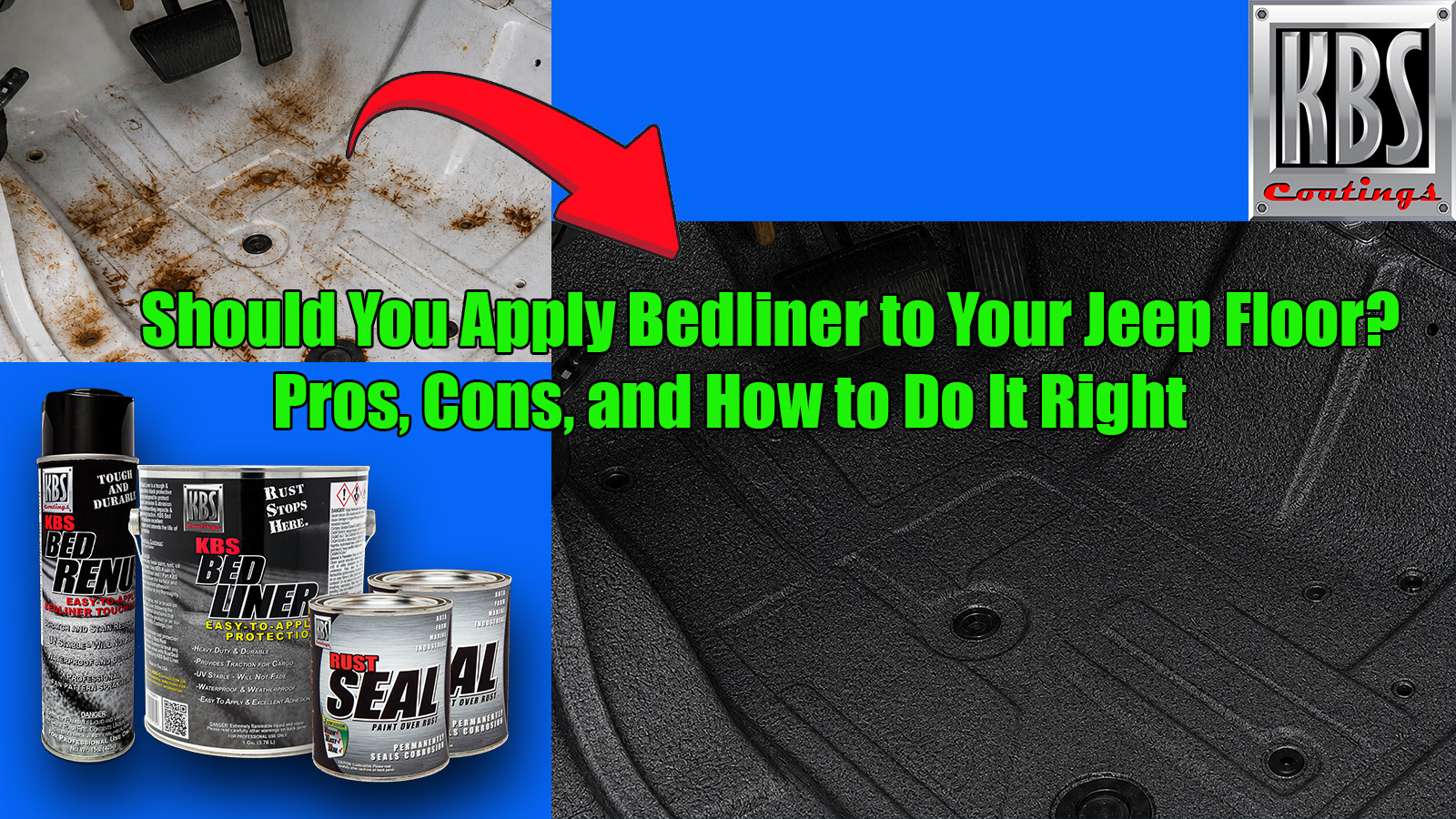
Should You Apply Bedliner to Your Jeep Floor? Pros, Cons, and How to Do It Right
If you're tired of wet carpet, trapped dirt, and hidden rust, removing the carpet and applying bedliner to your Jeep floor can be a long-term solution. As explained in this how-to guide, it creates a durable, waterproof, and easy-to-clean surface — but only if properly prepped and sealed. Done right, it's a low-maintenance upgrade for real-world Jeep use.

The Problems That Cause Jeep Owners to Remove Carpet
- Carpet stays wet for days
- Dirt and sand never fully come out
- Odors keep returning
- Moisture trapped underneath leads to rust

Is Using Bedliner on Your Jeep Floor the Right Solution?
Yes, using bedliner on your Jeep floor is the right solution if you regularly deal with water, mud, sand, or top-off driving. It creates a durable, waterproof surface that makes the Jeep interior easy to clean and better suited for real-world use.
It may not be the right choice if your priority is a comfortable and quiet interior. Applying bedliner removes carpet and insulation, which changes how the Jeep feels in everyday driving. Bedliner works best for Jeeps used off-road, on trails, at the beach, or in wet and messy environments, especially when driving with the top or doors removed. In these conditions, a coated floor simplifies cleanup and eliminates the constant issues caused by carpet.
It's less ideal for daily drivers focused on comfort, for extreme hot or cold climates without added insulation, or for owners who want to maintain a factory-style interior for resale.
In short, if you use your Jeep like a utility vehicle, bedliner is a practical and effective upgrade. If you use it primarily on the road, it's a trade-off that should be considered carefully.
Pros and Cons of Using Bedliner on a Jeep Interior
Using bedliner on a Jeep interior has its advantages and trade-offs.
Pros
- Waterproof surface
- Easy to clean — floors can be hosed off
- Durable and abrasion-resistant
- Helps prevent moisture-related rust
Cons
- Increased heat transfer
- More cabin noise
- Permanent modification
- Time-intensive preparation
Ready to get started? KBS Coatings offers a complete system — cleaner, rust treatment, rust-preventive sealer, and bedliner — so every product is designed to work together for maximum adhesion and long-term protection.
Shop KBS Bed Liner Shop RustSealWhat Most People Don't Realize Before They Apply a Bedliner to a Jeep Floor
Applying bedliner to a Jeep floor solves a lot of problems — but it also changes how the interior feels and sounds in ways many people don't expect.
Heat:
Without carpet and padding, more heat transfers through the floor, especially from the transmission tunnel and exhaust. This is most noticeable in summer and during longer drives when heat builds over time. Many owners add removable mats or insulation to reduce this effect.
Noise:
With less insulation, road noise and drivetrain sounds become more noticeable, particularly at higher speeds. Some drivers, especially daily drivers, find it louder than expected.
Prep time:
Surface prep takes significantly more time than applying the coating. Removing factory sound deadening is often the most labor-intensive step. Skipping or rushing prep can lead to poor adhesion and coating failure.
Permanence:
Once applied, bedliner is difficult to remove. Returning to a fully stock interior requires substantial effort.
Texture and usability:
Finish texture varies by product. Some coatings are rough on knees, hands, or gear, and traction can feel different when the surface is wet.
How to Apply Bedliner to a Jeep Floor (Step-by-Step)
- Remove interior
- Clean and degrease
- Remove rust
- Prep and scuff
- Seal the metal with a preventive coating
- Apply bedliner
- Cure
While this process works, long-term durability depends on how well the metal is prepared before applying bedliner and the effectiveness of the products used. The following outlines a more thorough approach.
How to Apply Bedliner to a Jeep Floor Using the KBS Coatings System
Follow these steps closely for the best and most durable result.
Step 1: Remove Jeep Interior Components
- Disconnect battery
- Remove seats, console, seat belts (as needed)
- Remove trim panels, drain plugs, carpet, and padding
- Move or remove components and secure wiring
- Mask areas for protection
- Ensure the floor is fully exposed
Step 2: Remove Rust, Debris, and Adhesives
- Remove loose rust, dirt, and debris using a wire brush or sandpaper
- Break down heavier rust with a wire wheel, sandpaper, or mechanical abrasion (note: surface rust can remain if treated with KBS RustBlast)
- Scrape off any adhesive residue left from carpet or padding
- Use adhesive remover to eliminate any remaining glue
- Vacuum or blow out all loosened material to leave a clean working surface
Step 3: Clean and Degrease Thoroughly
Completely clean the floor pan with KBS Klean. This powerful degreaser removes dirt, grease, and grime without leaving adhesion-hindering residue.
Use KBS Klean as directed:
- Mix KBS Klean with hot water and scrub with a sponge or bristle brush
- Rinse and dry thoroughly
- Full instructions for KBS Klean can be found on the KBS Klean directions page

Step 4: Scuff the Floor Pan
Scuff the floor to create a uniform profile ("tooth") for proper KBS RustSeal adhesion.
- Use 80–120 grit sandpaper or red/maroon scuff pads
- Scuff metal and paint to a dull, even finish (no shine)
- Focus on flat areas, ribs, brackets, seams, corners, and spot welds
- Avoid leaving smooth or glossy spots
Step 5: Final Cleaning
- Clean again with KBS Klean and dry thoroughly as previously described
Step 6: Treat Metal and Neutralize Remaining Rust
Before applying KBS RustSeal, treat the floor with KBS RustBlast. Applied to bare metal or areas with light rust or corrosion, it neutralizes existing oxidation and leaves a micro-etched surface profile that promotes superior adhesion for KBS RustSeal.
Use KBS RustBlast as directed:
- Spray it on and keep wet for 30 minutes to 2 hours, depending on rust or corrosion severity
- Scrub intermittently with a Scotch-Brite pad
- Rinse and dry thoroughly
- A whitish zinc-phosphate residue will remain — this is beneficial and prevents flash rust. Do not remove it.
- Full instructions for KBS RustBlast can be found on the KBS RustBlast directions page

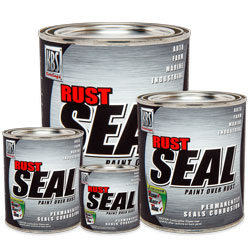
Step 7: Seal the Metal Before Applying KBS Bed Liner
For ultimate rust protection, apply KBS RustSeal before the bedliner goes on. This step is critical for long-term durability — it seals the floor from moisture and prevents rust from forming underneath the bedliner.
KBS RustSeal is a 1K moisture-cured urethane rust-preventive coating that creates a tough, flexible barrier permanently sealing out moisture, oxygen, and salt. It dries to a rock-hard yet flexible finish that doesn't chip or peel, and it can be applied directly to treated surface rust, bare metal, and painted surfaces that have been scuffed. RustSeal is available in 11 colors and can act as a stand-alone coating or a foundation for additional coatings.
Application Guidelines:
- Methods: Brush, roll, or spray equipment
- Temperature: Apply between 55°F and 82°F. Avoid high humidity or rainy conditions.
- Mix thoroughly: Stir from the bottom of the can upward before use
- Coat thickness: Apply a minimum of two thin, even coats with overlapping strokes. Thin coats cure harder and stronger than thick ones.
- Recoat time: Once the previous coat is dry to the touch (2–6 hours), apply additional coats within 8 hours
- Cure time: Handle after one day; full cure in seven days
- Full instructions for KBS RustSeal can be found on the KBS RustSeal directions page

How to Prepare RustSeal for Top Coating with KBS Bed Liner
Choose one of these methods to prepare KBS RustSeal for receiving KBS Bed Liner.
- Apply Bed Liner once the second or final coat of KBS RustSeal is dry-to-the-touch and does not leave a fingerprint
- Let the second or final coat of KBS RustSeal fully cure and scuff with 320 grit sandpaper, then apply KBS Bed Liner
- Let the second or final coat of KBS RustSeal fully cure, dust with Fusion SEP Self-Etching Primer, let it cure for 30 minutes, then apply KBS Bed Liner
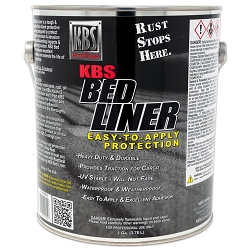
Step 8: Apply KBS Bed Liner to the Jeep Floor
The final step is to apply KBS Bed Liner. This is a tough, flexible thick black protective coating designed to resist corrosion and abrasion while withstanding impacts and improving traction. KBS Bed Liner features excellent adhesion and is built to hold up under real-world use.
- The surface must be clean, bone dry, and non-glossy
- Choose application method: brushing, rolling, or spray equipment
- Do not apply when air temperature or surface temperature is below 50°F or above 90°F
- When spraying, use a Schutz style spray gun or HVLP spray gun
- Spray 18–24 inches away from the surface in long, sweeping motions
- On the first pass, apply a thin coat to provide a base for heavier subsequent coats. This improves adhesion so KBS Bed Liner does not run off smooth surfaces or sag on vertical surfaces.
- Vary spray paths to avoid "shadowing" patterns
- When rolling, use a high-quality solvent-resistant textured foam roller
- For maximum durability, apply 2–3 thin coats, avoiding heavy passes
- Recoating can be done once the first or consecutive coat is dry to the touch
- Allow 72 hours for full cure before reassembling the interior
- Full instructions for KBS Bed Liner can be found on the KBS Bed Liner directions page

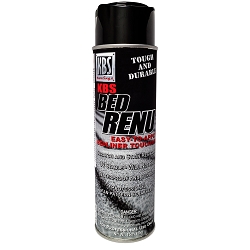
Apply KBS Bed Renu to the Jeep Floor (Optional)
KBS Bed Renu is the aerosol version of KBS Bed Liner, offering the convenience of spray-on application.
- Prepare KBS RustSeal as described above
- Hold KBS Bed Renu about 8 to 10 inches from the surface to be sprayed
- Spray in smooth, overlapping passes, releasing the trigger at the end of each stroke
- For maximum durability, apply 5–6 thin coats, avoiding heavy passes
- Allow 1–2 hours cure time between coats depending on humidity levels
- Full cure is usually achieved within 48 hours
- Full instructions for KBS Bed Renu can be found on the KBS Bed Renu directions page

Can Bed Liner Be Repaired If the Floor Gets Damaged?
Yes. If the KBS Bed Liner topcoat gets gouged or scraped, you can use KBS Bed Renu aerosol to touch up the damaged area.
- Bonds directly to the original KBS Bed Liner
- Restores protection quickly
- Matches the texture closely
- Helps maintain long-term rust prevention
This makes ongoing maintenance simple and straightforward.
Common Mistakes When Applying Bedliner to a Jeep Floor
Mistakes during prep and application are the main reason bedliner coatings fail. The most common issues are easy to avoid.
Skipping prep:
Applying bedliner over dirt, grease, or a surface that hasn't been scuffed prevents proper adhesion and can lead to peeling or lifting.
Coating over rust:
Applying bedliner over untreated rust traps corrosion underneath, causing bubbling and premature failure.
Applying too thick:
Thick coats can create longer cure times and weak spots in the finish.
Wrong temperatures or humidity:
Applying outside recommended conditions can affect flow, bonding, and curing, reducing overall durability.
Rushing the process:
Not allowing proper drying or cure time between steps can lead to poor adhesion and premature coating failure.
Choosing the Right Coating System for Long-Term Results
The durability of a bedlined Jeep Wrangler floor doesn't come from the bedliner alone — it depends on the entire coating system underneath it.
A complete system starts with proper surface prep. Cleaning and preparing the metal ensures the coating bonds correctly. Without it, adhesion problems are likely.
A rust prevention layer is equally important. Sealing the metal before applying bedliner helps prevent corrosion from forming beneath the coating.
Finally, the topcoat must be durable and compatible with the layers below. Its performance depends on how well the surface was prepared and protected.
A system approach ensures each step works together. KBS Klean, KBS RustBlast, and KBS RustSeal are designed to clean, seal, and protect the surface while supporting the long-term adhesion of KBS Bed Liner or KBS Bed Renu.

Frequently Asked Questions
Can you apply bedliner over rust?
Light surface rust can be treated first with KBS RustBlast, but heavy rust should be mechanically removed before applying any coating.
Does bedliner make the Jeep interior hotter?
It can increase heat transfer, especially without insulation. Many owners add removable mats or heat barriers to compensate.
Can you go back to carpet after applying bedliner?
It's possible but difficult. Bedliner is considered a permanent modification, and returning to a stock interior requires substantial effort.
How long does a bedlined floor last?
When properly applied over a sealed surface, it can last the life of the vehicle.
Is Applying a Bedliner to Your Jeep Floor Worth It?
Bedlining your Jeep floor isn't just about replacing carpet — it's about eliminating the problems that come with it. If you follow the right process and use a complete coating system, you get a durable, low-maintenance interior that holds up to real use. Done right, it's a one-time upgrade that can last the lifetime of the vehicle.

Get the Products for the Job
KBS Coatings products are made in the USA and engineered to work together as a complete system — from degreasing and rust treatment to sealing and bedliner topcoat.
Shop KBS Bed Liner Shop KBS Bed RenuTagged Products