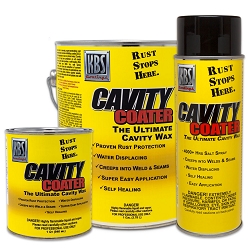


Cavity wax is a solvent-based, water-repellent rust preventive that stays soft, creeps into welds and seams, and seals the inside of frame rails, rocker panels, doors and fenders where paint cannot reach. Cavity Coater is the KBS cavity wax: one thin coat, more than 4,000 hours of salt spray protection, over 4 times the protection of conventional cavity waxes.
Updated September 2026 by the KBS Coatings technical team.

What Is Cavity Wax?
Cavity wax, also called rustproof wax, is a solvent-based water repellant wax that doesn't completely harden but remains soft and pliable and therefore doesn't crack, chip or peel. It is self-healing if scratched, and it wicks into welds and seams. Rust develops when steel or iron is exposed to moisture and oxygen, so sealing the metal from both is how you stop it.
Where to Use Cavity Wax
Use cavity wax inside frame rails, rocker panels, fenders, doors, tailgates, windshield cowls and posts, and on welds and seams. These are the places a rustproof paint or coating cannot reach, so the bare metal stays exposed to salt, dirt and moisture. Cavity wax is especially important in body areas repaired after an accident, and it is often used when restoring vehicles.
KBS Cavity Coater
Cavity Coater is a single step, super-penetrating corrosion inhibiting coating that gives more than 4,000 hours of ASTM B-117 salt spray protection on steel, over 4 times the protection of conventional cavity waxes. It resists road salt, alkaline solutions and chemicals, passes low temperature flaking to minus 60 degrees F, and has no effect on paint. It comes as an aerosol, a quart and a gallon.
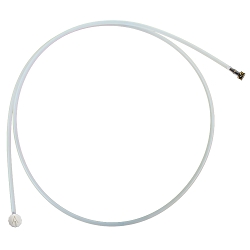
For hard-to-reach cavities, the reusable 36 inch Cavity Wand attaches to the aerosol can and fits through a 1/4 inch hole. It sprays 360 degrees around and out of the front, so you do not need to rotate it by hand. Read the full Cavity Coater directions or browse the Cavity Coater FAQs for more.
Cavity Wax at a Glance
| Product | Cavity Coater, applied with the Cavity Wand or a Schutz gun |
|---|---|
| Coats | One thin coat, about 1 mil dry |
| Application temperature | 70 to 80 degrees F for aerosol and Cavity Wand |
| Coverage at 1 mil | Aerosol 125 sq. ft., quart 200 sq. ft., gallon 800 sq. ft. |
| Wait before wiping excess | 10 minutes |
| Corrosion resistance | More than 4,000 hours ASTM B-117 salt spray on steel |
| Cavity Wand | 36 inches long, fits a 1/4 inch access hole |
What You Need
- KBS Cavity Coater: the cavity wax, in aerosol, quart or gallon
- KBS Cavity Wand: for aerosol use in rockers, frames, doors and fenders
- KBS Schutz Underseal Spray Gun (quart and gallon only): skip it when you spray the aerosol
- KBS Klean (optional): skip it when there is no grease or oil on the metal
- KBS #1 Thinner or mineral spirits (bulk only): to thin quart and gallon Cavity Coater, and mineral spirits to wipe excess
- KBS RustSeal (optional): skip it when there are no exterior surfaces to protect
- Chemical-resistant gloves, safety glasses and proper personal protective equipment
How to Apply Cavity Wax
Apply cavity wax in one thin coat of about 1 mil to clean, dry metal, then wait 10 minutes and wipe off the excess. With KBS Cavity Coater, work between 70 and 80 degrees F, and spray the wand only while pulling it out of the cavity.

- Prepare the surface. Remove any readily accessible loose, scaly rust. Clean grease or oil with KBS Klean and let the surface dry. Keep existing drain holes open. If a cavity has no drain hole, drill one, 1/4 inch at the lowest accessible point, which also serves as the Cavity Wand access hole.
- Spray the aerosol. Shake the can extremely well and shake again often. Hold it 8 to 12 inches from the surface and apply one thin, even coat of about 1 mil. Cover completely but do not over-saturate.
- Reach enclosed cavities with the Cavity Wand. Push the wand onto the aerosol spray tip with a slight twist, insert it through a 1/4 inch hole, press the tip and spray only while withdrawing at roughly 2 inches per second. Repeat as needed for complete coverage.
- Spray quart or gallon Cavity Coater. Bring the can to room temperature and stir 3 to 5 minutes. Thin 30 to 50 percent with KBS #1 Thinner or mineral spirits, stir again for 3 to 5 minutes, and spray through a Schutz gun at 90 to 150 PSI at the gun. The 48 inch Schutz wand needs a 3/8 inch hole.
- Wait 10 minutes, then wipe off the excess. Give the coating 10 minutes to wick into seams and weld joints. Then wipe excess from exterior surfaces with a clean rag lightly dampened with mineral spirits. Do not soak the rag.
- Flush the Cavity Wand. Turn the aerosol can upside down and spray for 10 seconds to flush residual coating out of the Cavity Wand. A flushed wand is reusable for many jobs.

Stuck or unsure? Search the KBS Support Desk for instant answers


When to Apply Cavity Wax
Apply cavity wax last, after every paint and coating has fully cured. Nothing can be painted or caulked over Cavity Coater. If you are also using RustSeal, prep and apply RustSeal first and let it cure, because RustSeal will not adhere to Cavity Coater overspray. Getting Cavity Coater on fully cured RustSeal is not a problem.
Cavity Wax Safety
Wear protective gloves and safety glasses, work in a well-ventilated area, and do not smoke. When you spray cavity wax into an enclosed area such as a door panel, the solvents can take several hours to escape. Keep that area away from heat, sparks, electrical devices and open flames during that time. Turn electrical power off before spraying fuses and relays.
Do not apply cavity wax to exhaust systems, because it will smoke and can be flammable. Grinding, cutting or heating with a torch can make cavity wax run, so do any work that raises a part above 160 degrees F before you apply it.
Frequently Asked Questions About Cavity Wax
What does cavity wax do?
Cavity wax coats the inside of enclosed metal such as frame rails, rocker panels, doors and fenders with a soft, water-repellent film that keeps salt, dirt and moisture off the steel. It wicks into welds and seams, stays pliable so it does not crack, chip or peel, and self-heals if scratched. KBS Cavity Coater is a cavity wax made for this job.
How long does cavity wax last?
KBS does not publish a service life in years, because it depends on climate, road salt and how completely the cavity is coated. What KBS does publish is lab data: Cavity Coater resists more than 4,000 hours of ASTM B-117 salt spray on steel, over 4 times the protection of conventional cavity waxes. Apply it in one thin coat of about 1 mil and coat every seam.
Is a name-brand cavity wax better than other cavity waxes?
Judge any cavity wax on the same few points: salt spray hours, whether it stays soft and self-heals, how well it creeps into seams, and whether you can reach the cavity with a wand. KBS Cavity Coater tests at more than 4,000 hours of ASTM B-117 salt spray on steel, passes penetration testing, and has no effect on paint.
How much does cavity wax cost?
Cavity wax pricing varies by brand, can size and whether a wand is included. Cavity Coater comes as an aerosol, a quart and a gallon, and the Cavity Wand is a separate item. Check each product page for the current price. The aerosol covers 125 sq. ft. at 1 mil, the quart 200 sq. ft. and the gallon 800 sq. ft.
Can you put cavity wax over rust?
Yes. Cavity Coater goes over lightly rusted metal after you knock off the loose scale, and it stops the rust from getting worse. Remove any readily accessible loose, scaly rust first, clean off grease or oil with KBS Klean, and let the surface dry before you spray.
Can you paint over cavity wax?
No. Nothing can be painted or caulked over Cavity Coater, which is why it goes on last, after every paint and coating has fully cured. If you are using RustSeal, apply it first and let it cure, because RustSeal will not adhere to Cavity Coater overspray.
What temperature should cavity wax be sprayed at?
Spray Cavity Coater aerosol and the Cavity Wand between 70 and 80 degrees F for the best flow. Quart and gallon Cavity Coater should be at room temperature before you stir and thin it. Spray onto a dry surface.
Still have questions? Search the KBS Support Desk for instant answers
Cavity wax protects the metal you cannot see. Coat every seam once, thinly, after the exterior coatings have cured, and the inside of your panels gets the same protection as the outside.
Related guides: How to Fix Rust on a Truck Frame, Trailer Frame Rust Repair, Does Rust Converter Work?, or browse all KBS application guides.
Tagged Products