

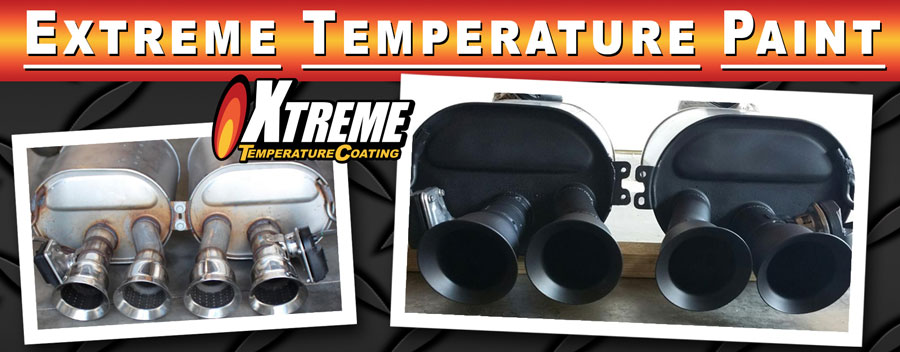
To paint an exhaust, strip off old paint and loose rust, wash the metal with KBS Klean, then apply thin coats of XTC Zinc Rich Primer and XTC Xtreme Temperature Coating and heat cure the finish. Liquid XTC protects metal in continuous service from 500°F to 1500°F and is guaranteed not to burn off.
Updated October 2026 by the KBS Coatings technical team.
- Why Paint an Exhaust System?
- Exhaust Painting at a Glance
- What Is the Best Paint for an Exhaust?
- What Do You Need to Paint an Exhaust?
- How to Prepare an Exhaust for Paint
- How to Apply Exhaust Paint
- How to Cure Exhaust Paint
- What Colors Does XTC Come In?
- Frequently Asked Questions
- Protect Your Exhaust for Years
Why Paint an Exhaust System?
Paint an exhaust to protect it from rust and to restyle it. An exhaust is hit by water, road salt and debris while you drive, and it sits in moisture whenever the car is parked, so it corrodes from the outside. Even stainless steel exhausts are not fully corrosion proof, and a sealed coating keeps moisture and salt off the metal.
Regular rinsing helps, because spraying the exhaust with water removes salt and particles that trap moisture. A coating is what shields the surface.

Exhaust Painting at a Glance
| Products | KBS Klean, XTC Zinc Rich Primer, XTC Xtreme Temperature Coating |
|---|---|
| Temperature rating | Liquid XTC colors: 500°F to 1500°F continuous. XTC Clear, XTC aerosols and XTC Zinc Rich Primer: 1200°F |
| Application temperature | 50°F to 82°F for the air and the metal |
| Coats | 1 to 2 thin coats of primer, then 1 to 2 thin coats of XTC |
| Time between coats | 1 to 2 hours for liquid coats |
| Flash off before heat | At least 8 hours after the final coat |
| Heat cure | About 350°F for 20 to 30 minutes |
What Is the Best Paint for an Exhaust?
The best paint for an exhaust is a silicone based high temperature coating that is rated above the temperature the metal reaches, and that pairs with a zinc rich primer for rust protection. The KBS XTC rust prevention system does both: XTC is the finish and XTC Silicone Zinc Primer is the basecoat.
XTC is a high temperature, heat resistant exhaust paint for metal operating from 500°F to 1500°F. It resists weathering and thermal shock across that range, bonds well to prepared metal, and is guaranteed not to burn off within its rating. Once cured it will not peel, flake or chalk, and it resists scratching and marring.
One number decides which version to buy. Liquid XTC is rated to 1500°F. XTC aerosols and XTC Primer are rated to 1200°F. Headers and the pipe sections closest to the engine run hottest, so use liquid XTC there. XTC Primer works much like galvanization: it locks itself to bare metal and leaves a primed surface that is ready for the topcoat.

What Do You Need to Paint an Exhaust?
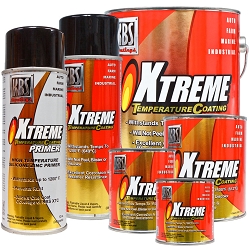
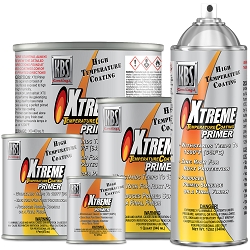
Painting an exhaust takes a cleaner, a primer, a topcoat and basic prep and safety gear. Both XTC products come as aerosol cans or as liquid in larger containers that you apply by brush, roller or spray equipment.
- KBS Klean: concentrated cleaner and degreaser for the prep wash
- XTC Zinc Rich Primer: zinc rich basecoat for rust protection
- XTC Xtreme Temperature Coating: the high temperature topcoat
- KBS #1 Thinner (liquid only): thins liquid XTC for spray equipment and cleans the gun
- Brushes, rollers or an HVLP spray gun for liquid coatings
- Wire brush, wire wheel or 60 to 80 grit paper, masking tape and masking paper
- Chemical resistant gloves, safety glasses and a respirator whenever you spray
How to Prepare an Exhaust for Paint
Prepare an exhaust by stripping off old paint, dirt and loose rust, creating a surface profile, then washing and drying the bare metal. The surface must be dry and free of old coatings, dirt, oil and rust before primer goes on. If rust-through or thin metal shows up, repair or replace that part first, because paint cannot restore metal that is gone.
Sandblasting prepares the surface best for adhesion. If you do not have a sandblaster, use a wire wheel, wire brush or 60 to 80 grit paper, which gives an equivalent surface. Chrome and stainless exhaust tips need to be scuffed until no gloss is left, because a coating cannot grip a polished surface.

Then wash the exhaust with KBS Klean at 10 parts hot water to 1 part KBS Klean, rinse it, and dry it immediately and thoroughly. Mask off anything you do not want coated and protect nearby areas with drop cloths. For the full prep steps, see the XTC application directions.
Stuck or unsure? Search the KBS Support Desk for instant answers
How to Apply Exhaust Paint
Apply exhaust paint in thin coats: 1 to 2 coats of XTC Zinc Rich Primer, then 1 to 2 coats of XTC Xtreme Temperature Coating, with 1 to 2 hours between liquid coats. Apply when the air and the metal are between 50°F and 82°F. A heavy film traps solvent, and that solvent blisters the coating the first time the pipes get hot.
Mix both products thoroughly before you apply them, since the pigment settles. Aerosols go on from 12 to 15 inches away with steady, even strokes. Thin liquid coatings for spraying only with KBS #1 Thinner, never lacquer thinner. Without primer, apply two thin coats of XTC, each about 1.0 mil dry film thickness.

KBS Klean
Degreases and cleans the bare metal before primer.
XTC Zinc Rich Primer
Rust protection basecoat, rated to 1200°F.
XTC
High temperature topcoat in 10 colors.
How to Cure Exhaust Paint
Cure exhaust paint by letting the final coat flash off for at least 8 hours, then heating it to about 350°F for 20 to 30 minutes in an oven or BBQ, or by running the engine through four heat cycles. The resins do not reach full hardness by air drying, so a coating that feels dry is not yet cured.
For the engine method, idle the engine until the coating starts to smoke, shut it off right away, and let it cool to room temperature. Repeat that for the first three cycles. On the fourth cycle, let the engine keep running until the smoke completely dissipates. Ventilate the area fully, because the coating can give off vapors during the first heat cycles. Do not use an oven you also cook in.
What Colors Does XTC Come In?
XTC comes in 10 colors, and it is available as an aerosol or in containers for brush, roller or spray application. That lets you restyle the exhaust while you protect it, from classic cast iron grey and black to stainless steel, aluminum and bright red.

Frequently Asked Questions About Painting an Exhaust
How to repaint an exhaust?
To repaint an exhaust, strip the old paint and rust, scuff the metal to a 60 to 80 grit profile, wash it with KBS Klean at 10 parts hot water to 1 part KBS Klean, then rinse and dry it. Apply 1 to 2 thin coats of XTC Zinc Rich Primer and 1 to 2 thin coats of XTC, let the finish flash off for 8 hours, and heat cure it at about 350°F for 20 to 30 minutes.
Is 90 degrees too hot to spray paint?
Yes, for XTC. KBS directions give 50°F to 82°F as the ideal application temperature for both the air and the metal, so 90°F is above the range. Wait for a cooler part of the day or work in the shade, and check that the exhaust itself has cooled to that range before you spray.
Can you spray paint an exhaust tip?
Yes. An exhaust tip takes the same system as the rest of the exhaust: strip it to bare metal, scuff chrome or stainless until no gloss is left, degrease with KBS Klean, then apply XTC Zinc Rich Primer and XTC in thin coats. Heat cure the finish afterward. Tips run hot and sit in the weather, so do not skip the primer.
Can you paint a car muffler?
Yes. A muffler is one of the most common parts people coat with XTC. Remove loose rust first with a wire brush, wire wheel or 60 to 80 grit paper, wash with KBS Klean, rinse and dry, then apply XTC Zinc Rich Primer and 1 to 2 coats of XTC. Do not coat over rust. Liquid XTC is rated to 1500°F and XTC aerosols to 1200°F, both well above normal muffler temperatures.
What is the best paint for an exhaust?
The best paint for an exhaust is a silicone based high temperature coating rated above the temperature the metal reaches. Liquid XTC Xtreme Temperature Coating protects metal in continuous service from 500°F to 1500°F and is guaranteed not to burn off. XTC aerosols and XTC Zinc Rich Primer are rated to 1200°F, so use liquid XTC on headers and other parts that run hotter than that.
Do you need primer under exhaust paint?
Primer is recommended but not mandatory on bare metal. XTC Zinc Rich Primer improves rust protection, and it works much like galvanizing by sacrificing itself to protect the steel beneath. An exhaust sits in water, road salt and condensation, so prime it. If you skip the primer, apply two thin coats of XTC, each about 1.0 mil dry film thickness, instead of one.
Still have questions? Search the KBS Support Desk for instant answers
Protect Your Exhaust for Years
The XTC rust prevention system is a practical way to restyle an exhaust and protect it from corrosion. Prep the metal well, keep every coat thin, and heat cure the finish, and the coating will hold up to heat, humidity, condensation and salt. For more detail, see the XTC and XTC Primer directions and the XTC questions and answers.
Related guides: How to Paint a Motorcycle Exhaust, Engine and Exhaust Paints, or browse all KBS application guides.
Tagged Products