

To stop rust, cut it off from the moisture and oxygen it needs. Remove the loose rust, clean and etch the metal with KBS Klean and RustBlast, then seal it with two coats of RustSeal. Tight rust that remains gets sealed in place, so you do not have to grind down to bare metal.
Updated November 2026 by the KBS Coatings technical team.
| Products | KBS Klean, RustBlast, RustSeal |
|---|---|
| Rust removal needed | Loose, flaky rust and scale only; tight rust is sealed in place |
| RustBlast wet time | 30 minutes minimum on light rust, 40 to 60 minutes moderate, 1 to 2 hours heavy |
| Coat after RustBlast | Within 7 days, with the surface kept clean |
| RustSeal coats | Minimum of 2 thin coats, about 2 mils each |
| Application conditions | 55 to 82°F, ideally 30 to 80% relative humidity |
| Recoat | When dry to the touch with no fingerprint, typically 2 to 6 hours |
| Full cure | 24 hours after the final coat |
| In direct sun | Topcoat with BlackTop, KBS Top Coater or KBS MAXX |
What Stops Rust on Metal?
Rust stops when moisture and oxygen can no longer reach the metal. Rust is a chemical reaction between iron, oxygen and water, so anything that keeps those apart slows it or stops it. A sealed, non-porous coating such as RustSeal stops it for good, because without moisture and oxygen at the surface, steel cannot rust.
Oil, wax and ordinary paint all work as barriers for a while. Oil and wax wear off and need reapplying, and paint only protects as long as it stays unbroken. Once a chip lets water in, rust starts under the edges and creeps outward.
How to Keep Rust From Forming
To keep rust from forming, keep bare metal coated, keep the surface clean, and fix damage to the coating right away. Road salt speeds rust up, so vehicles, trailers and equipment that see winter roads need the most attention.
- Keep metal coated with paint or a rust preventive coating so air, moisture and corrosives cannot reach it.
- Wash off dirt, debris and road salt, especially from nooks, seams and the inside of rocker panels where wet debris collects.
- Keep drain holes open. They exist so water cannot pool inside cavities and recesses.
- Touch up chips and scratches as soon as you see them, before rust takes hold.

Can You Stop Rust Once It Starts?
Yes. Once rust starts, it keeps going until the metal is sealed from moisture and oxygen, and keeping it dry is not enough. Old cars left in the desert are dry almost all the time and still rust, slowly, because the humidity in the air supplies the water the reaction needs.
Spraying penetrating oil on rust is a stopgap. The film keeps water off for a while, but it wears away quickly and has to be resprayed often. To actually stop rust that has started, you have three options: grind it out and repaint, convert it chemically, or treat it and seal it.
How to Stop Rust From Spreading
To stop rust from spreading, remove the loose rust, treat what remains, and seal the area with a coating moisture cannot get through. On a paint chip, clean every trace of rust out of the chip before touching it up, and do it as soon as you notice the damage. On a larger area, the KBS 3-Step System stops the spread without grinding to bare metal.
Rust under a chip or scratch spreads sideways under the surrounding paint, which is why a small blister often turns into a large patch. Treat the edges as well as the visible spot. For rust in hidden areas such as rocker panels and cab corners, see our guide to fixing hidden rust in rocker panels.
Three Ways to Stop Existing Rust Compared
The right method depends on how much labor you want to put in, how long the protection has to last, and the finish you want. Sanding to bare metal is the traditional route and the most labor. A rust converter primes rusty steel in one step. The KBS 3-Step System seals rust in place under a hard, durable finish.
| Method | Rust removal needed | Best for |
|---|---|---|
| Sand or blast, then prime and paint | All rust, down to bare metal | Smaller areas where you can reach and abrade every surface |
| KBS Rust Converter | Loose, flaky rust only; the area must be rusty to react | Rusty iron and steel you want primed in one step |
| KBS 3-Step System | Loose, flaky rust only; tight rust is sealed in place | Frames, floors, equipment and metal that mixes rusty and clean areas |
KBS Rust Converter uses phosphoric and tannic acid chemistry to turn rust into a stable, inert black layer that works as a primer. It dries to the touch in about 10 minutes, takes most topcoats after 24 hours, and can also be left as a flat black finish. It needs rust to react with, so it is not for clean metal, aluminum or galvanized steel. See the KBS Rust Converter directions, or our comparison of rust converter, rust reformer and full removal.

The KBS 3-Step System is the better fit when the metal has both rusty and clean areas, or when the part has to hold up to road salt and fuel. RustSeal cures to a rock-hard, non-porous coating that will not crack, chip, flake or peel, and it resists road salt, fuel and most chemicals. For a full prep walkthrough, see how to prep rusty metal for paint.
What You Need
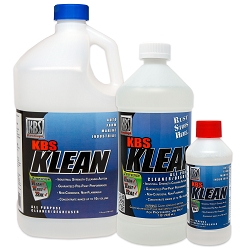
- KBS Klean: removes grease, oil and dirt that would block adhesion
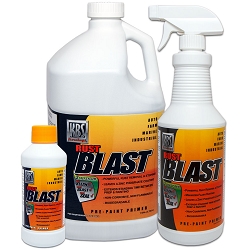
- RustBlast: dissolves remaining rust, etches the metal and leaves a zinc phosphate coating for RustSeal to grip
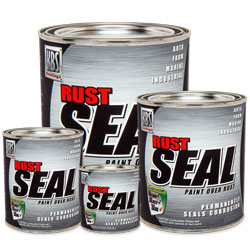
- RustSeal: seals the metal from moisture and oxygen
- KBS #1 Thinner (optional): skip it unless you are spraying or the coating needs thinning, and never thin RustSeal with lacquer thinner
- KBS Paint Mixing Cup and KBS Paint Spout: pour clean and paint out of the cup, but store leftover RustSeal in a steel can or glass jar
- Paint brushes, a roller or a spray gun
- BlackTop, KBS Top Coater or KBS MAXX (optional): skip a topcoat when the part stays out of direct sun
- Cavity Coater (optional): skip it when there are no enclosed cavities such as rocker panels or frame rails
- Chemical-resistant gloves, safety glasses and proper personal protective equipment
How to Stop Rust With the KBS 3-Step System
The KBS 3-Step System stops rust in three products: KBS Klean cleans, RustBlast treats and etches, and RustSeal seals. Only loose, flaky rust has to come off first. Work between 55 and 82°F, and follow the RustSeal directions for the full details.
Step 1: Remove Loose Rust
Take off loose, flaky rust and scale with 320 grit sandpaper, a wire brush or a wire wheel until you reach a solid surface. You do not need to remove every trace of rust; RustSeal bonds to and seals the tight rust that remains. Freshly sandblasted metal handled with gloves needs only the dust blown off before RustSeal.
Step 2: Clean With KBS Klean
Scrub the surface with KBS Klean diluted in warm water, up to 10 parts water to 1 part KBS Klean (5 to 1 is a good general mix), then rinse and let it dry. Avoid solvent-based cleaners, which leave a residue that hurts adhesion. See the KBS Klean directions.
Step 3: Treat With RustBlast
Apply RustBlast full strength and keep the surface wet: at least 30 minutes on smooth or lightly rusted metal, 40 to 60 minutes on moderate rust, and 1 to 2 hours on heavy rust. Rinse with water before it dries, then let the metal dry completely. The rinse avoids excess zinc phosphate buildup and neutralizes the active acid. The thin white residue left behind is zinc phosphate, which helps RustSeal adhere; coat within 7 days while the surface stays clean. See the RustBlast directions.
Step 4: Seal With RustSeal
Brush, roll or spray a minimum of two thin coats of RustSeal at about 2 mils each, ideally at 30 to 80% relative humidity. Recoat when the previous coat is dry to the touch and leaves no fingerprint, typically 2 to 6 hours. If more than 8 hours pass, wait a full 24 hours and scuff with 320 grit or a green scuff pad before the next coat. RustSeal is fully cured 24 hours after the final coat.

Step 5: Topcoat Anything in the Sun
RustSeal is not UV stable: its rust protection holds, but its color and sheen chalk and fade in sustained sunlight. Topcoat sun-exposed parts with BlackTop, KBS Top Coater or KBS MAXX. Apply the topcoat with no prep when the last RustSeal coat is 3 to 8 hours old, or let it cure 24 hours and scuff with 320 grit first. A clear coat does not block UV, so it is not a substitute.
Step 6: Protect Enclosed Cavities
Spray Cavity Coater inside rocker panels, frame rails and other enclosed cavities, where a brush cannot reach. Apply it last, after the exterior coatings have fully cured, because RustSeal will not adhere to Cavity Coater overspray. See the Cavity Coater directions.
Stuck or unsure? Search the KBS Support Desk for instant answers


Frequently Asked Questions About Stopping Rust
Can I prevent my car from rusting?
Yes. Wash road salt and dirt off the body and underside, keep the drain holes open, and touch up paint chips as soon as you see them. For lasting protection, coat the frame and underbody with RustSeal and treat enclosed cavities such as rocker panels with Cavity Coater.
Can you paint over a rust stopper?
Yes, if you follow the timing. KBS Rust Converter works as a primer and takes most topcoats after 24 hours. RustSeal takes BlackTop, KBS Top Coater or KBS MAXX with no prep when the last coat is 3 to 8 hours old; after that, let it cure 24 hours and scuff with 320 grit first. A clear coat is not enough over RustSeal in the sun: use an opaque topcoat.
Can I put penetrating oil on metal to prevent rust?
Yes, as a short-term measure. An oil film keeps moisture off bare metal for a while, but it wears and washes off, so it has to be reapplied often. For metal that has to stay protected, seal it with a coating such as RustSeal.
Does waxing prevent rust?
Wax helps protect sound paint by shedding water and road grime, but it is not a rust treatment. It wears off, and it does nothing for rust that has already started in a chip or under the paint. Treat and coat that metal first, then keep the paint clean and waxed.
Will rust stop if kept dry?
Keeping metal dry slows rust, but it does not stop it. Rust is a reaction between iron, oxygen and water, and the humidity in the air supplies enough water for it to keep going slowly. Sealing the metal with RustSeal cuts off both the moisture and the oxygen.
Do you have to remove all the rust before coating?
Not with RustSeal. Remove loose, flaky rust and scale, clean with KBS Klean and treat with RustBlast, and RustSeal bonds to and seals the tight rust that remains. The traditional sand, prime and paint method needs bare metal, and KBS Rust Converter needs rust across the whole area to react with.
More answers: RustSeal questions and answers.
Still have questions? Search the KBS Support Desk for instant answers
Choosing the Right Way to Stop Rust
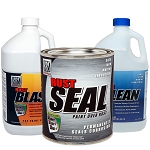
For most rusty metal, the KBS 3-Step System is the most complete fix: knock off the loose rust, clean with KBS Klean, treat with RustBlast and seal with RustSeal. The Stop Rust Quart Kit has a quart of each for about 50 square feet; for bigger jobs, the Kit Finder matches a kit to the project. For more rust prevention paint options, browse the full line.
Related guides: How to Stop Rust on a Car's Undercarriage Before Winter, How to Fix Hidden Rust in Rocker Panels, Cab Corners, and Body Seams, Does Rust Converter Work?, or browse all KBS application guides.
Tagged Products