

Once metal starts to rust, it won’t stop on its own—oxidation will keep eating through until the metal fails completely. The sooner you act, the better. Two proven techniques can stop rust in its tracks: rust converter, which chemically transforms existing rust into an inert barrier, and full rust removal followed by a protective coating, which eliminates rust entirely and seals the metal from future corrosion. Both work—but they differ dramatically in how long that protection lasts and the quality of finish you get.
Shop All Rust Prevention Products →
Method 1: Using Rust Converter
 Rust converter stops active rust, but the resulting finish is rougher than a fully prepared surface
Rust converter—also called rust reformer—is a chemical solution or primer applied directly to a rusted surface. It reacts with iron oxide (rust) and converts it into a stable, inert barrier that resists moisture and prevents further corrosion. Most rust converters contain phosphoric acid, tannic acid, or a blend of both:
- Phosphoric acid converts iron oxide into a ferric phosphate layer. It can be used on exterior metal when top-coated with a quality paint or coating.
- Tannic acid produces a bluish-black ferric tannate primer layer that can stand alone against exterior weather or serve as a primer for oil- and epoxy-based paints.
Important limitation: Rust converter works only on iron and steel. It will not work on aluminum, copper, stainless steel, or galvanized metal.
What Are the Benefits of Using Rust Converter?
Before applying rust converter, you must remove any loose or flaking rust with a stiff bristle brush, wire wheel, or sandpaper to provide a stable surface. Beyond that initial step, rust converter is one of the fastest and simplest ways to stop rust. You do not need to strip the metal completely—the converter chemically bonds to the remaining rust and seals it in place. This makes it especially practical when:
- Time to complete the project is limited
- The object is large and thorough rust removal would be highly labor-intensive
- The finished appearance is less critical than stopping rust quickly
What Are the Drawbacks of Using Rust Converter?
Rust converter trades speed for longevity. While it saves labor upfront, a well-executed rust removal and sealing job can provide 4 to 5 times longer protection than rust converter alone—meaning the rust converter process will need to be repeated far sooner.
Finish quality is another consideration. Because rust converter bonds to rust rather than bare metal, it leaves a rougher surface that is harder to paint smoothly. It also won’t work on non-rusty areas or on surfaces with a mix of rusted and bare metal—limiting its use on partially corroded parts.
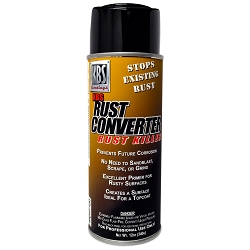
KBS Rust Converter
KBS Rust Converter transforms a rusty surface into a black, inert primed surface ready for paint. Available in an easy-to-use aerosol with a fast dry time, it’s compatible with most topcoats.
Shop KBS Rust Converter →
Method 2: Remove Rust and Seal the Metal with a Coating
 Rust removed and metal sealed with a protective coating—the longest-lasting approach
For the best and most durable result, the correct sequence is: remove all rust → prime the bare metal → apply a top coat. Each step matters. Skimping on any one of them shortens the life of the entire system.
How Do You Remove Rust from Metal?
As with rust converter, start by removing loose, flaking rust with a stiff-bristled brush or sandpaper. From there, choose a removal method based on the severity of the rust and the size of the object.
Chemical and Solvent Rust Removers
White Vinegar — Soaking metal in white vinegar for a few hours dissolves rust, leaving a paste that can be scrubbed away. For large objects, apply directly and scrub after the vinegar has had time to work.
Oxalic Acid — A white crystalline compound that, when dissolved in water, creates a colorless rust-removing solution. Soak time ranges from 20 minutes for light rust to 24 hours for heavy corrosion. Wear gloves, a mask, and safety goggles when handling.
Petroleum-Based Solvents — Products like WD-40 are less corrosive than acids and effective on moderate rust, though full results may take up to 24 hours.
Water-Based Rust Removers (Chelation) — Acid-free formulas use chelation to draw rust molecules away from the metal into a substrate. Light rust dissolves in about 30 minutes; heavy rust may require overnight soaking.
Abrasive Rust Removal
Mechanical abrasion is one of the most effective methods. Options include hand sanding, angle grinders, sanders, and drill-mounted wire wheels or surface-finishing discs. Sandblasting is particularly effective—it removes rust completely and leaves a textured surface profile that dramatically improves paint adhesion.
Priming After Rust Removal
Once rust is gone, the bare metal must be primed before any topcoat is applied—especially if the surface will be exposed to moisture. The two most common options are:
Self-Etching Primer — Uses acid to micro-etch the metal surface, creating an anchor pattern that maximizes adhesion for the primer and topcoat. Many self-etching primers also deposit a layer of zinc phosphate for added protection. Fast curing shortens project times.
Epoxy Primer — Provides excellent adhesion but requires the surface to be manually sanded (80–180 grit) or sandblasted to create the necessary surface profile, since it does not etch on its own. Epoxy primers also have longer cure times than self-etching options.
Topcoat compatibility note: Epoxy surfaces do not accept new paint without preparation. Before recoating, sand the cured epoxy with 120–220 grit sandpaper to open the surface and promote bonding.
What Are the Benefits of Removing Rust and Sealing Metal?
Done properly, this is the longest-lasting rust protection available—up to 4–5 times more durable than rust converter. It also produces a smoother, more attractive finish because the primer adheres to clean bare metal rather than converted rust.
What Are the Drawbacks of Removing Rust and Sealing Metal?
This method is more labor-intensive and typically costs more in materials than rust converter. However, the extended protection life means fewer repeat applications—making the higher upfront investment worthwhile for any project where longevity matters.
The KBS 3-Step Rust Prevention System
KBS Coatings engineered a complete, user-friendly solution that handles every phase of rust removal and metal sealing in three proven steps:
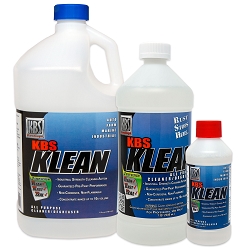
- KBS Klean — Biodegradable cleaner that removes dirt, oil, grease, and other contaminants before treatment. Apply, scrub with a brush or scouring pad, and rinse.
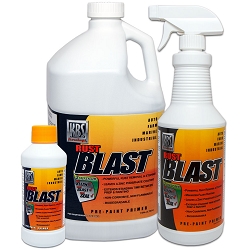
- RustBlast — A water-based, biodegradable solution that dissolves and neutralizes rust while etching the metal surface for maximum paint adhesion. Spray on, keep wet for 30 minutes, then rinse.
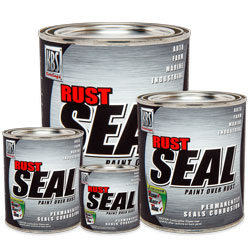
- RustSeal — A single-part coating that seals metal away from moisture and oxygen, forming a tough, ceramic-like barrier that resists chipping, scratching, cracking, and peeling. Apply by brush, spray, or roller.
Try the KBS 3-Step System
The System Sampler Kit includes all three products in one package—enough to treat up to 12 sq ft. It’s the fastest way to experience the full KBS rust prevention process before committing to full-size quantities.
Shop the System Sampler Kit → Learn More About the System
So Which Method Is Best for Stopping Rust?
The right choice depends on your priorities:
- Speed is the primary concern
- The project is large and full rust removal isn’t practical
- Appearance is secondary to stopping rust quickly
- You plan to repaint or reapply more frequently
- You want maximum protection (4–5x longer life)
- A smooth, high-quality finish matters
- The surface includes both rusted and bare metal areas
- The metal is aluminum, stainless, copper, or galvanized
KBS Rust Converter is a reliable, fast option for stopping rust and is a worthwhile tool when time or access is limited. For the longest-lasting protection and the best-looking finish, removing rust completely and sealing the metal with the KBS 3-Step System is the proven superior choice. You get what you pay for—and a properly sealed surface can go years longer between treatments.
Frequently Asked Questions About Stopping Rust
Does rust converter stop rust permanently?
No. Rust converter provides a temporary protective barrier that will need to be reapplied over time. For the longest-lasting rust protection, completely removing rust and sealing the metal with a quality coating like RustSeal is recommended.
Can rust converter be used on aluminum, stainless steel, or galvanized metal?
No. Rust converter works only on iron and steel. It will not react on aluminum, copper, stainless steel, or galvanized metal surfaces.
How much longer does rust removal and sealing last compared to rust converter?
A properly executed rust removal and metal sealing job can provide up to 4 to 5 times longer protection than using rust converter alone.
What products does KBS Coatings offer for rust prevention?
KBS Coatings offers the KBS Rust Converter aerosol for fast rust stopping, and the complete 3-Step System (KBS Klean, RustBlast, and RustSeal) for maximum long-term rust prevention. A System Sampler Kit is available for small projects up to 12 sq ft.
Tagged Products